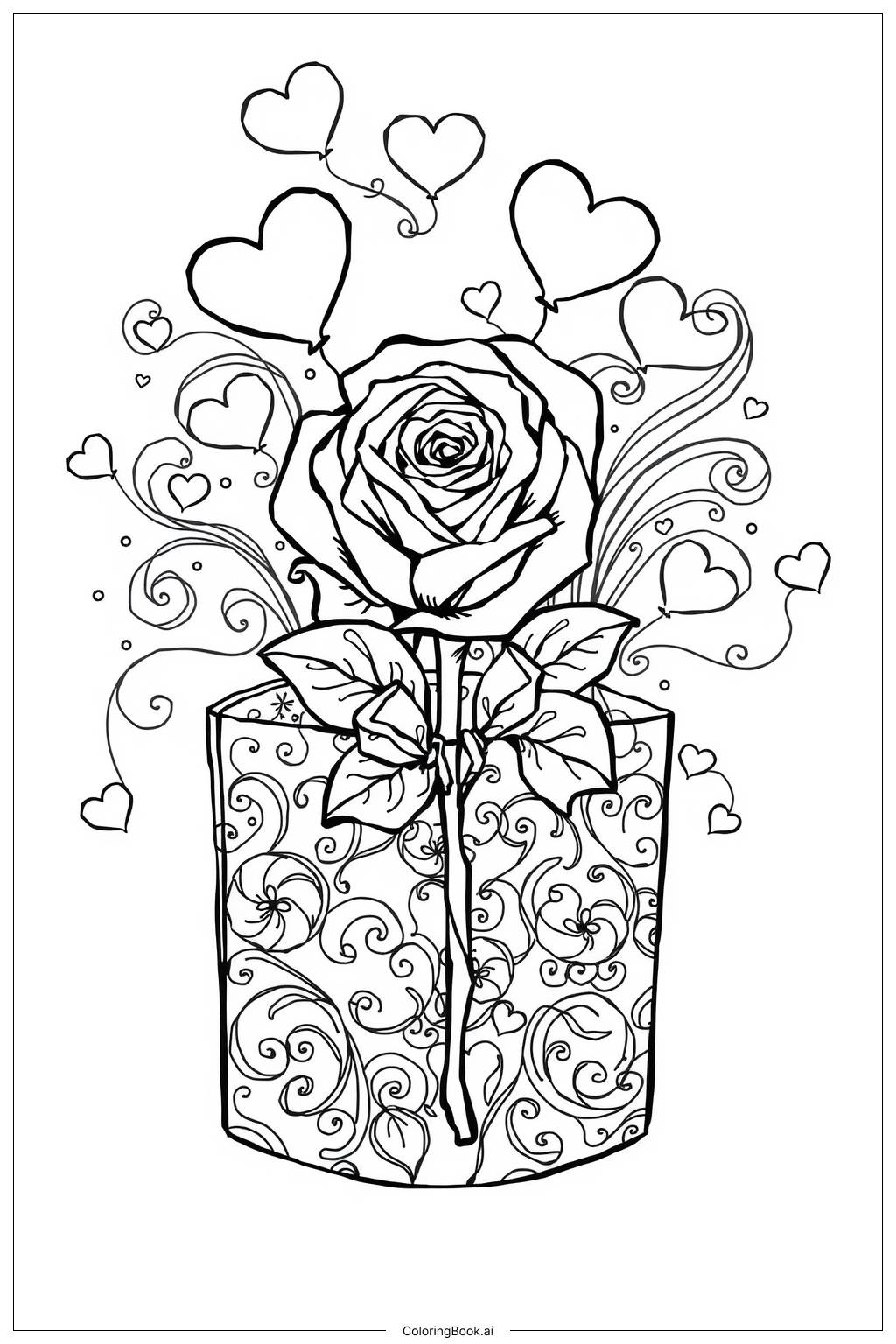
Coloring tips: How to color Valentine Rose Gift coloring page well?
Start with the rose petals using shades of red or pink. Try deep red at the outer edges and lighter pink near the center to show depth. You can also use coral, peach, or purple for a creative twist. Color the leaves in bright or dark green. Use a lighter green on the tops and a darker shade underneath to give them a natural look. For the stem, use medium green or olive. The ribbon looks great in red, gold, or pink to match the Valentine theme. You can add small dots or swirls in the background using light colors like lavender or soft yellow to make the image feel more festive and fun. Take your time with the petals — layering colors slowly makes the rose look really beautiful.
Coloring challenges: Which parts are difficult to color and need attention for Valentine Rose Gift coloring page?
• Petal Layering and Depth: The rose has many overlapping petals with curved edges and fine inner lines. Coloring each petal individually while keeping a sense of depth can be tricky. You need to use at least two shades of the same color — lighter in the center and darker toward the edges — to make the flower look three-dimensional and realistic rather than flat.
• Small Petal Details: The inner petals near the center of the rose are small and tightly packed. The lines between them are narrow and close together. Staying within these tiny spaces without smearing color into neighboring sections requires a fine-tipped pencil or marker and a steady hand, which can be challenging for younger colorists.
• Leaf Vein Lines: Each leaf has a central vein and smaller branching veins across the surface. These thin lines are easy to color over by accident. To make the veins stand out, you can leave them white or use a very light green, but this requires careful control of your coloring tool.
• Ribbon or Bow Details: The bow near the base of the stem has folds and shadows built into the line art. Coloring the ribbon so that the folds look natural — using lighter tones on raised areas and darker tones in the creases — adds a professional touch but demands some patience and color-blending skill.
• Overall Color Harmony: Choosing colors that work well together across the entire image — petals, leaves, stem, and ribbon — is a creative challenge. Making sure nothing looks too busy or mismatched while keeping the Valentine theme takes planning before you start coloring.
Benefits of coloring books: Advantages of drawing Valentine Rose Gift coloring page
Coloring this Valentine Rose Gift page offers many wonderful benefits for kids and adults alike. For younger children, carefully filling in the petals, leaves, and ribbon helps build fine motor skills and hand-eye coordination. Staying within the lines takes focus and practice, which strengthens concentration over time. Choosing colors and deciding how to blend them encourages creative thinking and artistic expression. Kids learn about color relationships — how light and dark shades can work together to create beautiful effects. For older children and adults, the detailed design offers a relaxing, meditative experience. Focusing on a coloring task can reduce stress and calm a busy mind. The Valentine theme also makes this page a meaningful activity around the holiday. Finishing the page gives a real sense of accomplishment and pride. You end up with a piece of art that can be shared as a gift or displayed at home. Whether you are coloring alone or together with friends and family, this page turns a simple activity into a joyful and rewarding creative experience that celebrates love and beauty.