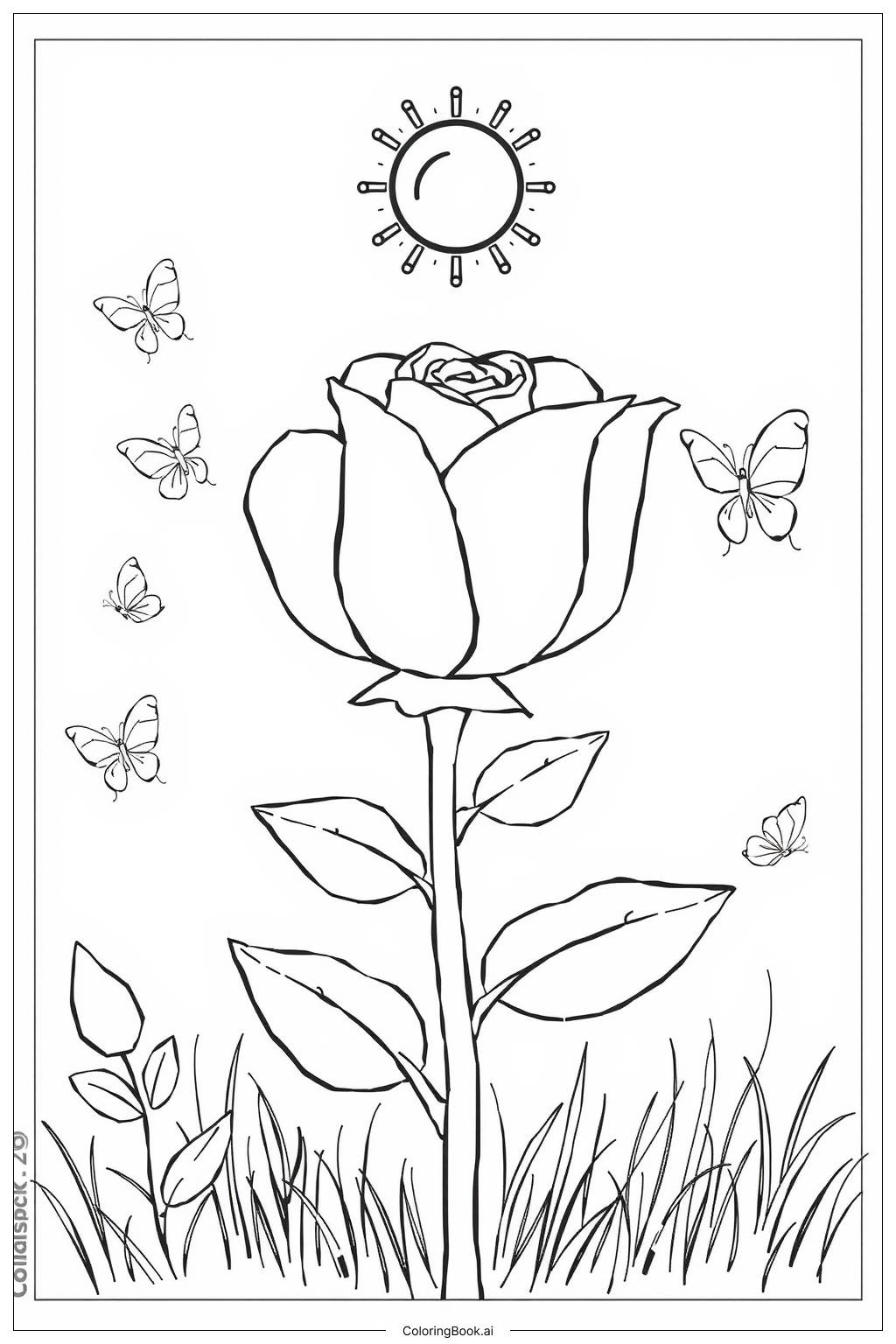
Coloring tips: How to color First Rose Bloom coloring page well?
Start with the rose petals using shades of pink or red. Use a lighter color in the center and gradually deepen the shade toward the outer edges. This gives the petals a natural, glowing look. Try blending two colors together for a soft gradient effect. For the leaves, use different shades of green. Lighter green works well for younger leaves, while darker green suits the older ones. Add a touch of yellow-green near the veins to make them stand out. Color the stem a medium green or brownish green. If you want a dreamy feel, try soft peach or lavender for the petals instead of red. Take your time with each section and stay inside the lines for a clean, polished result. Have fun experimenting with colors!
Coloring challenges: Which parts are difficult to color and need attention for First Rose Bloom coloring page?
• Petal Layering: The rose has multiple overlapping petals, and it can be tricky to tell where one ends and another begins. Coloring each petal separately with slightly different shades helps show depth and separation. Look closely at the lines before you start, so you know exactly which area you are filling in.
• Gradient Blending: A rose looks most beautiful when the petals show a smooth color transition from light to dark. Achieving this blend can be difficult, especially with crayons or markers. Using colored pencils and pressing lightly for light areas and harder for darker ones is a good technique. Practicing on scrap paper first can help a lot.
• Vein Details on Leaves: The leaves have fine veins running through them. These thin lines are easy to accidentally color over. Try using a lighter color along the veins to keep them visible, or carefully leave those lines uncolored to preserve the natural leaf pattern.
• Small Curved Spaces: Near the center of the bloom and between petals, there are small, tightly curved areas that are hard to color neatly. A sharp colored pencil or a fine-tip marker works best in these spots. Take it slow and use small, controlled strokes.
• Keeping Colors Balanced: With so many petals and leaves in the image, it can be easy to make one area too bold and another too faint. Step back occasionally to check that the colors feel balanced across the whole page. Adjusting as you go helps the final result look harmonious and complete.
Benefits of coloring books: Advantages of drawing First Rose Bloom coloring page
Coloring this rose page offers wonderful benefits for kids and adults alike. Focusing on the petals and leaves helps improve concentration and attention to detail. It trains the hand and eye to work together, which strengthens fine motor skills over time. Choosing colors and deciding how to shade the petals encourages creative thinking and self-expression. There is no single right answer, so colorists feel free to explore and experiment. Working through a detailed image like this also builds patience and persistence, as it takes time and care to finish well. The calming, repetitive motion of coloring helps reduce stress and quiet a busy mind. For younger children, it is a great way to learn about flowers and nature. For older kids and adults, it becomes a relaxing creative outlet. Completing the page gives a real sense of achievement and pride. Overall, this rose coloring page is a simple but meaningful activity that nurtures both the mind and the imagination.