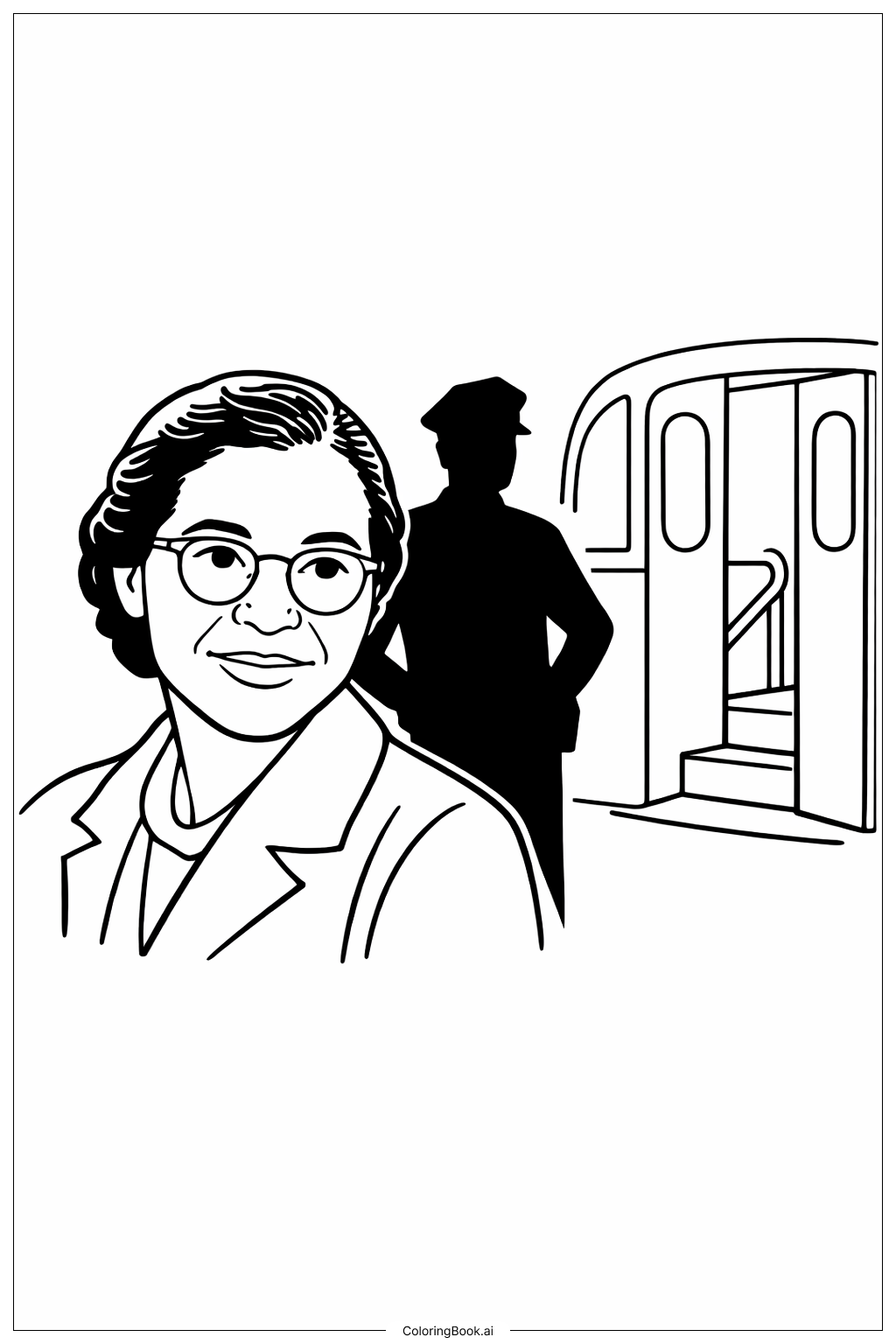
Coloring tips: How to color Rosa Parks With Policeman Silhouette coloring page well?
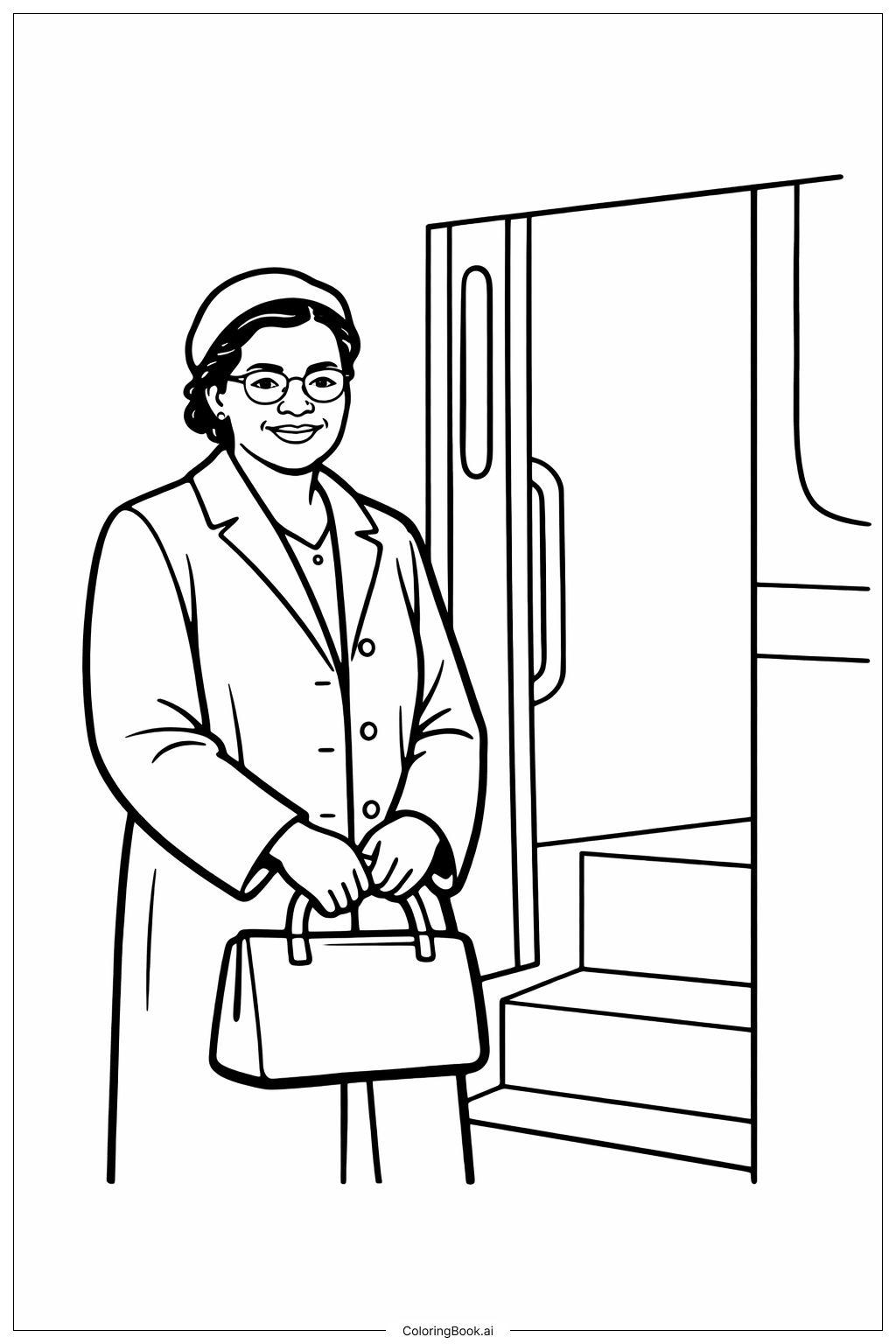
Start with Rosa Parks herself. Use warm, rich skin tones for her face and hands. Her coat can be colored in deep navy blue or dark brown to reflect the era's fashion. Add a white or cream-colored blouse underneath for contrast. Her glasses can be colored gold or dark brown. Use soft gray or black for the policeman's silhouette to keep the focus on Rosa Parks. You can add a light blue or pale yellow background to represent the sky or the street setting. Keep Rosa's colors warm and bright to show her strength and dignity. Use darker, cooler tones for the silhouette to create a contrast between courage and authority. This contrast makes the image feel powerful and meaningful. Take your time with small details like buttons, fabric folds, and facial features to bring the scene to life.
Coloring challenges: Which parts are difficult to color and need attention for Rosa Parks With Policeman Silhouette coloring page?
• Facial Details: Rosa Parks has a calm, determined expression with small features like eyes, eyebrows, lips, and glasses. Coloring these areas requires a fine-tipped pencil or marker. Staying inside the lines around the face is tricky, especially near the glasses frames. Young colorists should go slowly and use light strokes first before adding deeper color.
• Skin Tone Blending: Capturing a realistic and respectful skin tone for Rosa Parks requires blending several shades. Using a single color can look flat. Try layering light peach, tan, brown, or a combination that feels natural. This is one of the most important parts of the image to get right, as it honors the person being depicted.
• Silhouette Shading: The policeman is shown as a silhouette, which means the entire figure should be one consistent dark tone. However, making it look smooth and even without streaks or gaps can be challenging. Using a soft pencil or blending tool helps achieve a clean, solid look without going outside the shape.
• Clothing Texture and Folds: Rosa Parks's coat and clothing have folds and fabric details. Adding shading to these areas gives the image depth and realism. Younger colorists may find it hard to shade inside curves and corners. Try using a slightly darker version of the main coat color along the fold lines to create a natural shadow effect.
• Background Balance: Choosing the right background color is important. A background that is too bright can overpower the main figures. A background that is too dark can blend with the silhouette. Finding a soft, neutral tone that highlights both Rosa Parks and the policeman takes careful thought and color testing.
Benefits of coloring books: Advantages of drawing Rosa Parks With Policeman Silhouette coloring page
Coloring this image of Rosa Parks With Policeman Silhouette offers many wonderful benefits for children and adults alike. First, it helps young colorists learn about an important moment in history. As they color, they can think about Rosa Parks's bravery and what it means to stand up for what is right. This makes coloring both creative and educational at the same time. Second, working on fine details like faces, clothing, and shading builds focus and patience. These skills are useful in school and everyday life. Third, choosing colors thoughtfully, such as warm tones for Rosa Parks and cool tones for the silhouette, helps develop artistic thinking and visual storytelling. Fourth, completing a detailed coloring page gives a sense of pride and accomplishment. Children feel confident when they finish something meaningful. Fifth, coloring is a calm, quiet activity that helps reduce stress and anxiety. It allows the mind to relax while still staying engaged. Finally, this image can open conversations between children and parents or teachers about civil rights, equality, and the importance of courage. Coloring becomes a bridge between creativity and learning about the world.