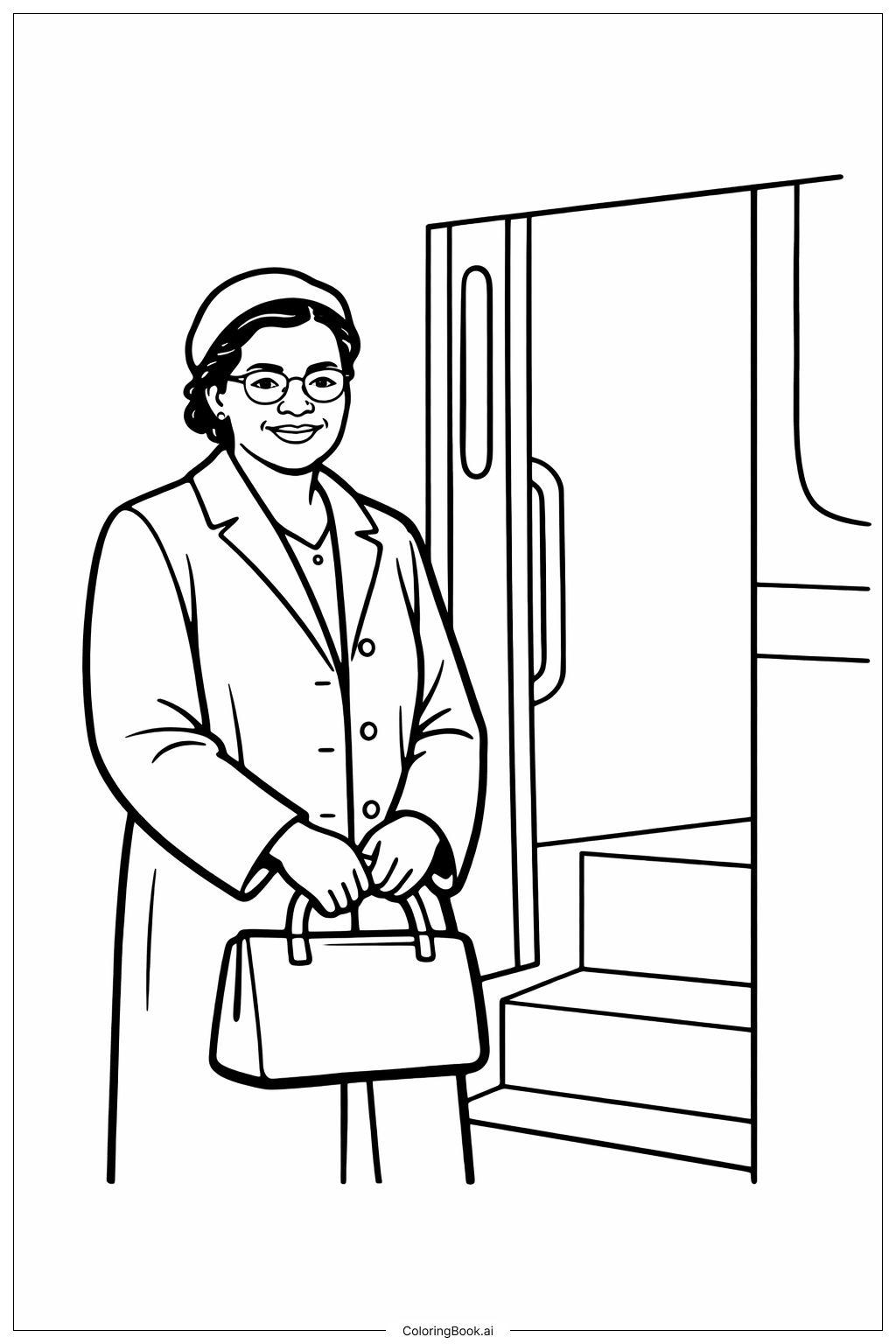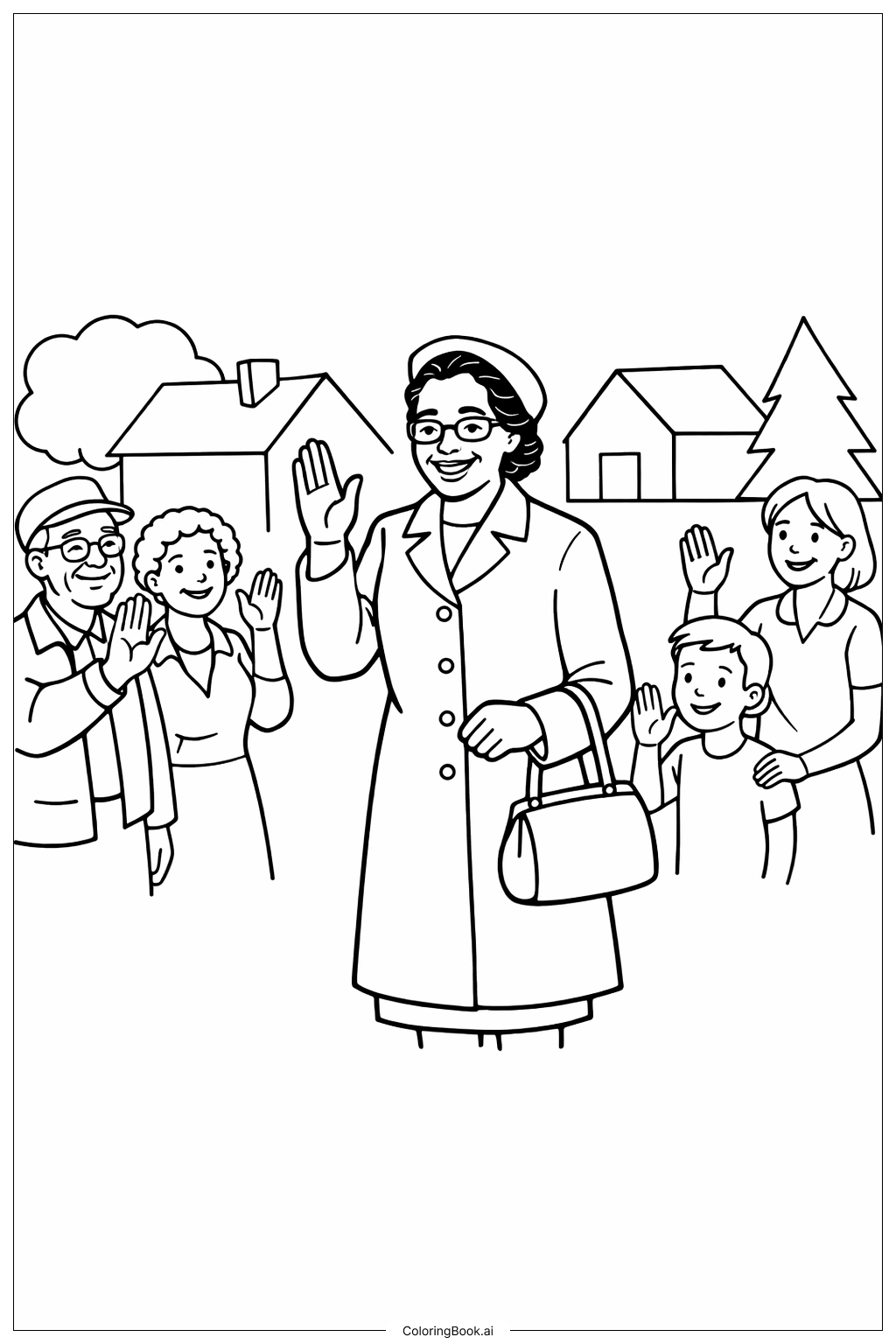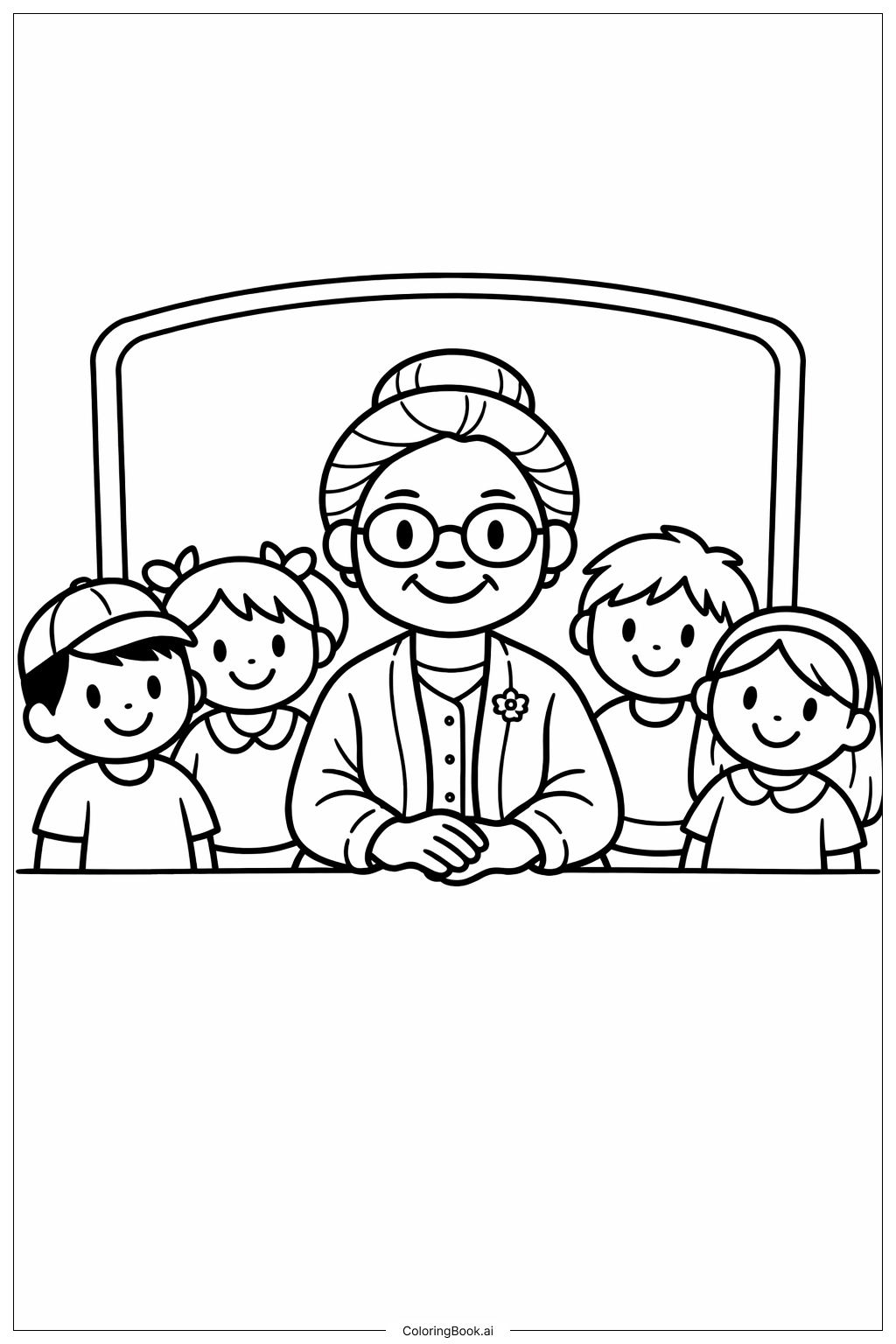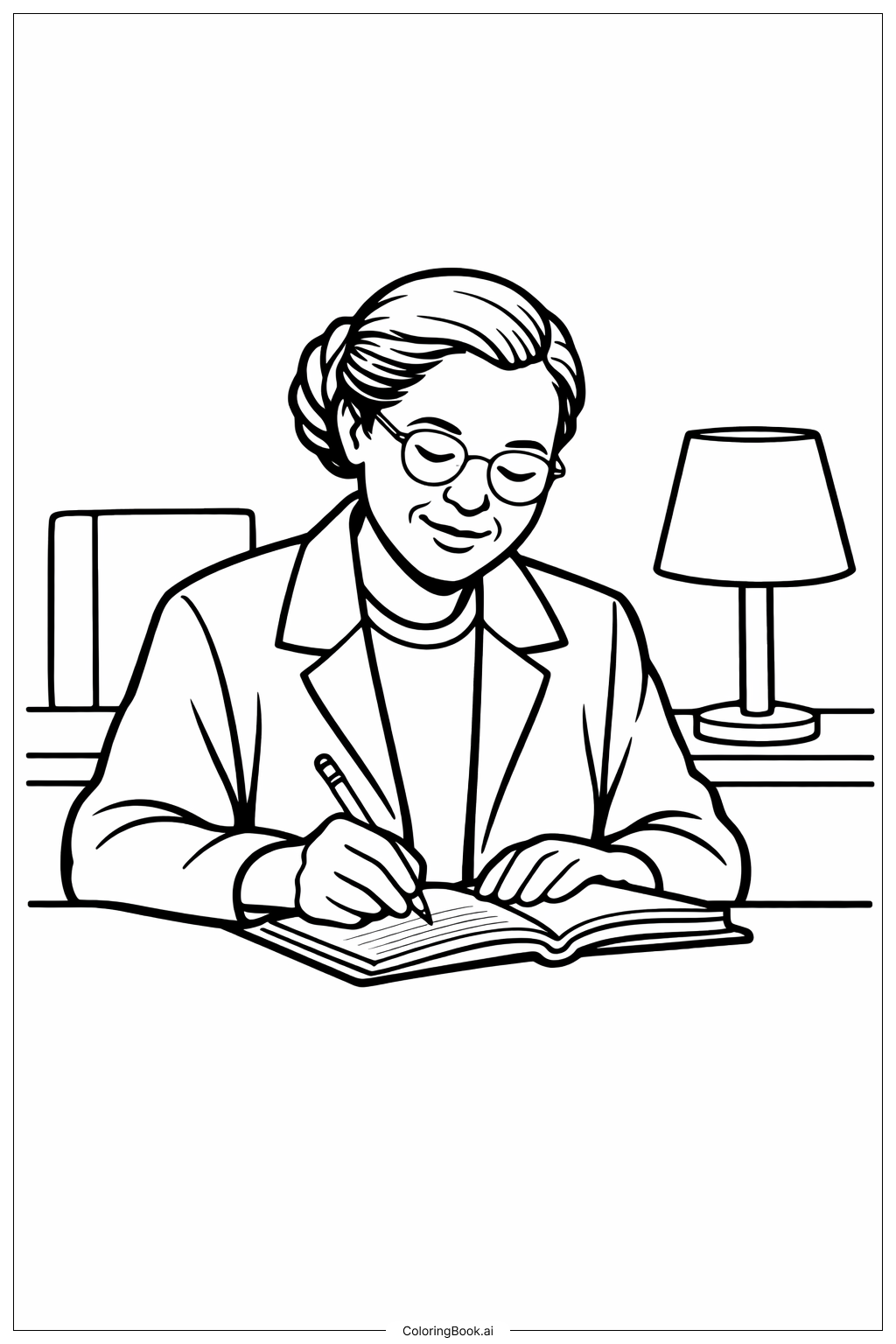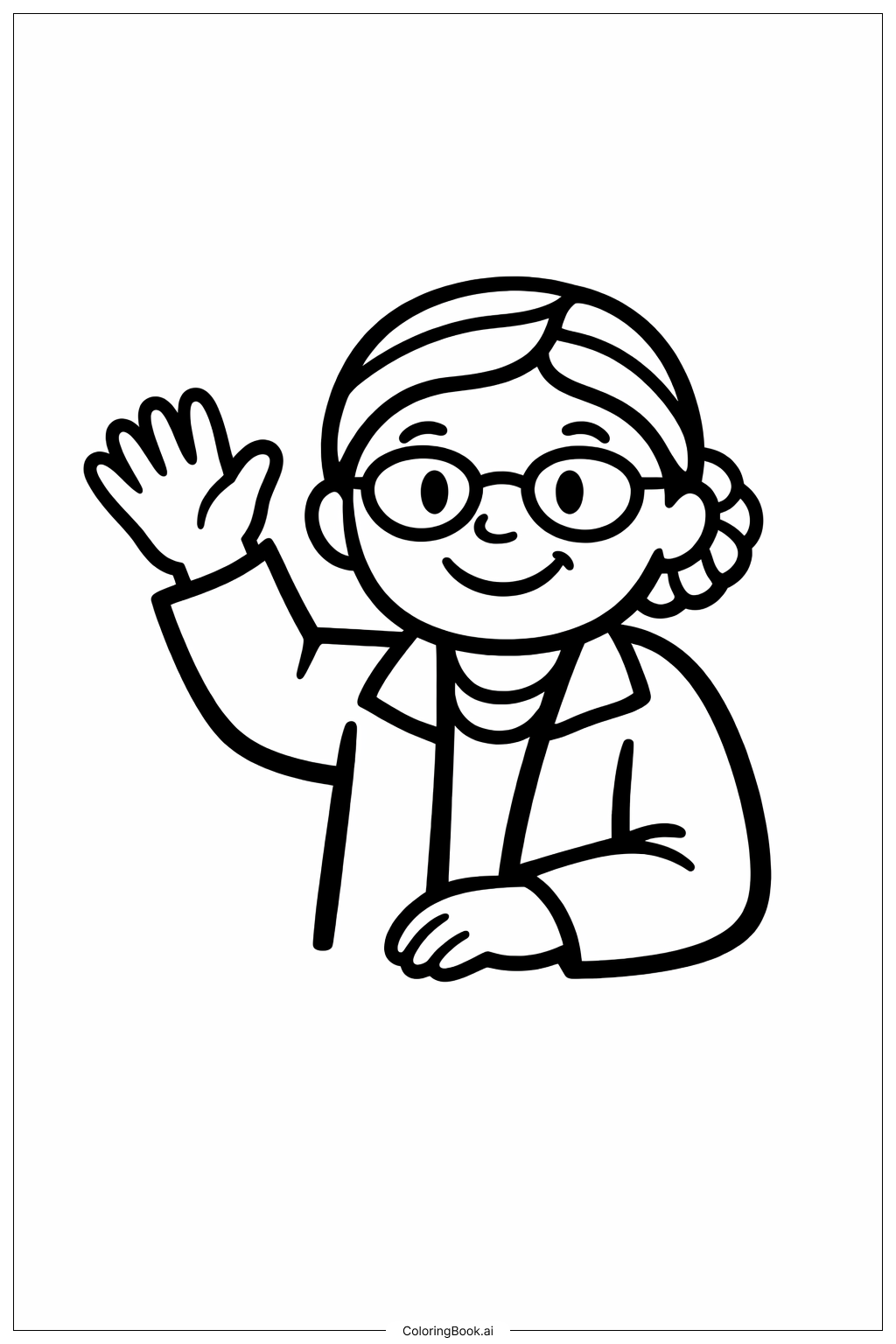
Coloring tips: How to color Rosa Parks Waving to Children coloring page well?
Start with Rosa Parks herself. Use warm, earthy tones like brown and tan for her skin. Her dress can be colored a deep navy blue, burgundy, or soft gray to reflect her dignified style. Add dark frames for her glasses. For her hair, use black or dark brown.
For the children, use a variety of skin tones to celebrate diversity — light peach, warm brown, golden tan, and deep chocolate. Give each child a different colored outfit to make the scene bright and lively. Try reds, yellows, greens, and blues.
The background can be colored in soft, sunny tones like pale yellow or light sky blue to give the scene a warm and hopeful feeling. Adding gentle shading around Rosa's figure will help her stand out as the heart of the image. Use cheerful colors overall to match the joyful mood of this special moment.
Coloring challenges: Which parts are difficult to color and need attention for Rosa Parks Waving to Children coloring page?
• Facial Details on Rosa Parks: Rosa's face includes small but meaningful details like her glasses, gentle eyes, and soft smile. These areas are very small and require a fine-tipped coloring tool such as a colored pencil or thin marker. Being careful here ensures her kind expression comes through clearly without smudging.
• Varied Skin Tones Across Multiple Figures: The image includes Rosa Parks and several children of different backgrounds. Choosing and blending the right skin tones for each figure can be tricky. It helps to use multiple shades and layer them gently to create a natural, realistic look that honors each character's individuality.
• Clothing Patterns and Layers: Rosa's outfit and the children's clothes may have folds, collars, buttons, or other small details. Staying within these lines while switching between colors takes patience. Using lighter base colors first before adding darker shadow tones can make the clothing look more three-dimensional.
• Background Balance: The background needs to complement the main figures without overpowering them. Choosing colors that are softer and less saturated than the foreground elements helps keep Rosa Parks and the children as the visual focus. Blending background tones smoothly is a skill that takes practice.
• Overall Color Harmony: With multiple figures and a detailed background, keeping the whole image balanced and visually pleasing is a challenge. Try to pick a color theme before starting — for example, warm and sunny tones throughout — so all the elements work together and the scene feels unified and joyful.
Benefits of coloring books: Advantages of drawing Rosa Parks Waving to Children coloring page
Coloring this image of Rosa Parks waving to children offers wonderful benefits for young artists of all ages.
Learning about history becomes more personal and meaningful when children engage with it through art. As kids color this scene, they connect with the story of Rosa Parks and her courage in a gentle, creative way.
This image also encourages conversations about kindness, equality, and respect. Parents and teachers can use it as a starting point to talk about why Rosa Parks is an important figure and what her legacy means today.
For younger children, filling in the different figures helps develop fine motor skills and hand-eye coordination. Choosing colors for each character encourages decision-making and creativity.
For older children and adults, the challenge of blending skin tones and balancing a multi-figure composition builds artistic confidence and patience.
Coloring also has calming effects. It helps reduce stress and encourages focus, making it a healthy and productive activity for both kids and grown-ups.
Most importantly, this page inspires empathy. By bringing Rosa Parks and these joyful children to life with color, artists of any age can feel a personal connection to a story of courage, community, and hope.