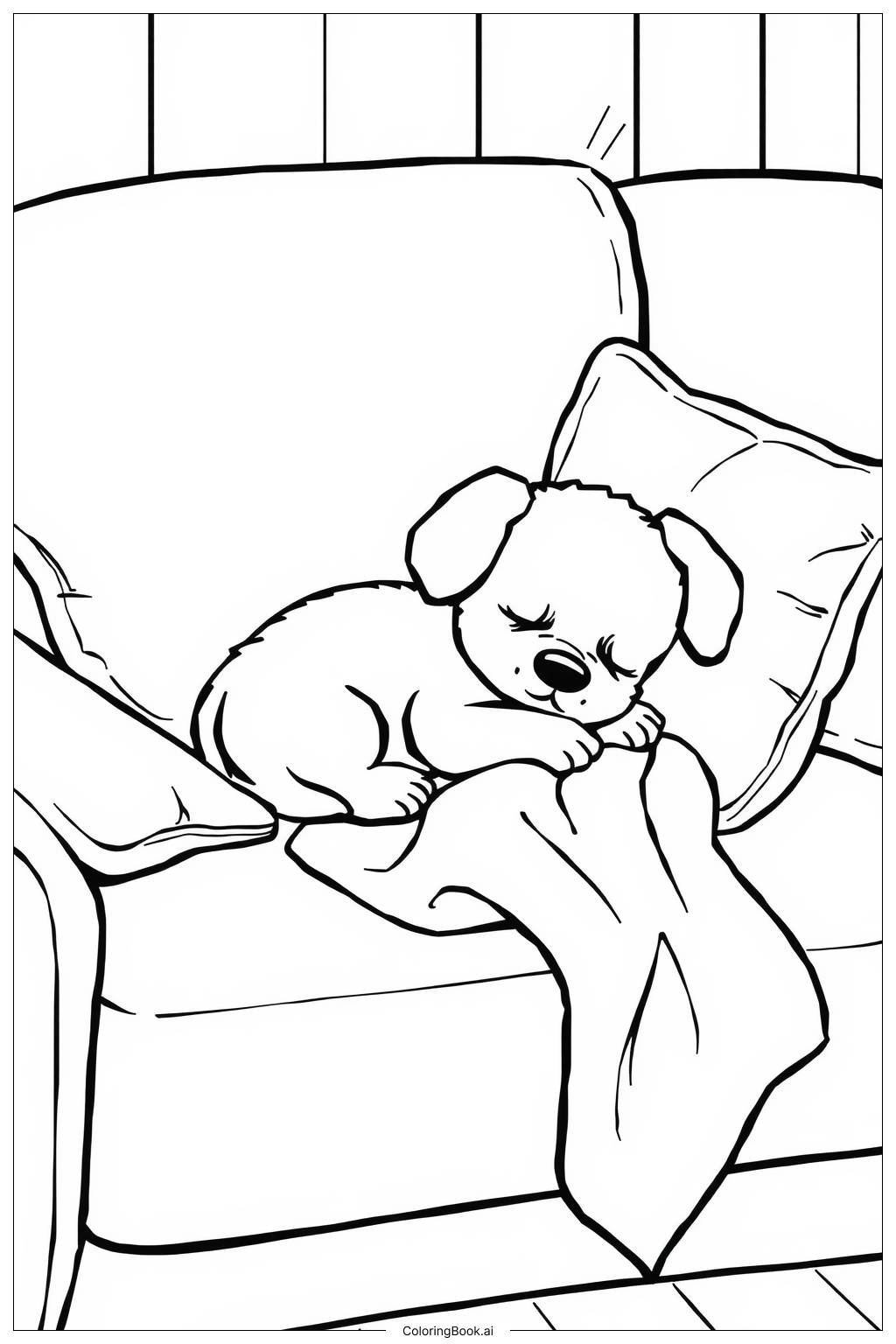
Coloring tips: How to color Sleeping Puppy on a Couch coloring page well?
Start with the puppy's fur. Light golden yellow or warm beige works well for a classic look. You can also try cream, tan, or soft brown to make the fur feel natural. Use small, curved strokes to follow the direction of the fur lines. For a fluffy effect, blend two shades together — a lighter tone in the middle and a slightly darker shade along the edges and shadowed areas. Color the couch in warm, cozy tones like dusty rose, soft blue, sage green, or warm gray. The cushions can be a slightly lighter shade than the couch frame to show depth. Add subtle shading under the puppy and along the cushion folds to create a three-dimensional look. Use a soft peach or pink for the puppy's nose and inner ears. Keep the overall palette gentle and harmonious to match the peaceful mood of the scene.
Coloring challenges: Which parts are difficult to color and need attention for Sleeping Puppy on a Couch coloring page?
• Fur Texture Details: The puppy's fur has many small, flowing lines that suggest softness and fluffiness. Staying within these fine lines while still creating a smooth, layered look can be tricky. Using a sharp pencil tip or a fine-tipped marker will help you stay precise. Try coloring in the same direction as the fur lines to make the texture look realistic.
• Shading and Depth on Cushions: The couch cushions have rounded, puffy shapes that require careful shading to look three-dimensional. Getting the gradual transition from light to shadow without hard lines takes practice. Light circular blending or gentle back-and-forth strokes near the edges of each cushion can help create a soft, rounded effect.
• Small Facial Features: The puppy's sleeping face includes tiny details like closed eyelids, a small nose, and subtle muzzle lines. These areas are very small and easy to color outside of. Use your finest tool here and go slowly. A very light hand is best for the face to keep the expression soft and gentle.
• Contrast Between Puppy and Couch: Because both the puppy and the couch are large, similarly sized shapes, it can be hard to make them look separate. Choosing colors with enough contrast between the two — for example, a warm-toned puppy on a cool-toned couch — will help each element stand out clearly.
• Stitching and Fabric Lines: The couch has small stitching details along the cushion seams. These thin lines are easy to accidentally color over. Consider leaving them as white outlines or using a very light color to keep them visible and add a realistic fabric feel to the scene.
Benefits of coloring books: Advantages of drawing Sleeping Puppy on a Couch coloring page
Coloring this sweet image of a sleeping puppy on a couch offers many wonderful benefits for kids and beginners alike. The calm, peaceful subject helps set a relaxing mood, making it a great activity after a busy day. Focusing on coloring quietly can help reduce stress and bring a sense of calm.
This page also helps build fine motor skills. Staying within the lines of the puppy's fur and the couch cushions requires steady hand control, which improves with practice. Choosing colors for the fur, the couch, and the background encourages creative thinking and decision-making.
Young colorists can learn about color blending and shading by trying to make the cushions look soft and round or making the fur look fluffy. These are early artistic skills that build confidence over time.
The familiar, cozy subject — a puppy napping on a couch — is easy for children to connect with emotionally. This emotional connection makes the coloring experience more enjoyable and engaging. Kids who love animals will feel especially motivated to finish and share their artwork.
Completing the page also gives a sense of accomplishment. Whether framed on a wall or shared with a friend, the finished piece is something to be proud of. Overall, this coloring page is a fun, gentle, and rewarding creative activity for all ages.