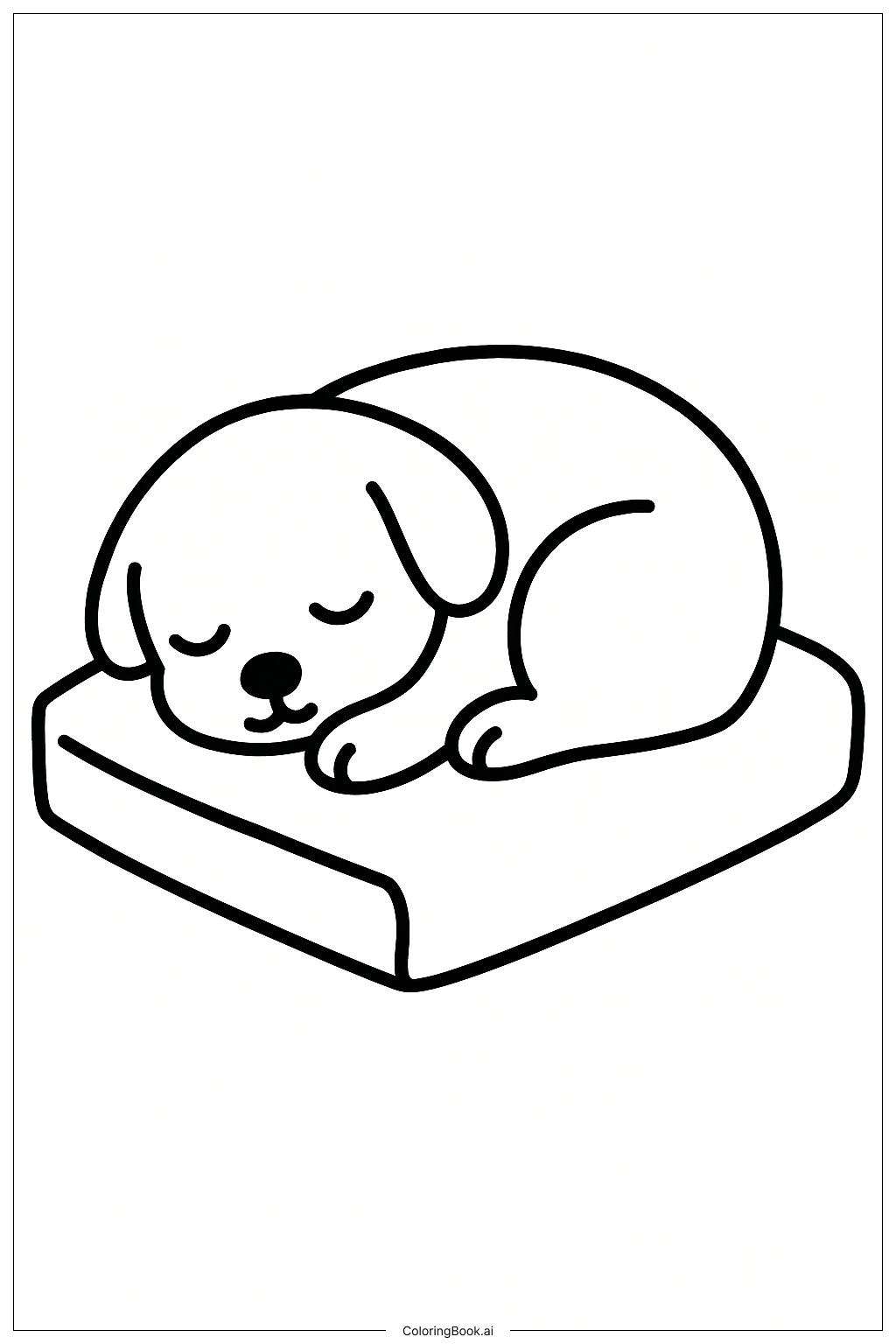
Coloring tips: How to color Sleeping Puppy Curled On A Cushion coloring page well?
Start with the puppy's fur. Choose a warm color like golden yellow, light brown, cream, or soft tan. You can use two shades of the same color — a lighter one for the belly and face, and a darker one for the back and ears — to give the fur a fluffy, realistic look. Use short, gentle strokes to suggest the texture of soft fur. For the nose, use a small dot of pink or dark brown. The eyes can be left as simple closed lines or lightly shaded. For the cushion, pick a cozy color like dusty rose, sky blue, lavender, or warm red. Add a slightly darker shade around the edges and folds of the cushion to show its soft, puffy shape. The decorative border can be colored in a contrasting or complementary color to make it pop. Keep your colors soft and warm overall to match the sleepy, peaceful mood of the scene. Have fun and make it as cozy as you like!
Coloring challenges: Which parts are difficult to color and need attention for Sleeping Puppy Curled On A Cushion coloring page?
• Puppy Fur Texture: The puppy's fur requires careful shading to look soft and fluffy. You need to layer light and dark shades of the same color using short, feathery strokes. Going too dark or coloring in a solid block of color can make the fur look flat instead of fluffy. Take your time and build the color up gradually.
• Curved Body Shape: The puppy is curled into a round shape, which means the body has curves and shadows in different directions. Shading the inner curve darker and the outer curve lighter helps show the rounded, three-dimensional form of the sleeping puppy. This takes patience and a steady hand.
• Cushion Folds and Volume: The cushion has soft folds and a puffy, rounded form. Coloring the folds with a slightly darker tone and the raised areas with a lighter tone will make the cushion look plump and realistic. Without this contrast, the cushion can look like a flat, uninteresting shape.
• Small Details Like the Face and Paws: The puppy's face and tiny paws are small areas with fine details. The closed eyes, small nose, and delicate paw lines need to be colored carefully with a thin tool or a sharpened pencil. Using too much color or going outside the lines in these small areas can cover up the sweet details that make the image charming.
• Keeping the Overall Mood Soft and Warm: Every color choice in this image should feel cozy and calm. Using very bright or bold colors can break the peaceful feeling of the sleeping puppy scene. Choosing soft, muted, and warm tones throughout the whole picture helps keep the gentle, restful mood intact.
Benefits of coloring books: Advantages of drawing Sleeping Puppy Curled On A Cushion coloring page
Coloring this image of a sleeping puppy is a wonderful activity for kids and beginners alike. Here are some of the great benefits it offers.
It helps build focus and patience. Staying inside the lines and adding careful shading teaches children to slow down and concentrate, which is a skill that helps in school and everyday life.
It sparks creativity. Choosing colors for the puppy's fur and the cushion lets kids make their own creative choices. There is no single right answer, so every child can make a unique and personal piece of art.
It supports fine motor skills. Holding a crayon or colored pencil and coloring small areas like the puppy's face and paws helps strengthen the small muscles in the hands and fingers. This is great practice for writing and other detailed tasks.
It is calming and relaxing. The peaceful scene of a sleeping puppy has a naturally soothing feeling. Coloring it can help children feel calm, reduce stress, and enjoy a quiet moment of focus.
It builds confidence. Finishing a coloring page gives kids a real sense of accomplishment. Seeing a completed, colorful image that they created themselves is a wonderful boost to self-esteem.
This sweet, simple scene is the perfect starting point for young artists to enjoy and grow.