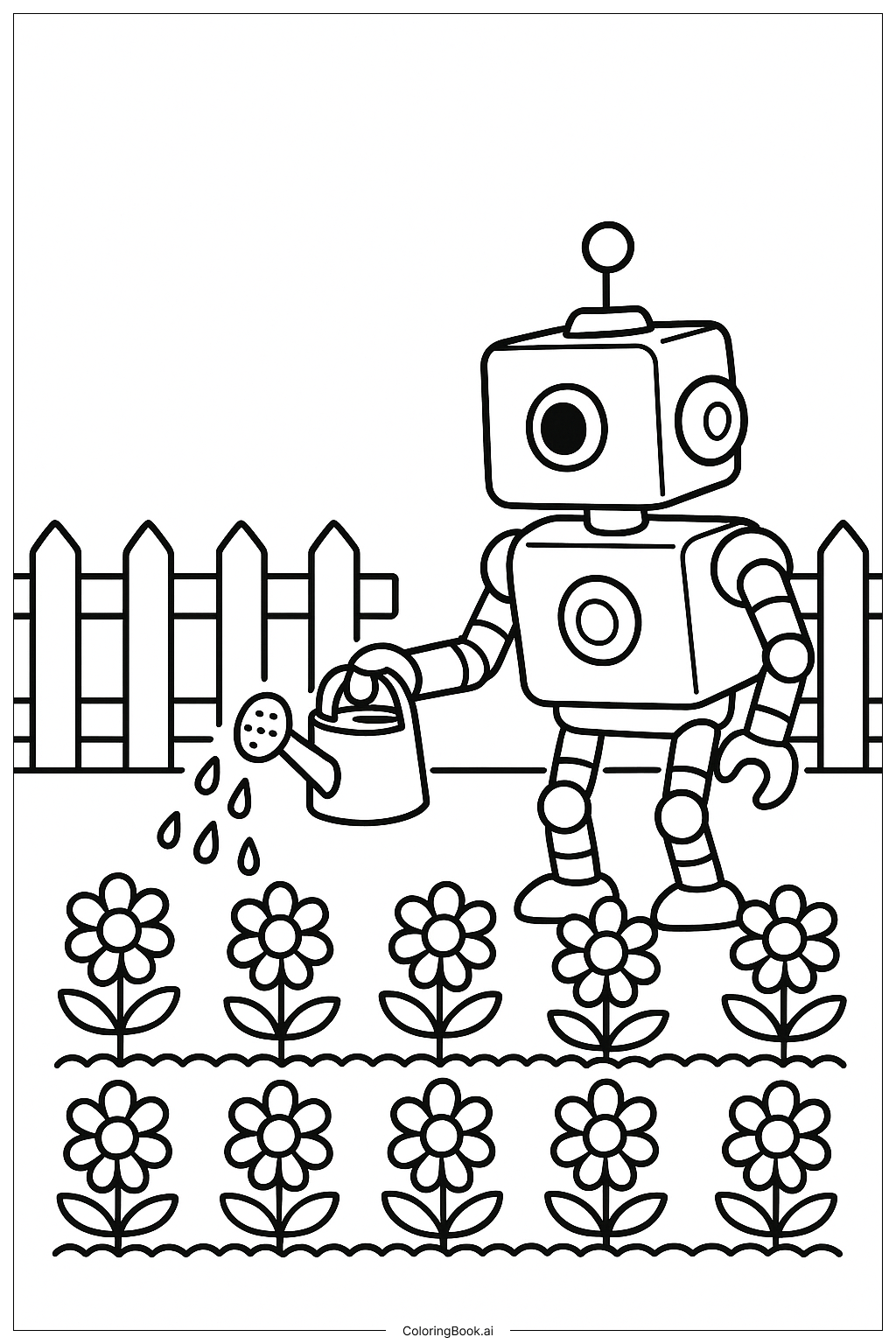
Coloring tips: How to color Prototype Garden Robot coloring page well?
Use bright and cheerful colors for this picture. You can color the robot with metallic shades like silver or gray, or make it colorful with blues and reds. The watering can can be green or blue. For the flowers, choose a variety of colors like yellow, pink, red, or purple to make the garden lively. The leaves and stems should be different shades of green. The fence can be a natural wood color, such as brown or beige. Try to use darker colors for the robot's joints and circles to add depth. Don’t forget to color the water drops light blue to show the flowing water.
Coloring challenges: Which parts are difficult to color and need attention for Prototype Garden Robot coloring page?
1. Small details like the water drops and the circular parts on the robot’s body require careful coloring to stay inside the lines.
2. Coloring the robot’s joints and limbs evenly can be tricky because of their shape and small size.
3. The repeated flowers can be tiring to color, but you can use different colors to keep it interesting.
4. The fence has straight lines and narrow spaces that need steady hands for neat coloring.
5. Adding shading or different shades on the robot’s body can be challenging but helps make the picture look more realistic.
Benefits of coloring books: Advantages of drawing Prototype Garden Robot coloring page
Coloring this picture helps improve hand-eye coordination and fine motor skills because of the small details. It encourages creativity by allowing kids to choose different colors for the robot and flowers. The repeated shapes of flowers help children practice pattern recognition and patience. Coloring the robot also introduces children to the idea of technology helping with nature, which can inspire learning. Overall, this coloring activity is fun and educational, making it suitable for kids aged 4 to 16.