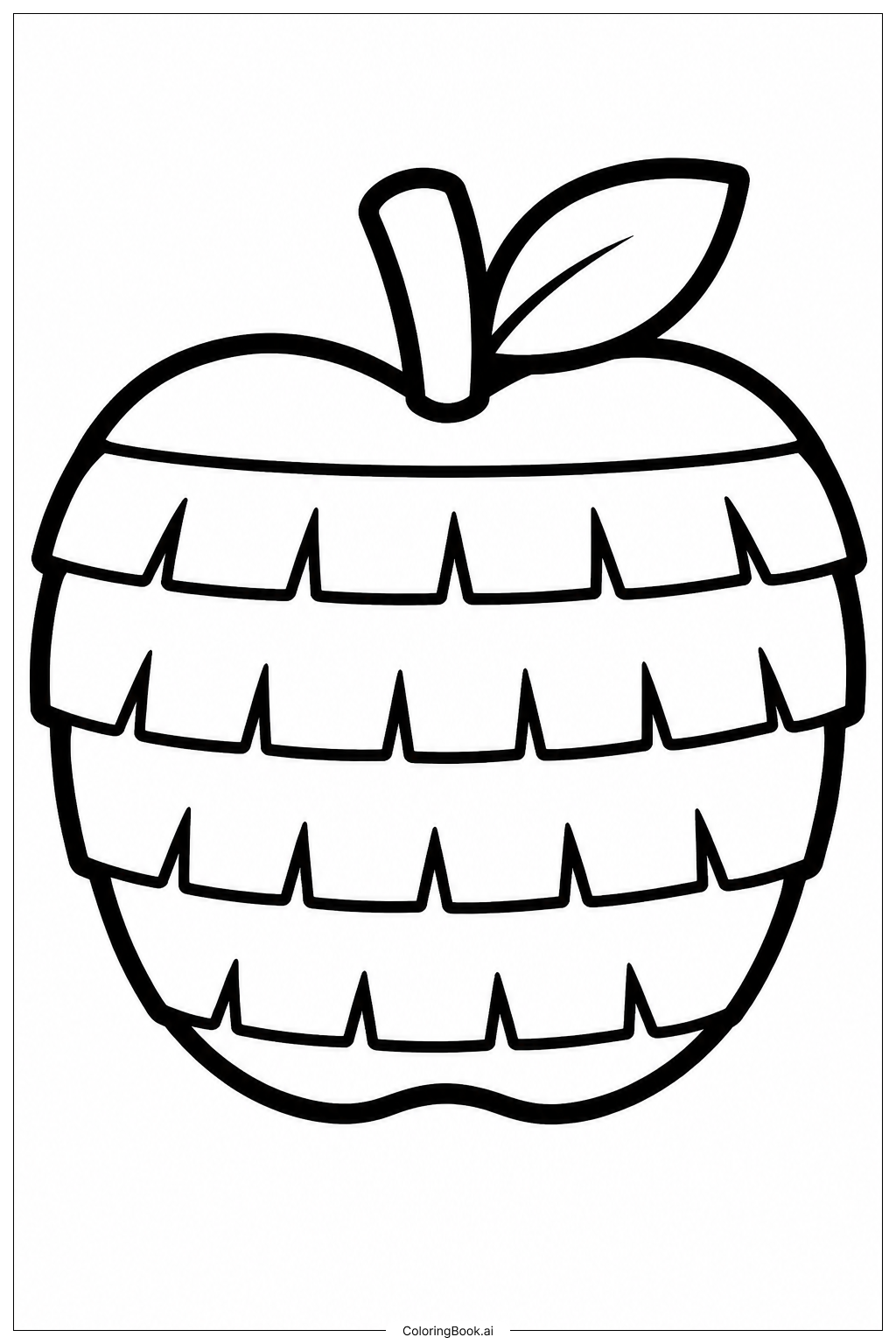
Coloring tips: How to color Pinata Apple coloring page well?
Start with the apple body. Use a bold red for the main shape to make it look like a classic apple. You can also try green or yellow if you want a different apple variety. For the paper fringes, use many different colors like pink, orange, purple, and yellow to give the piñata a festive, rainbow look. Alternate the colors row by row to create a fun pattern. Color the stem brown and the leaf bright green. Use a darker shade of red or orange along the edges of the apple to add depth and make it look round. For the rope at the top, try a tan or golden color. Do not be afraid to use bold, bright colors throughout. This is a party piñata, so the more colorful and lively it looks, the better. Kids can let their imagination run wild and make every fringe a different color for a truly unique result.
Coloring challenges: Which parts are difficult to color and need attention for Pinata Apple coloring page?
• Fringe Detail Work: The paper fringes that cover the piñata body are made up of many small, closely spaced strips. Coloring each strip individually takes patience and a fine-tipped coloring tool. Rushing through this area can cause colors to bleed together, making it hard to see the individual fringes clearly. Take your time and use colored pencils or thin markers for the best result.
• Maintaining Color Variety: One of the main challenges is keeping track of which colors have been used in each row of fringe. To make the piñata look festive, the colors should alternate in a clear pattern. It can be easy to accidentally repeat the same color in neighboring rows, which reduces the visual impact. Planning your color sequence before you start can help a lot.
• Shading the Rounded Apple Shape: The apple body is round and three-dimensional. To make it look realistic rather than flat, you need to add shading. Place a lighter color in the center where light hits and a darker tone near the edges. Blending two shades of the same color smoothly is a skill that takes some practice, especially for younger colorists.
• Small Stem and Leaf Area: The stem and leaf at the top of the apple are small details. Filling them in neatly without going outside their lines requires good control. A sharp pencil or a fine marker tip works best here. It is easy to accidentally color over the outline if you are not careful.
• Rope Texture: The rope at the top has a twisted or braided look. Capturing that texture with color, using light and dark tones of the same shade, adds realism but requires careful attention to the small curved lines in this area.
Benefits of coloring books: Advantages of drawing Pinata Apple coloring page
Coloring this Pinata Apple page offers a wide range of benefits for kids of all ages. First, it helps build fine motor skills. Carefully coloring the many small fringe strips strengthens hand muscles and improves pencil control, which also supports handwriting development. Second, it encourages creativity. Choosing colors for the fringes, apple body, and leaf lets children express themselves freely. There is no single right answer, so every child creates something unique. Third, it teaches color theory in a fun way. Alternating colors across rows of fringe introduces the idea of patterns and color combinations without any pressure. Fourth, it builds focus and patience. The detailed fringe work requires concentration, helping children practice sitting still and working carefully toward a finished goal. Fifth, it connects coloring to real-world fun. Piñatas are associated with celebrations and parties, so this page can spark conversations about traditions, cultures, and happy memories. For younger children, it is a relaxing and enjoyable activity that reduces stress and promotes a sense of calm. For older kids, the shading challenges offer a chance to develop more advanced artistic techniques. Overall, this is a joyful and rewarding coloring experience.