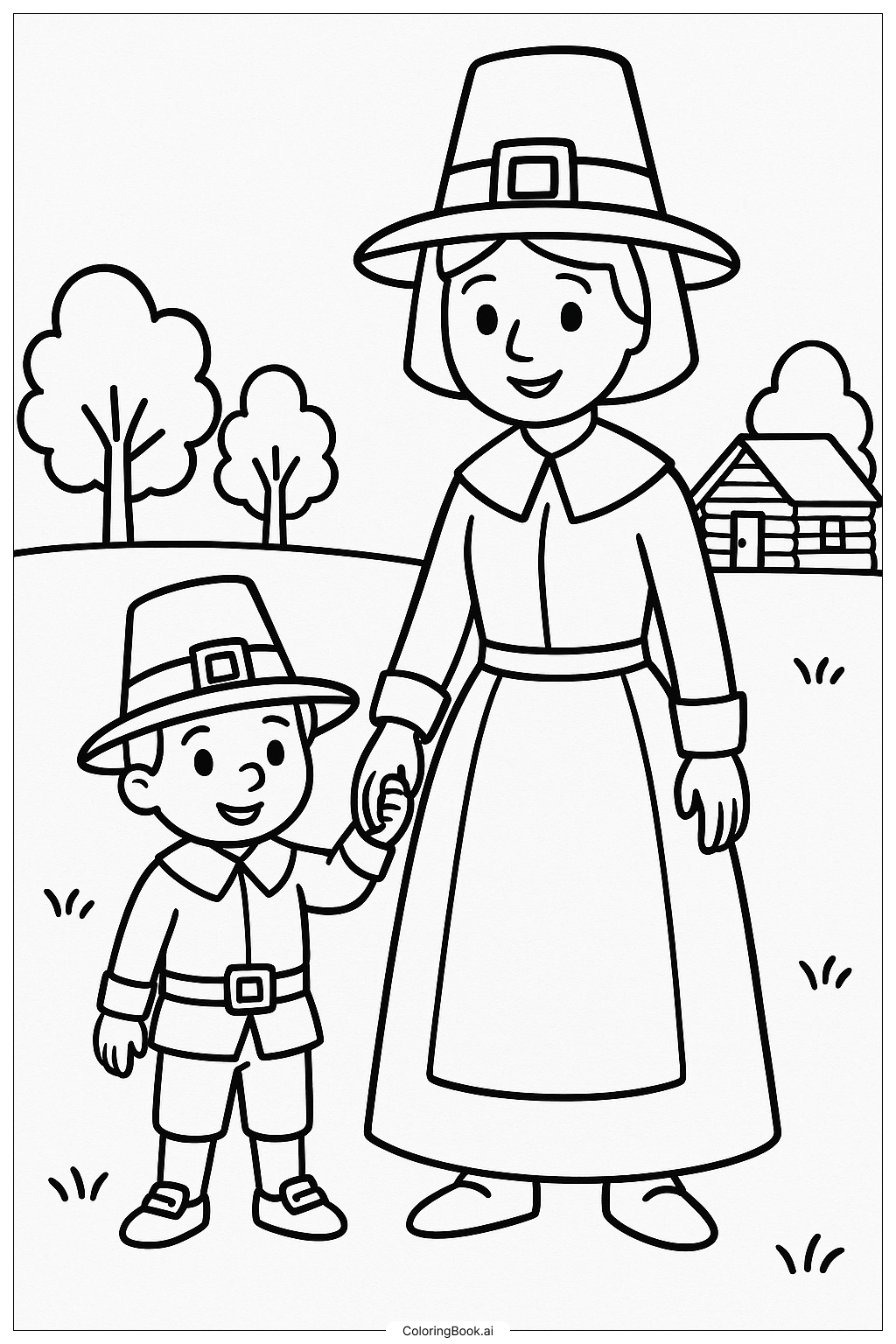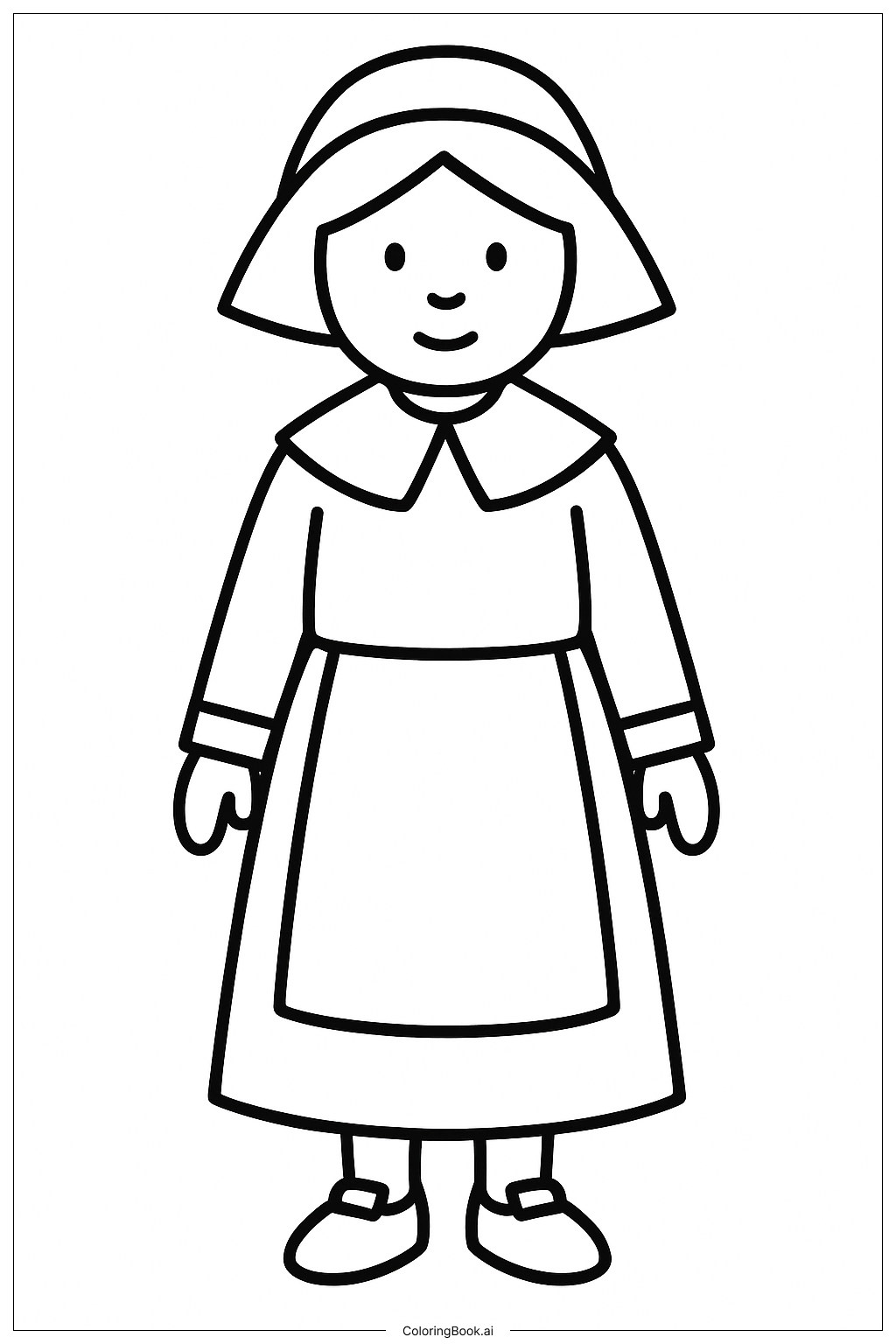
Coloring tips: How to color A Standing Pilgrim Woman coloring page well?
To color this image, you can use soft and natural colors like browns, tans, and muted greens for the dress. The apron and bonnet are usually white, but you can add light gray or pale yellow shading to give them depth. For the skin, choose warm peach or light brown tones. The background can be left blank or colored with gentle greens or blues to represent the outdoors or sky. Try coloring the folds in the dress darker in places to show shadows. You can also experiment with different shades of brown and beige for the belt and shoes to add contrast. Keep the colors simple and earthy to capture the Pilgrim’s modest style.
Coloring challenges: Which parts are difficult to color and need attention for A Standing Pilgrim Woman coloring page?
• Clothing Details: The folds and pleats in the dress require careful shading to make them look natural and three-dimensional without coloring outside the lines. • Small Features: The bonnet and apron have delicate edges that can be tricky to color neatly, especially for younger colorists. • Limited Color Variety: Because Pilgrim clothing is mostly in muted tones, it may be challenging to keep the image visually interesting without bold colors. • Hands and Face: Capturing subtle skin tones and facial expressions takes attention to detail and blending skills. • Shading Consistency: Maintaining consistent light source shading across the whole outfit helps the figure look realistic but requires practice.
Benefits of coloring books: Advantages of drawing A Standing Pilgrim Woman coloring page
Coloring this image helps improve fine motor skills as the design has detailed costume elements that require careful attention. It also encourages an appreciation for history and traditional clothing styles through creative expression. For children, it promotes patience and concentration while choosing colors that fit the modest Pilgrim palette. The image provides opportunities to practice shading techniques and color blending. Overall, coloring this figure fosters creativity, focus, and learning about an important era in early American life.