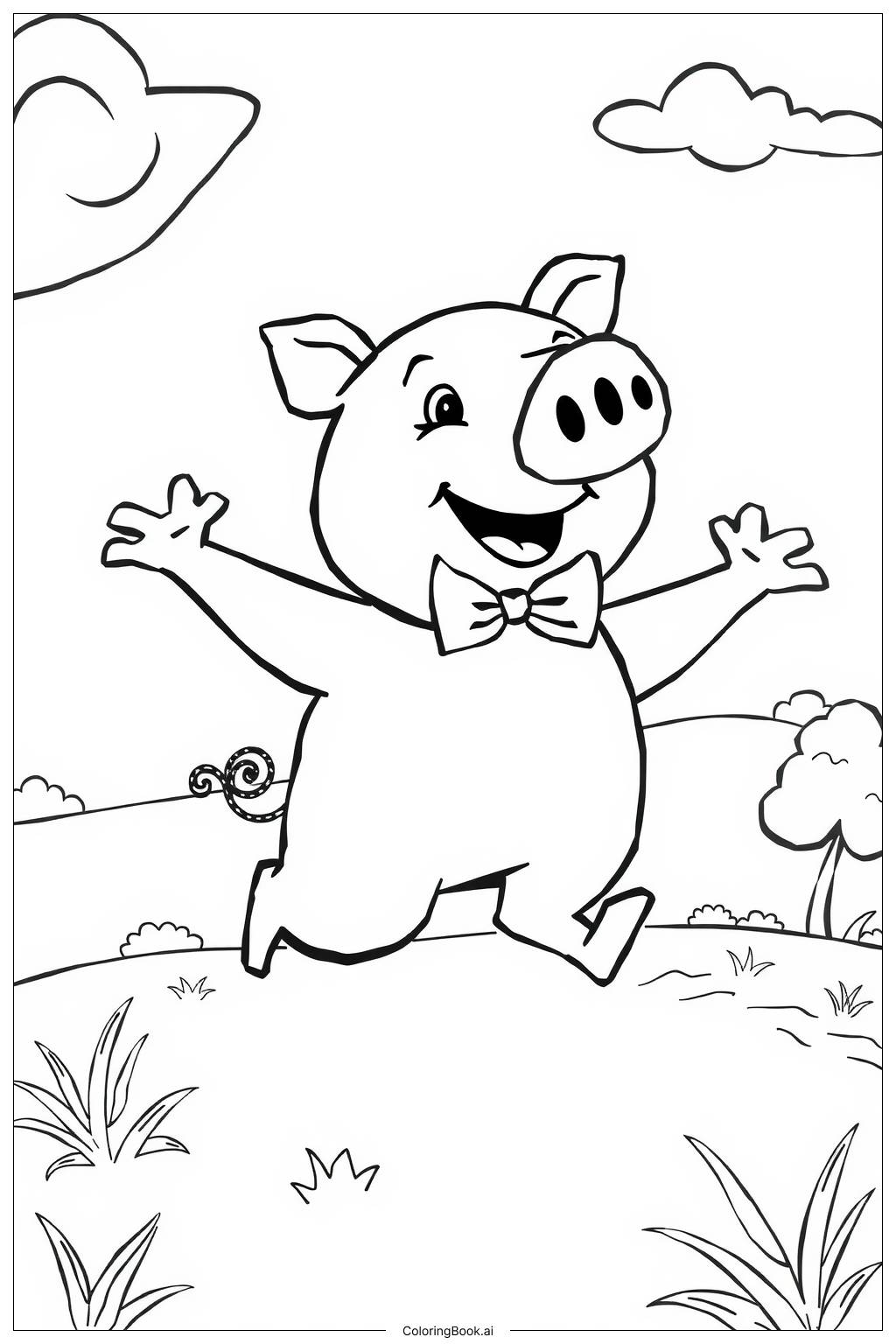
Coloring tips: How to color Porky Pig in a Funny Scene coloring page well?
For this image, you can use bright and happy colors to match Porky Pig's fun mood. Porky's skin is best colored a soft pink, while his shirt can be vibrant red and white stripes. You might want to use yellow or orange for the bouncing ball and add blue or green to the musical notes to make them stand out. The background can be a light shade like sky blue or pale yellow to keep the focus on Porky. Feel free to try unusual colors for a comedic twist, like purple pants or multicolored shoes. Remember to color inside the lines carefully to keep the image neat but have fun experimenting with different hues to bring this funny scene to life.
Coloring challenges: Which parts are difficult to color and need attention for Porky Pig in a Funny Scene coloring page?
• Small Details: Porky's face and expressions have intricate lines around the eyes and mouth. Coloring these carefully requires good control to preserve his joyful expression.
• Striped Shirt: The shirt has narrow stripes that require patience to color each stripe neatly and keep the pattern consistent.
• Musical Notes: The notes are small and thin, making them tricky to color without going outside the lines.
• Balancing Pose: Porky’s raised leg and detailed hooves need precision to keep the proportions realistic while coloring.
• Objects Overlap: The bouncing ball and musical notes partially overlap Porky, so color in layers or with care to avoid mixing colors and keep the scene clear and fun.
Benefits of coloring books: Advantages of drawing Porky Pig in a Funny Scene coloring page
Coloring this image helps improve focus and fine motor skills by requiring attention to small areas like Porky’s shirt stripes and facial details. It encourages creativity as children choose colors for the lively background and playful objects. The funny and cheerful expression of Porky Pig lifts mood and stimulates imagination, inspiring stories or games during or after coloring. Coloring such animated characters also enhances recognition of classic cartoons and can build a connection to humorous storytelling. Overall, it promotes relaxation while nurturing artistic confidence in children aged 4 to 16.