Coloring tips: How to color Pig on a Farm with Barn Animals -2 coloring page well?
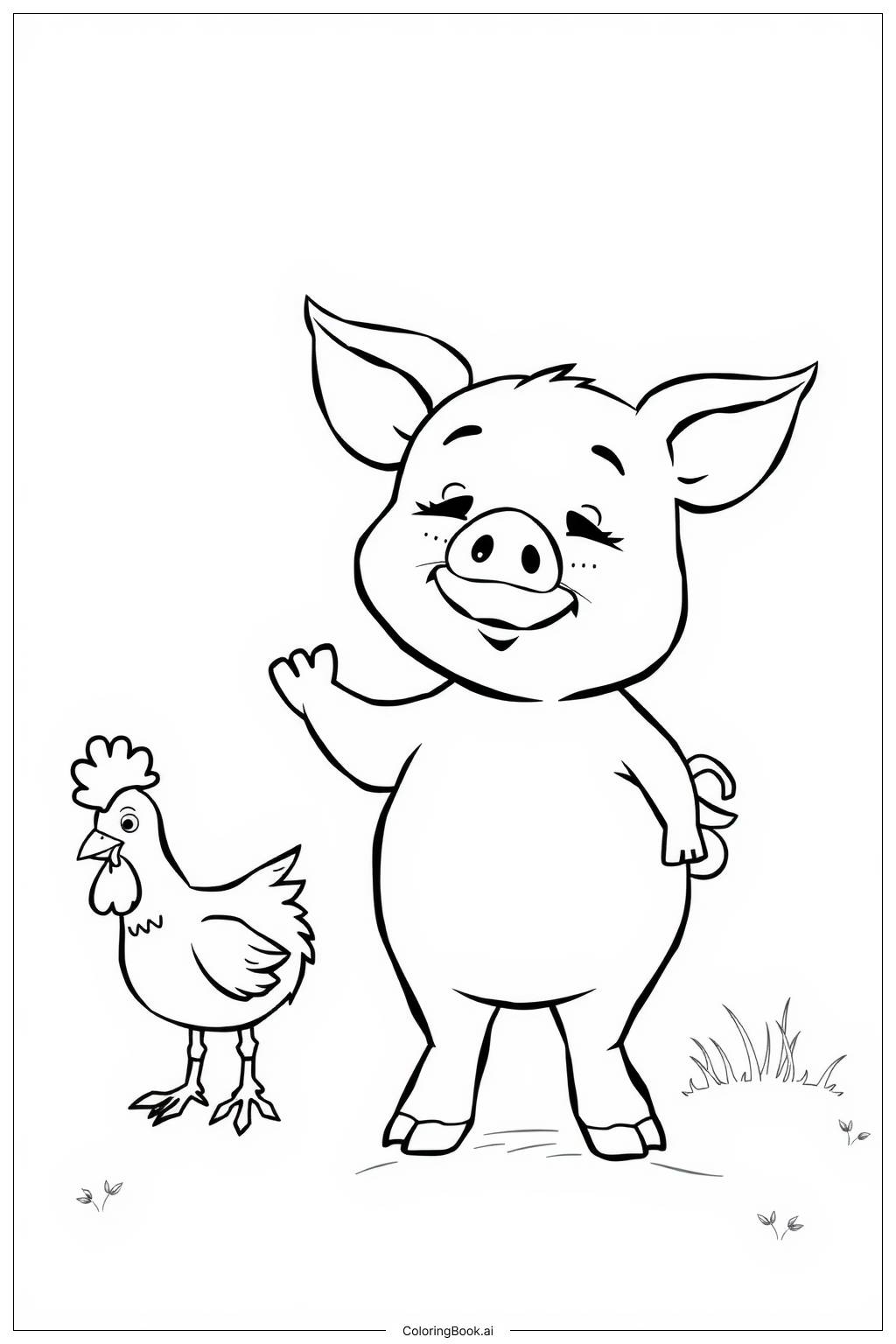
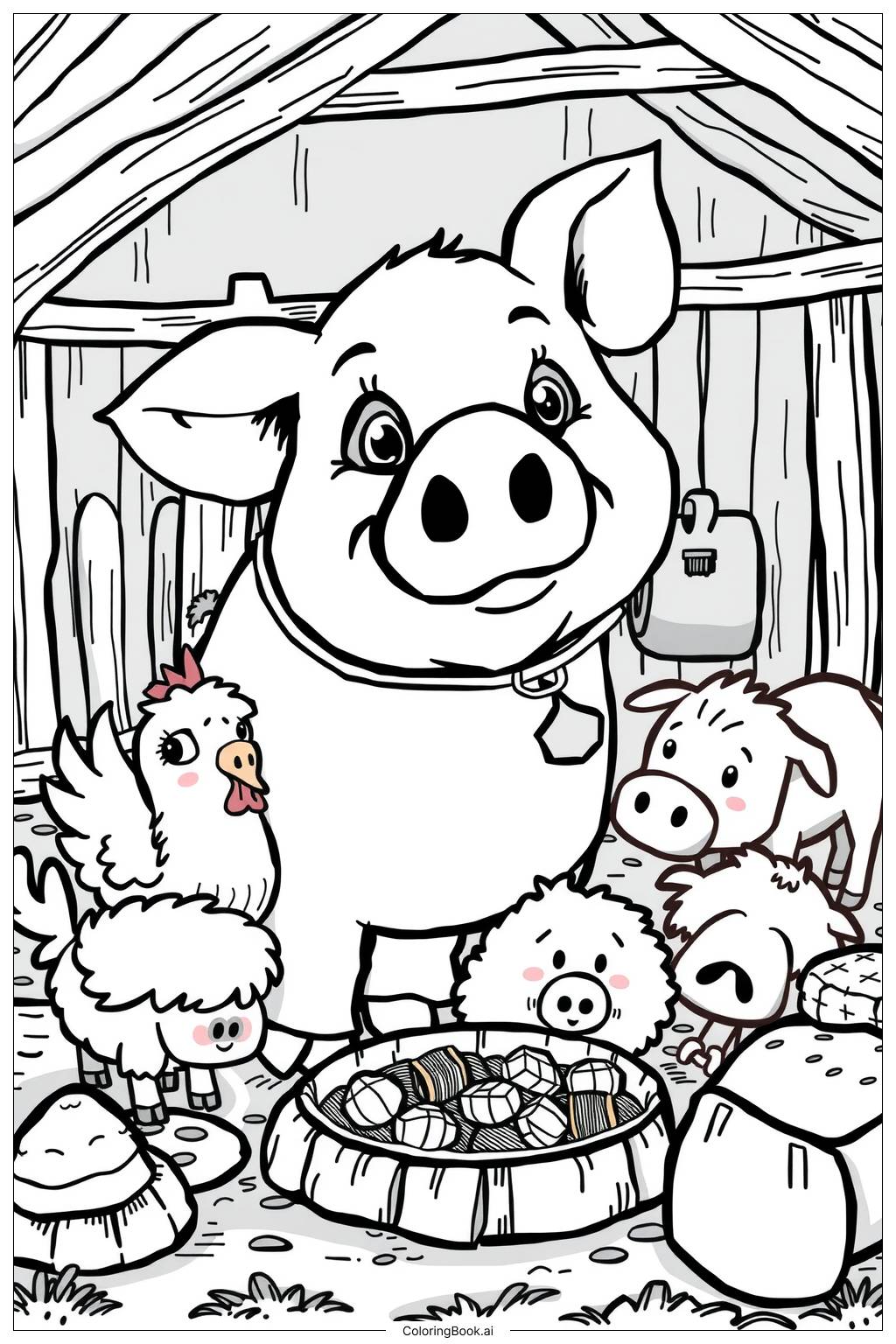
To bring this scene to life, use soft pinks or light browns for the pig’s body to highlight its friendly character. The barn can be colored red or orange, with white details for the door and windows to create contrast. Use shades of green for the grassy field to evoke freshness, varying tones to add depth. The cow can be black and white, and the sheep fluffy white or cream with a light gray outline. The chicken can be colored yellow or orange to stand out. For the sky, pale blue with white clouds works well. Encourage creativity with bright or pastel colors, making sure to color within the lines to practice fine motor skills.
Coloring challenges: Which parts are difficult to color and need attention for Pig on a Farm with Barn Animals -2 coloring page?
• Small Details: The pig’s eyes, nostrils, and curly tail have small features that require careful coloring for neatness. • Multiple Animals: Balancing colors between different barn animals can be tricky to avoid making the picture look crowded or too busy. • Background Elements: The barn’s roof, silo, and fence lines have precise shapes that need steady handwork to prevent color overflow. • Shading and Texture: Creating natural shading on the animals’ bodies and drawing fluffy texture on the sheep demands attention for a realistic look. • Color Consistency: Maintaining the same shade of green across the farm field without patchiness can be a challenge, especially for younger children exploring blending techniques.
Benefits of coloring books: Advantages of drawing Pig on a Farm with Barn Animals -2 coloring page
Coloring this farm scene helps improve hand-eye coordination and fine motor skills as kids carefully color within small outlines. It encourages creativity by allowing children to choose colors and understand natural farm animal appearances. Focusing on different textures, like the pig’s smooth skin versus the sheep’s wool, supports sensory development. This activity also promotes concentration and patience, especially when working on detailed areas like the barn and animals. Lastly, coloring familiar farm animals fosters curiosity and learning about animals and rural life, making it both fun and educational.