Coloring tips: How to color Peppa Pig Exploring a Dinosaur World coloring page well?
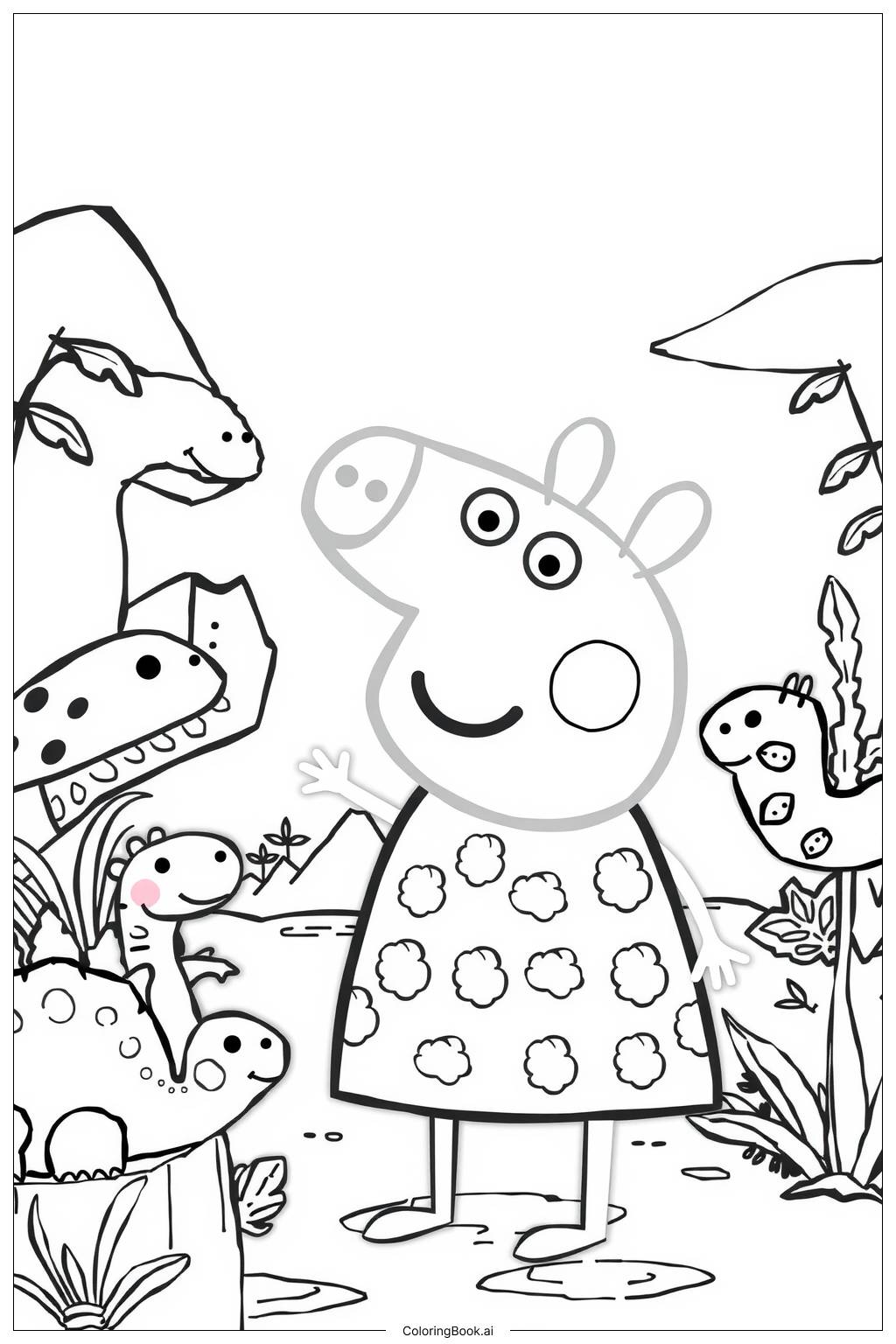
Start with Peppa Pig herself. Use her classic pink color for her body and face. Her dress can be red or orange, and her boots can be dark brown or black. Give her rosy cheeks with a light pink or peach blush.
For the dinosaurs, let your imagination run wild. You can use realistic greens and browns, or go bold with blues, purples, and yellows. Try using darker shades on the belly and lighter shades on the back to add depth.
Color the plants in bright shades of green. Use different tones — light green for leaves, dark green for ferns, and olive green for the ground. The rocks can be gray or sandy brown.
For the sky, try a warm orange or golden yellow to suggest a prehistoric sunset. The volcanoes can be dark gray with glowing red and orange tips. This palette will make the whole scene feel exciting and alive.
Coloring challenges: Which parts are difficult to color and need attention for Peppa Pig Exploring a Dinosaur World coloring page?
• Peppa's Details: Peppa Pig has a simple but iconic design. Getting her pink tones just right is important. If the pink is too dark or too light, she may not look like herself. Her small features, like her eyes and snout, are tiny and need a steady hand to color neatly without going outside the lines.
• Dinosaur Textures: The dinosaurs in the scene have rough, bumpy skin with spines and scales. Coloring these textures realistically requires layering — using light and dark shades of the same color to create depth and dimension. For young colorists, blending two colors smoothly in such small areas can be tricky.
• Background Complexity: The prehistoric landscape is filled with overlapping plants, rocks, trees, and volcanic mountains. Each element sits close to others, making it easy to accidentally color one object with the wrong shade. Keeping track of which area belongs to which element takes patience and focus.
• Plant and Foliage Variety: There are many types of plants in the scene, from giant ferns to ancient trees. Using enough color variety to distinguish each plant without making the background look messy is a real challenge, especially for younger children who are still developing color sense.
• Overall Color Harmony: With so many characters, creatures, and background elements, balancing the colors so that the whole image looks unified and not too chaotic is perhaps the biggest challenge. Planning your color choices before starting can help a lot.
Benefits of coloring books: Advantages of drawing Peppa Pig Exploring a Dinosaur World coloring page
Coloring this Peppa Pig and dinosaur scene brings a wide range of wonderful benefits for children.
First, it sparks creativity and imagination. The prehistoric world is a fantasy setting that encourages kids to think freely and invent their own color stories.
Second, it builds focus and patience. With so many details — dinosaurs, plants, rocks, and Peppa herself — children learn to slow down, pay attention, and work carefully on each section.
Third, it develops fine motor skills. Staying within the lines and handling different coloring tools helps strengthen hand muscles and improve coordination, which supports writing development in school.
Fourth, it introduces color theory in a fun way. Children experiment with mixing shades, creating contrast, and choosing harmonious palettes without even realizing they are learning.
Fifth, it connects learning and play. Dinosaurs naturally inspire curiosity about science and natural history. While coloring, kids may start asking questions about real dinosaurs, opening the door to discovery.
Finally, it offers emotional calm. Coloring is a relaxing activity that helps children manage stress and feel a sense of accomplishment when they finish a page. Sharing their colorful creation with family adds joy and builds confidence.