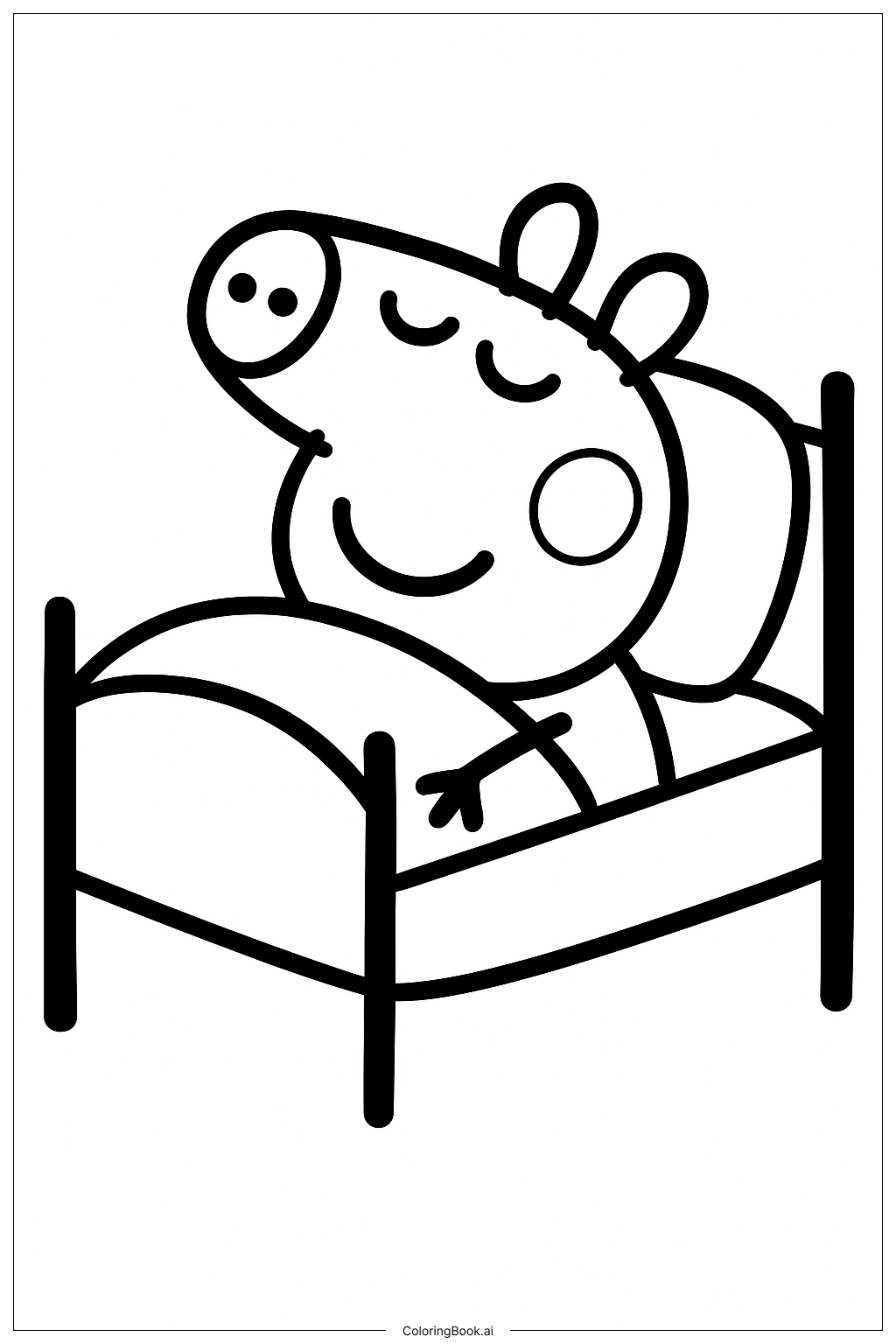
Coloring tips: How to color Peppa Pig Sleeping Bed coloring page well?
Start with Peppa's skin using a soft pink shade — this is her most recognizable color. Use a slightly darker pink for the outlines on her face and ears to add gentle contrast. For her pajamas, try light pastel colors like lavender, baby blue, or mint green to keep the bedtime mood soft and relaxing. The blanket and pillow can be colored in warm tones like cream, pale yellow, or light peach. The bedside table looks great in light brown or tan. If there are stars or moons in the background, use soft gold or pale silver. Keep the overall color palette light and gentle — this is a sleepy, peaceful scene, so bright and bold colors are best avoided. Younger kids can use crayons or colored pencils and focus on staying inside the lines. Older kids might enjoy adding shading or patterns to the blanket for a more detailed look.
Coloring challenges: Which parts are difficult to color and need attention for Peppa Pig Sleeping Bed coloring page?
• Peppa's Rounded Face and Body: Peppa Pig has a very distinctive circular face and simple round body shape. Staying neatly within these curved outlines can be tricky, especially for younger children who are still building their fine motor control. Take your time following the curves slowly and carefully.
• Pajama Fabric Details: The pajamas may include small patterns like stripes, polka dots, or tiny prints. Coloring these small repeated shapes requires patience and a well-sharpened pencil or thin marker. Rushing through these areas can result in colors bleeding into each other or going outside the lines.
• Blanket Folds and Texture: The blanket draped over Peppa likely has soft folds and wrinkles drawn into it. Giving these folds a sense of depth means using slightly different shades of the same color — lighter in raised areas and darker in the creases. This kind of shading can be challenging for beginners but very rewarding when done well.
• Small Bedroom Props: Items like the bedside table, lamp, or any small objects near the bed have fine edges and compact shapes. These tight spaces require careful coloring with the tip of a colored pencil or a fine-tipped marker to avoid accidentally coloring outside the intended area.
• Background Balance: The bedroom background, including walls, floor, or decorative elements like stars and moons, needs to be colored in a way that does not overpower Peppa in the foreground. Choosing colors that are lighter or more muted for the background helps keep the focus on the main character.
Benefits of coloring books: Advantages of drawing Peppa Pig Sleeping Bed coloring page
Coloring this Peppa Pig Sleeping Bed page offers a wonderful range of benefits for children of all ages. First, it helps young children develop fine motor skills as they practice gripping their coloring tools and carefully staying within the lines of Peppa's curved shapes and small details. This kind of hand-eye coordination practice is valuable for everyday tasks like writing and drawing.
Second, the calm, bedtime theme of the image naturally encourages a sense of relaxation and focus. Coloring can be a soothing activity, especially when the subject matter is as peaceful and familiar as a beloved character going to sleep. It can even be used as part of a calming bedtime routine for young fans of the show.
Third, choosing colors for Peppa's pajamas, blanket, and bedroom setting sparks creativity and imagination. Children get to make their own color choices and express their personal sense of style in a safe, fun way.
Fourth, completing the page gives children a sense of accomplishment and pride. Seeing their finished artwork encourages confidence and a positive attitude toward creative activities.
Finally, for fans of Peppa Pig, this coloring page deepens their connection to a character they love, making the activity both emotionally engaging and enjoyable. It is a simple, screen-free way to have fun.