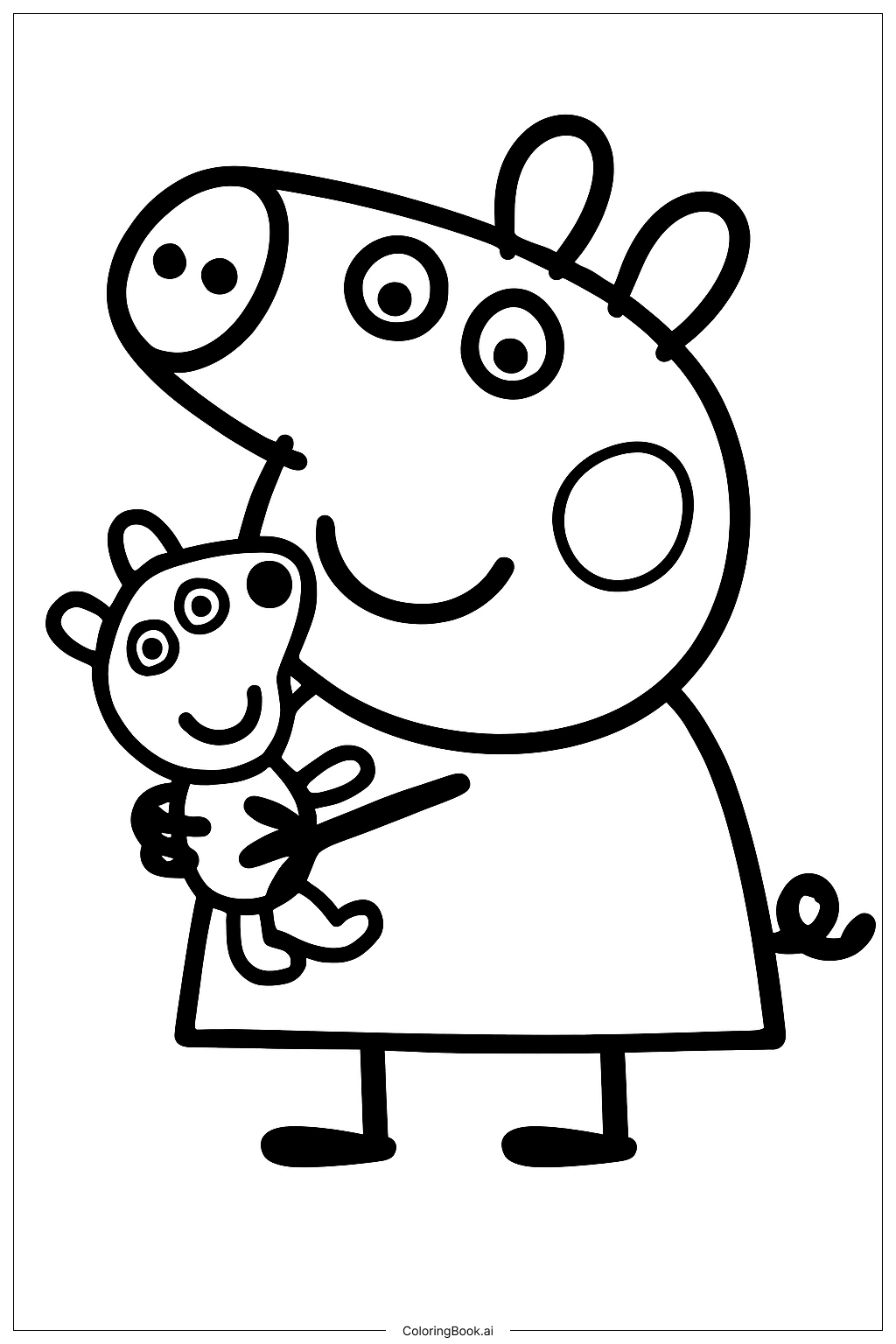
Coloring tips: How to color Peppa Pig Holding Teddy Bear coloring page well?
Start with Peppa's skin using a soft pink shade — a light rose or bubblegum pink works perfectly. Use a slightly darker pink for shading around her snout and ears to give her a little depth. Her dress is traditionally red, but feel free to try purple, blue, or any color your child loves. Color her shoes in a darker tone like brown or black to make them stand out. For the teddy bear, warm shades of tan, caramel, or golden brown look great. Add a darker brown for the bear's ears and paw pads to create contrast. The bear's button eyes can be black or dark brown. Keep the background simple — a soft yellow, light blue, or pastel color will make Peppa and her teddy bear pop off the page without overwhelming the main characters. Use crayons, colored pencils, or markers based on your comfort level.
Coloring challenges: Which parts are difficult to color and need attention for Peppa Pig Holding Teddy Bear coloring page?
Coloring this image looks simple at first, but a few areas need a little extra care. Here are the main challenges to watch out for:
• Peppa's Skin Tone Consistency: Peppa's body, face, ears, and snout all need the same base pink color. Because there are several separate outlined sections, it can be tricky to keep the pink even and consistent across all parts without accidentally using slightly different shades in each area.
• Small Facial Features: Peppa's eyes, nostrils, and smile are very small details packed into a compact face. Coloring these neatly without going outside the lines requires a sharpened pencil or a fine-tipped marker. A slip of the hand here can easily change her expression.
• Teddy Bear Shading and Texture: The teddy bear is a soft, fluffy toy, and capturing that cozy look means using at least two shades of brown — one lighter base and one darker shade for the ears, paws, and shadows. Getting that gradient to look smooth and natural takes patience, especially for younger colorists.
• Dress and Shoe Boundaries: Peppa's dress sits right next to her body, and the outline separating them can be thin. Carefully staying within the dress boundary while using a bold color like red requires steady hands and attention, so the color does not bleed into her skin tone.
• Overall Color Balance: With two characters in one scene, it is important that Peppa and the teddy bear complement each other rather than clash. Choosing colors that work well together — like pink and tan — will make the final result look polished and visually pleasing.
Benefits of coloring books: Advantages of drawing Peppa Pig Holding Teddy Bear coloring page
Coloring this Peppa Pig Holding Teddy Bear page offers a wonderful range of benefits for children and even older colorists. First, it helps young children develop fine motor skills. Carefully coloring within the bold outlines trains hand-eye coordination and builds the muscle control needed for writing. Second, it encourages creative thinking. Children get to choose their own color combinations for Peppa's dress, the teddy bear, and the background, giving them a fun sense of ownership and self-expression. Third, it supports emotional development. Peppa hugging her teddy bear is a warm, nurturing image that can help children connect with themes of comfort, love, and friendship in a gentle way. Fourth, coloring is a calming activity. It helps children focus, slow down, and find a peaceful moment in their day — great for winding down before bedtime or quiet time. Fifth, completing the page gives children a real sense of accomplishment. Seeing their finished, colorful artwork builds confidence and pride. For fans of the Peppa Pig show, this page also deepens their connection to a character they already love, making the experience even more engaging and enjoyable.