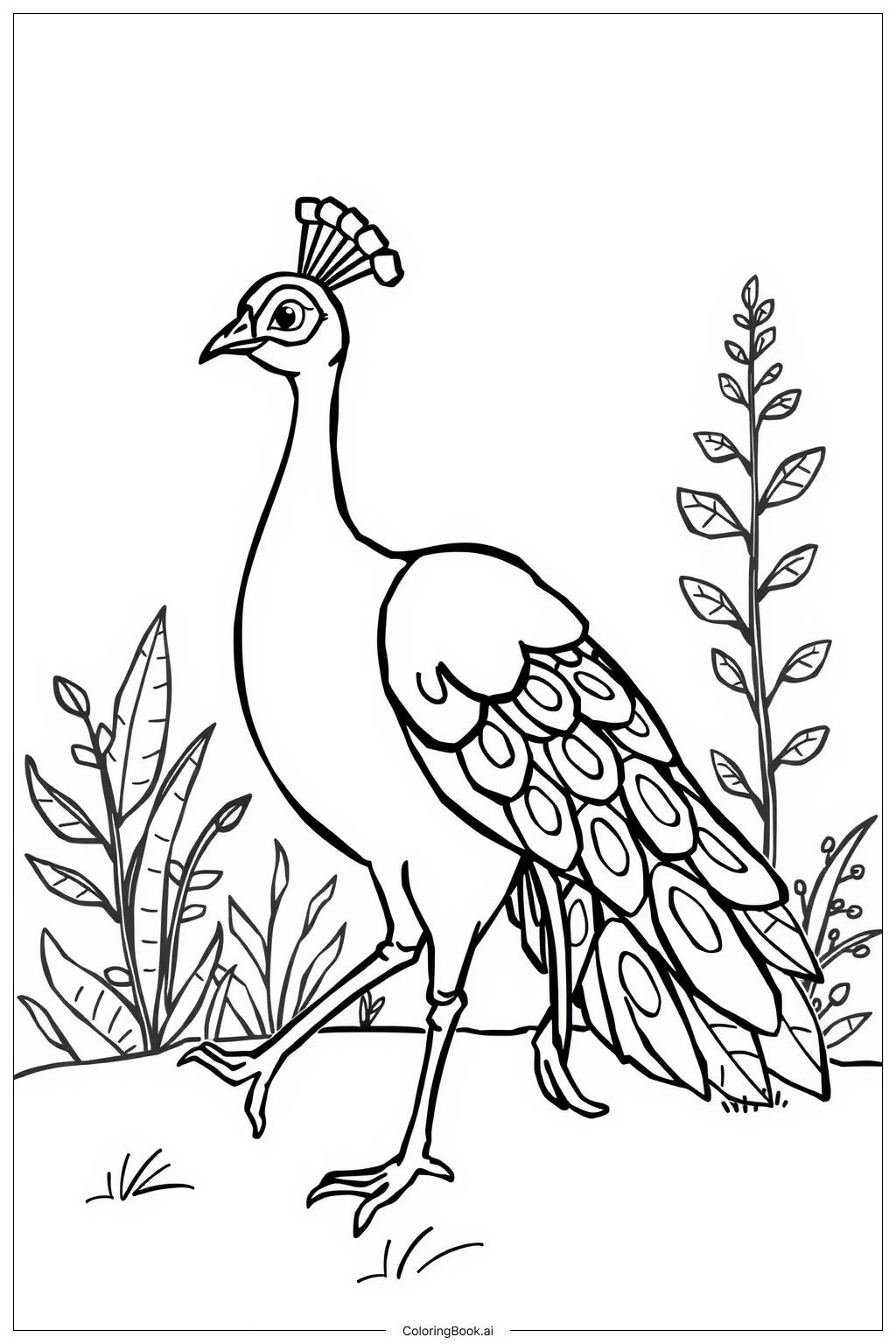
Coloring tips: How to color Peacock Walking Gracefully coloring page well?
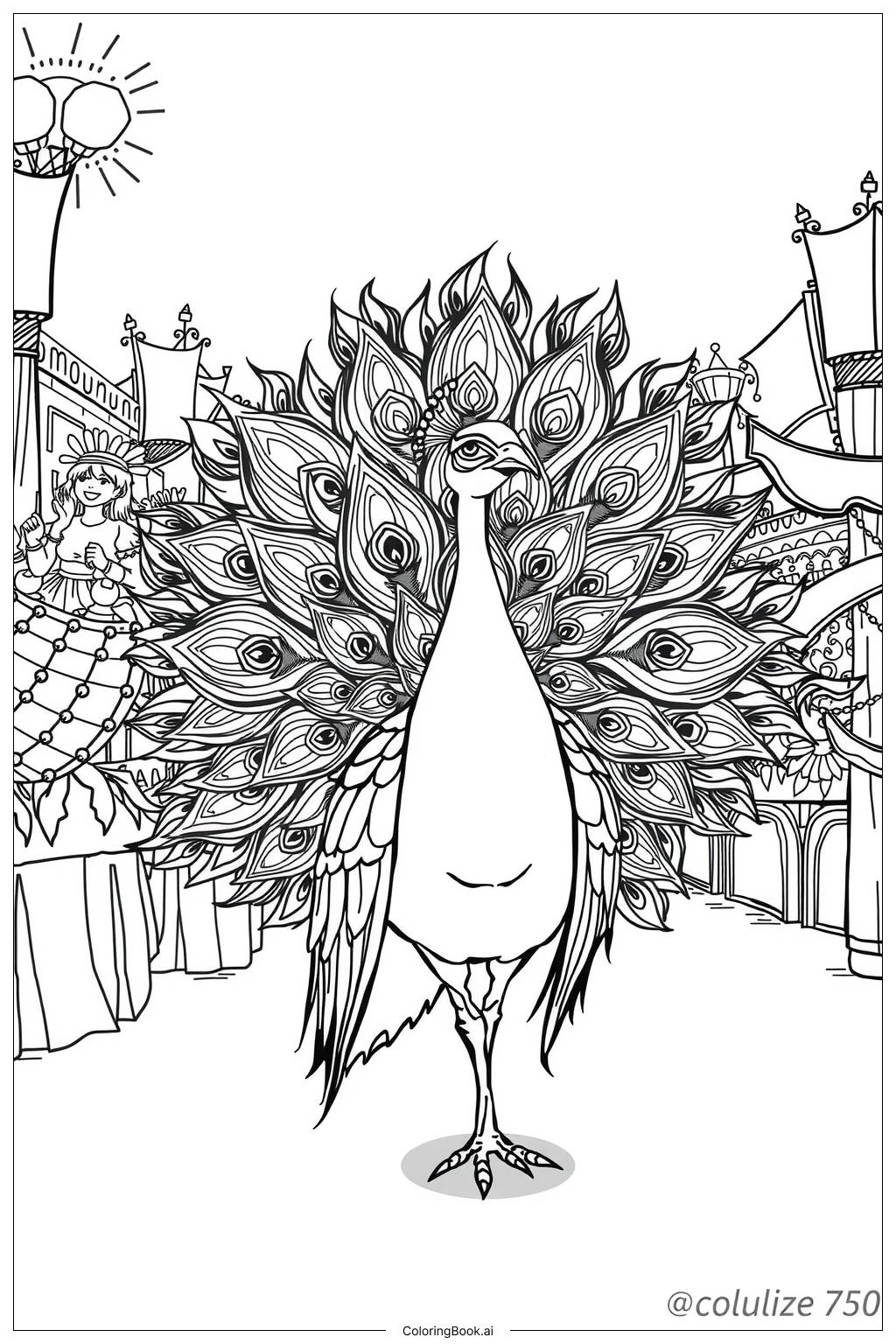
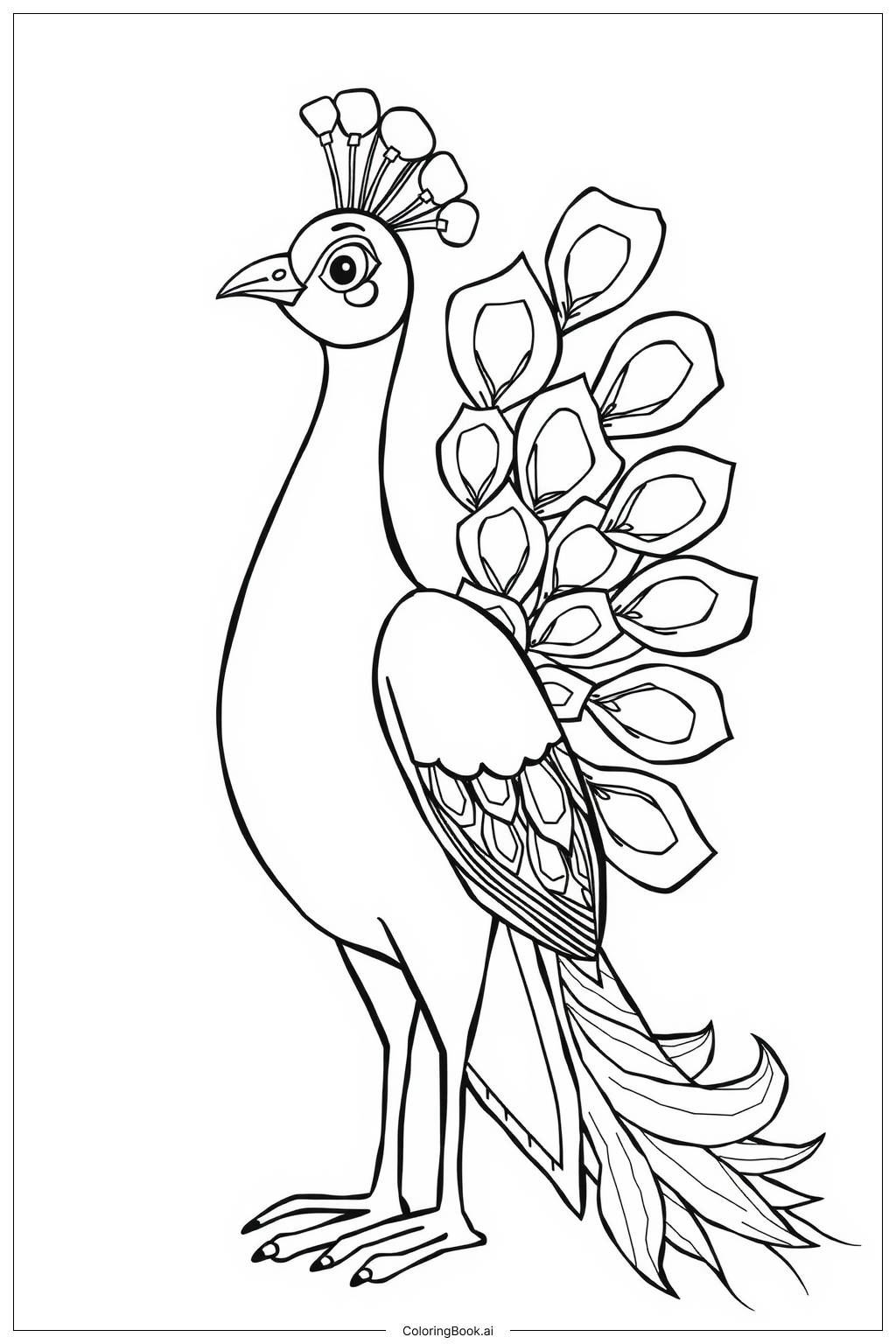
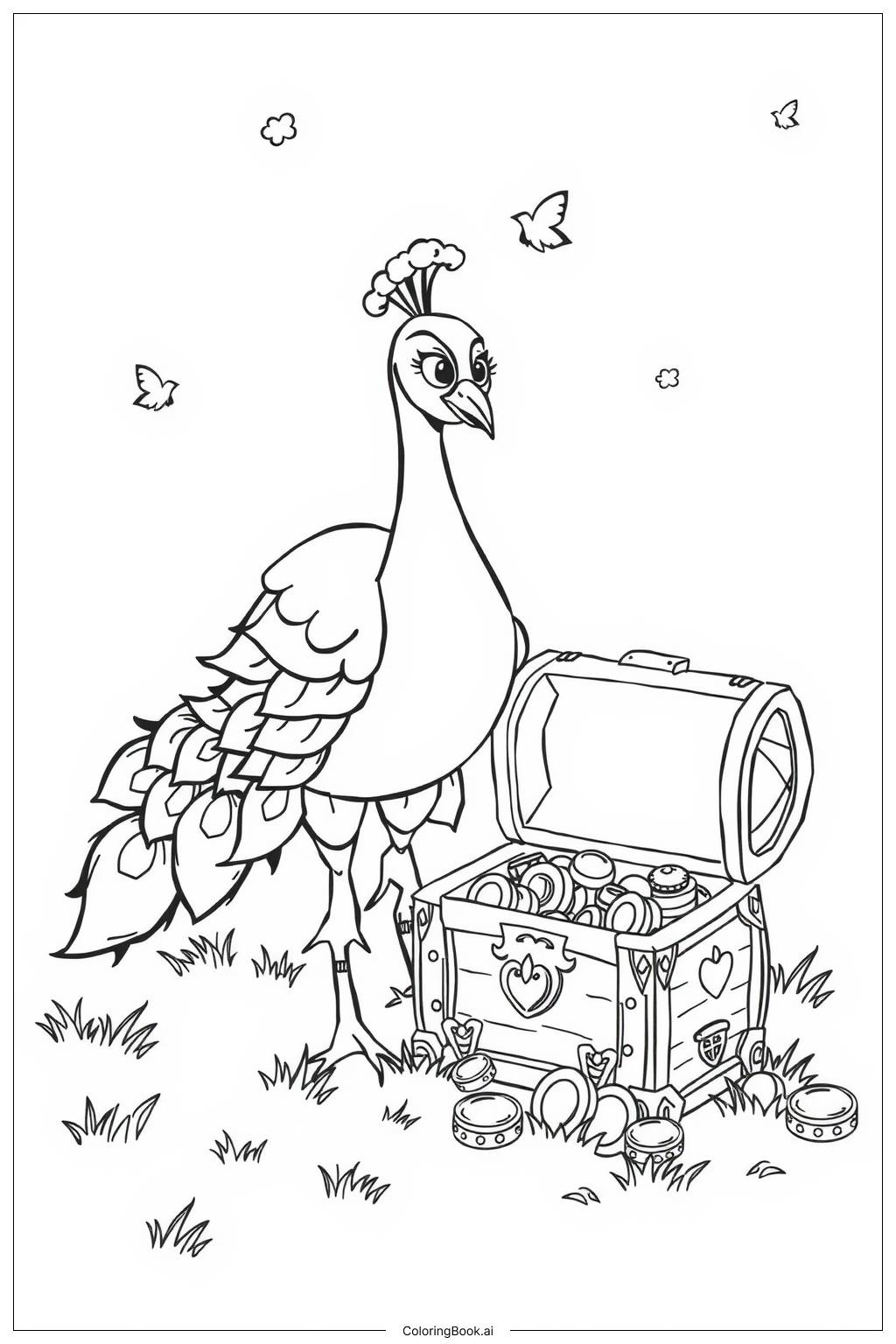
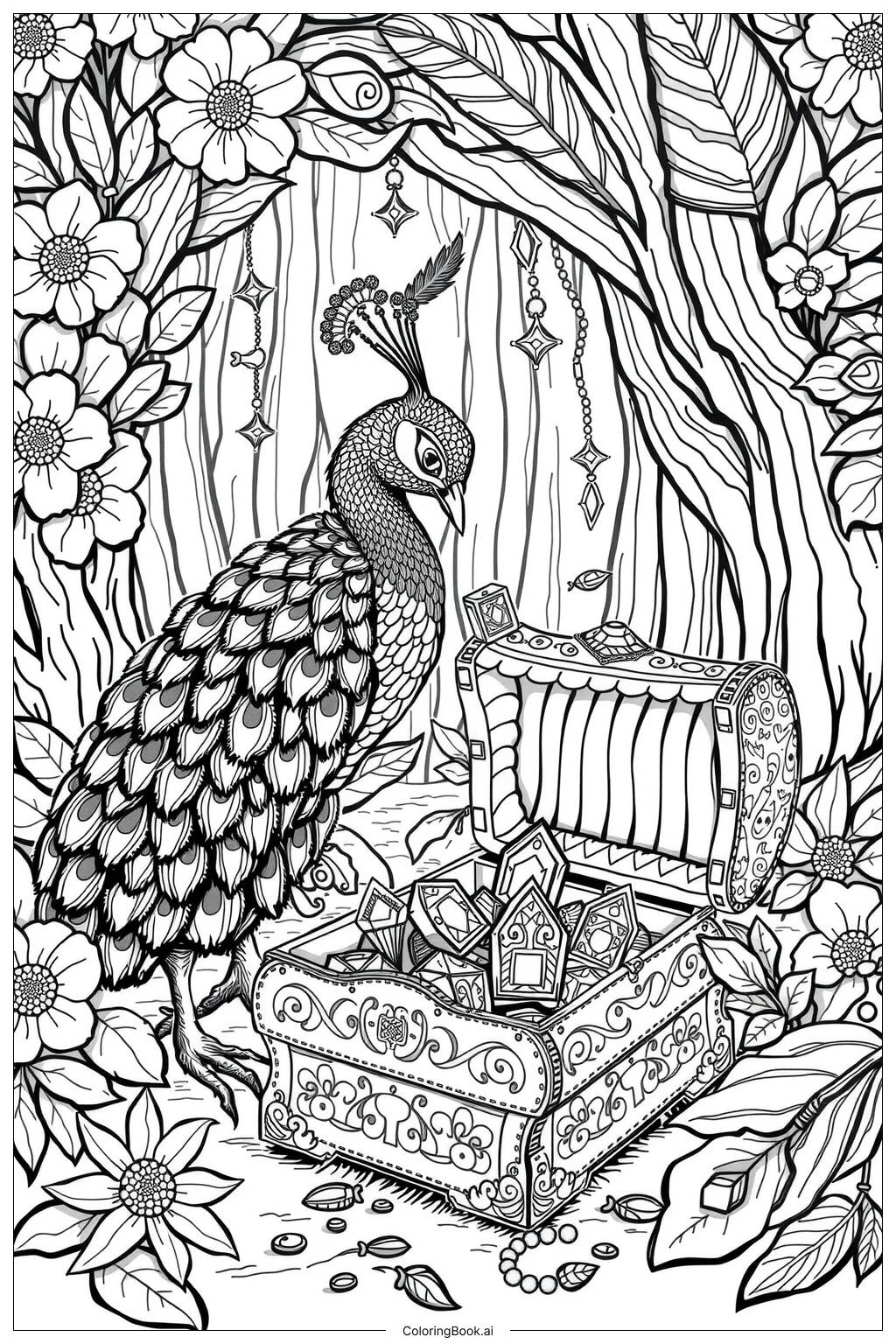
Start with the peacock's body. Use deep blue or teal for the neck and chest area. The belly and lower feathers can be a lighter blue-green. For the tail feathers, use long sweeping strokes of green and gold. The eye spots on each feather are the star of the image — try a dark circle in the center, surrounded by rings of blue, green, and bronze. Use brown or tan for the legs and feet. The small crest feathers on the head can be tipped with bright teal or yellow. Take your time on the tail. It has many feathers, so coloring one at a time helps keep things neat. You can make every eye spot the same color or mix them up for a fun, creative look. There is no wrong choice — peacocks are naturally full of color!
Coloring challenges: Which parts are difficult to color and need attention for Peacock Walking Gracefully coloring page?
• Tail Feather Eye Spots: The eye-shaped markings on each tail feather are the most complex part of this image. Each spot has multiple rings layered inside one another, requiring careful control to stay within each tiny section. Rushing through these details may cause colors to bleed into neighboring areas, so patience and a fine-tipped colored pencil or marker works best here.
• Overlapping Feather Layers: The tail feathers fan out and overlap in many places. It can be hard to tell where one feather ends and another begins. Look closely at the outlines before you start coloring. Choosing slightly different shades for neighboring feathers will help each one stand out clearly.
• Body and Feather Transition: The peacock's body connects to the long tail feathers at a curved junction. Blending the body color smoothly into the tail without creating a harsh line takes some practice. Gradual color transitions using light pressure will give this area a natural, flowing look.
• Small Head Crest Details: The tiny crest feathers on top of the peacock's head are very small and closely spaced. Coloring inside these fine lines requires a sharp pencil tip and slow, steady strokes. Using a lighter color first can help you build up the shade without going outside the lines.
• Leg and Foot Texture: The peacock's legs have a scaly texture with small segments. These narrow sections are easy to overlook, but adding subtle shading here adds a realistic touch and makes the whole image feel more complete.
Benefits of coloring books: Advantages of drawing Peacock Walking Gracefully coloring page
Coloring this peacock image is a wonderful activity for kids and anyone who loves nature and art. Here are some great reasons to pick up your colors and get started.
It builds focus and patience. The detailed tail feathers and tiny eye spots ask you to slow down and pay attention. This helps children practice sitting still and concentrating on one task at a time.
It sparks creativity. Peacocks are naturally colorful birds, so there are endless color combinations to try. Kids can follow realistic colors or invent their own rainbow peacock. Both choices are equally exciting.
It improves fine motor skills. Coloring inside the small sections of the feathers and crest strengthens hand muscles and sharpens pencil control. These skills directly support handwriting and other everyday tasks.
It teaches about nature. While coloring, children can learn that peacocks are real birds known for their spectacular feathers. This image can inspire curiosity about animals and the natural world.
It is relaxing and joyful. The flowing shapes of the feathers and the rhythmic motion of coloring help calm the mind. Finishing the page gives a real sense of pride and accomplishment. This is a perfect page for a quiet afternoon of creative fun!