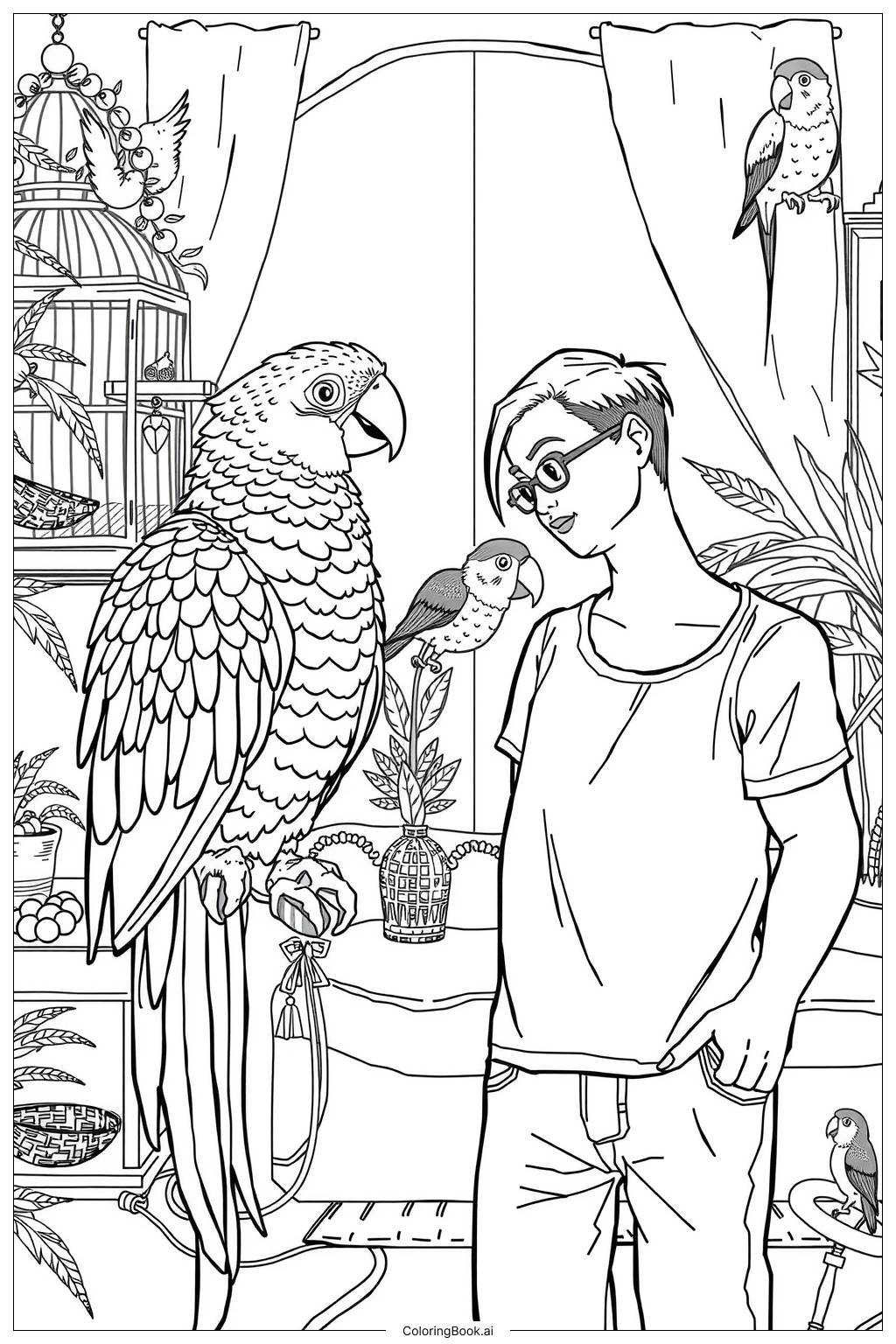
Coloring tips: How to color Parrot Talking to Its Owner coloring page well?
Start with the parrot's feathers first. Use bright, bold colors like red, green, blue, and yellow to bring the bird to life. Many parrots have multiple colors, so feel free to mix and match. Try layering light colors first, then add darker shades on top to create depth. For the feather tips, use a slightly darker version of the main color to make them pop. Next, move on to the owner. Choose warm, natural tones for the skin and pick fun colors for the clothing. For hair, use browns, blacks, or even creative colors if you want a playful look. Use a fine-tipped tool for the small details like the eyes and beak. For the background, soft colors like light blue or pale yellow work well to keep the focus on the parrot and its owner. Have fun and enjoy the process!
Coloring challenges: Which parts are difficult to color and need attention for Parrot Talking to Its Owner coloring page?
• Feather Details: The parrot's feathers are covered in many small, layered lines and overlapping shapes. Staying within each feather section without smudging nearby areas takes steady hands and careful control. Young colorists may find it tricky to switch colors between feathers without the colors bleeding into each other.
• Color Transitions on the Parrot: Parrots in real life have beautiful gradients moving from one color to another. Recreating this natural blending effect using crayons or colored pencils can be challenging. Achieving smooth transitions without creating harsh edges requires patience and light, layered strokes.
• Human Figure Details: The owner's face, hair, and clothing all have their own fine lines and small features. Keeping each section neat and choosing realistic skin tones, hair colors, and fabric shades all at once can feel overwhelming, especially for younger colorists who prefer simpler images.
• Small Facial Features: Both the parrot's face and the owner's face include tiny details like eyes, beaks, and expressions. These small areas are hard to color precisely without going outside the lines. Using a sharp pencil tip or a fine-tipped marker is strongly recommended for these sections.
• Background Elements: If the image includes a background with perches, indoor furniture, or other setting details, filling in these areas evenly without disturbing the main figures requires patience. Leaving the background lightly colored or white can help the parrot and owner stand out clearly.
Benefits of coloring books: Advantages of drawing Parrot Talking to Its Owner coloring page
Coloring this parrot scene offers wonderful benefits for kids and adults alike. It helps children learn about birds and the special bond between pets and their owners. Focusing on the details of the parrot's feathers and the person's expression builds concentration and patience. Choosing colors for the feathers encourages creativity and helps children explore color combinations. The fine lines in the feathers are great for practicing steady hand movements, which improves fine motor skills. Coloring the friendly interaction between the parrot and its owner sparks imagination and storytelling. Kids may start imagining what the parrot is saying, which supports language development and creative thinking. Overall, this page makes coloring a fun, educational, and emotionally engaging experience.