Coloring tips: How to color Parrot Sitting on a Branch coloring page well?
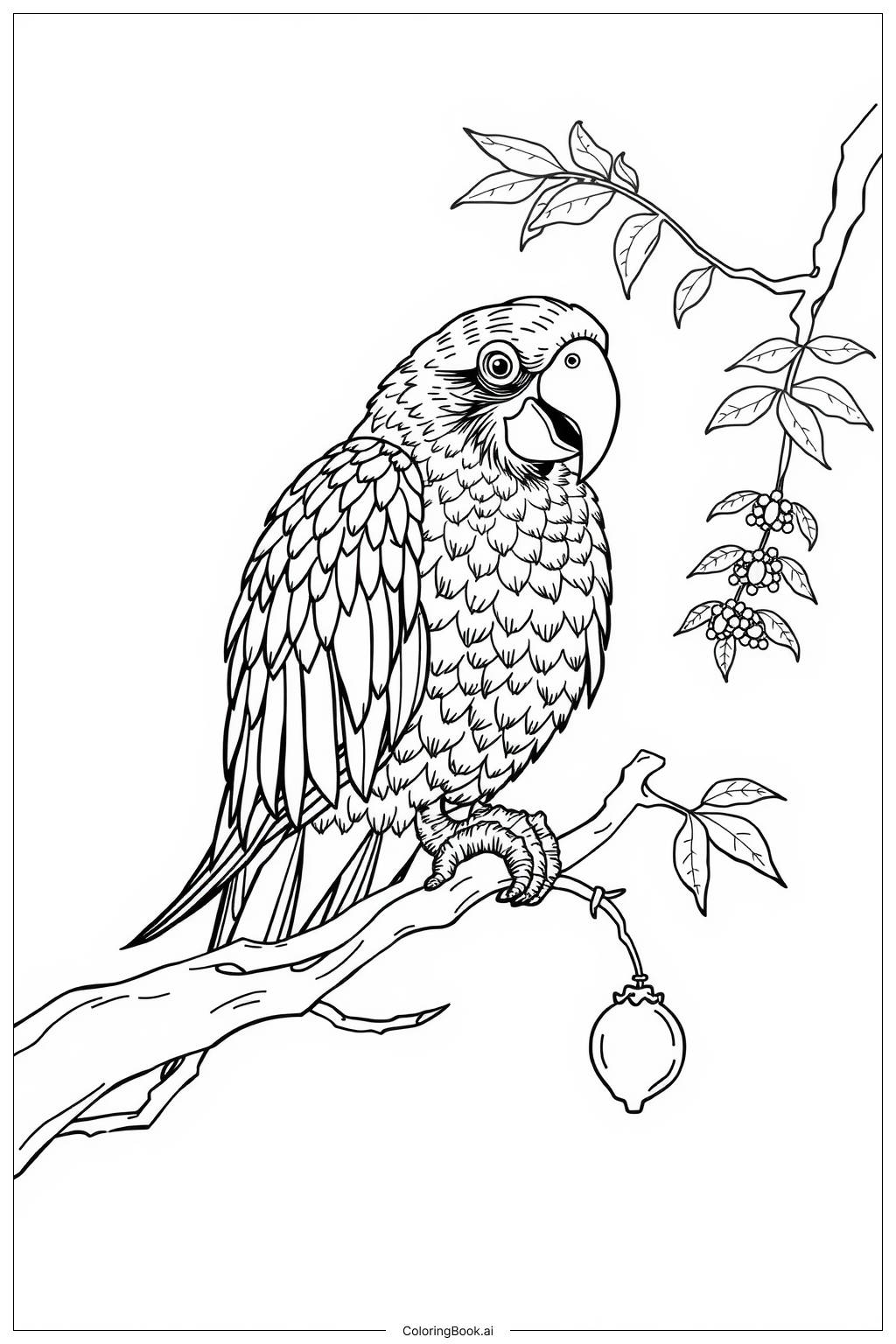
Start with the parrot's head using bright yellows or greens, which are common parrot colors. For the wings and body, consider using vibrant tropical shades like emerald green, turquoise blue, or sunny yellow. Many parrots have multicolored plumage, so feel free to mix reds, oranges, and blues throughout the feathers. Color the beak in shades of gray, black, or ivory. Use brown and tan tones for the branch, adding darker browns in the crevices to create depth and texture. The leaves can be colored in various shades of green, from lime to forest green. Consider adding shadows under the parrot's feet and body using darker versions of your chosen colors. For a more realistic look, layer similar colors together, or try a rainbow parrot design for a creative twist. The eye can be colored black with a small white highlight to make it sparkle.
Coloring challenges: Which parts are difficult to color and need attention for Parrot Sitting on a Branch coloring page?
• Feather Detail Work: The parrot's plumage contains numerous individual feathers that require careful attention to detail. Each feather has its own outline and internal patterns, making it challenging to stay within the lines, especially in the wing and tail areas where feathers overlap. Younger children may find the small spaces between feathers difficult to navigate without bleeding colors together, while this level of detail provides a satisfying challenge for older children and adults.
• Color Planning and Blending: Deciding on a cohesive color scheme for the parrot requires planning, especially if attempting to create realistic parrot coloring or smooth color transitions. Parrots often display multiple colors that need to blend naturally from one section to another. Creating smooth gradients between different colored feather sections, such as transitioning from green body feathers to blue wing feathers, requires patience and technique that may challenge intermediate colorists.
• Branch Texture and Dimension: The wooden branch features bark texture details and natural wood grain patterns that need different shading techniques to appear three-dimensional. Creating realistic wood texture requires layering browns and tans while leaving some areas lighter to suggest highlights. The curved surface of the branch needs darker shading on the underside and lighter tones on top to create proper depth.
• Small Detail Areas: The parrot's feet, claws, beak details, and eye require precision coloring in very small spaces. These tiny areas are particularly challenging for younger children or those using thick coloring tools like markers. The individual toes gripping the branch need careful color application to maintain definition and prevent the details from becoming muddy or unclear.
Benefits of coloring books: Advantages of drawing Parrot Sitting on a Branch coloring page
Coloring this parrot design offers wonderful educational benefits, helping children learn about tropical birds and their vibrant natural colors. The detailed feather patterns provide excellent practice for fine motor skill development and hand-eye coordination, especially important for younger children. Working on the intricate details requires focus and concentration, which helps improve attention span and patience. The variety of textures, from soft feathers to rough bark, encourages experimentation with different coloring techniques and tools. This page offers opportunities to practice color theory by mixing and matching complementary colors to create a beautiful, harmonious image. Completing such a detailed project builds confidence and provides a strong sense of accomplishment. The nature theme can spark curiosity about parrots, their habitats, and biodiversity, making it both a creative and educational activity. For adults, this coloring page serves as an excellent stress-relief activity and mindfulness exercise.