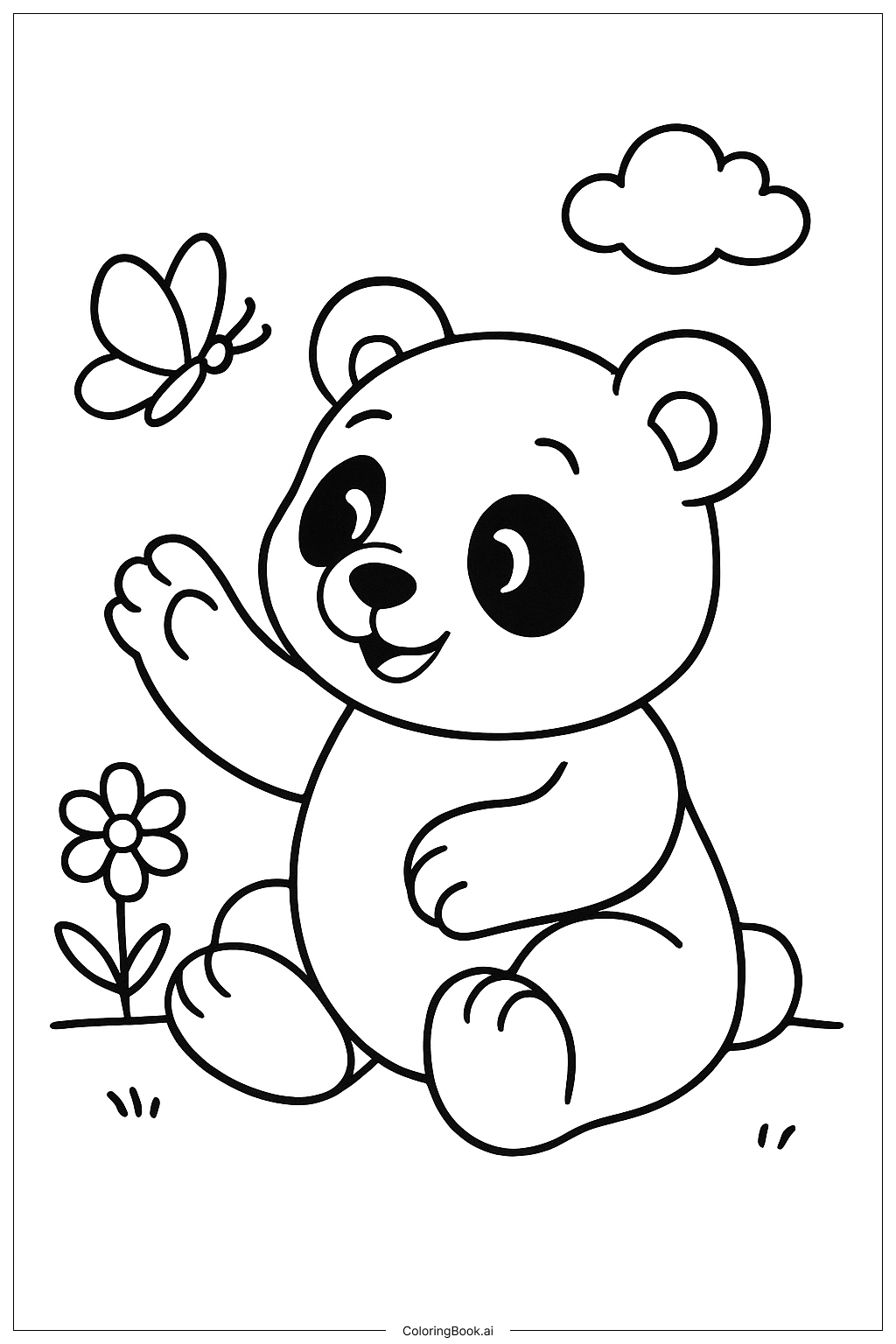
Coloring tips: How to color Panda Bear Playing With Butterfly coloring page well?
For this image, start by coloring the Panda Bear with soft black patches around its eyes, ears, and limbs, and use white or very light gray for the rest of its fur. Use shades of green for the bamboo stalks and leaves, mixing light and dark greens to add depth. The butterfly’s wings can be bright and colorful—try blues, yellows, or oranges to make it stand out against the natural background. Use gentle color transitions on the Panda’s fur to keep its softness. The ground can be a mix of browns and greens to reflect grass and dirt. You can also add light blue or soft sky colors in any small background gaps for a fresh outdoor feel.
Coloring challenges: Which parts are difficult to color and need attention for Panda Bear Playing With Butterfly coloring page?
• Contrast of Fur Textures: The Panda Bear has areas of solid black and white fur that require careful coloring to maintain the contrast without making it look too flat. Blending the edges of black patches smoothly can be challenging.
• Small Details on Butterfly: The butterfly’s wings have fine patterns and curves that need patience and precision to color neatly. Staying within the lines of these tiny shapes can be tricky.
• Bamboo Leaves Layering: The bamboo plants overlap in many places. Coloring each leaf distinctly without making colors merge helps keep the image clear but demands careful shading.
• Maintaining Softness: The overall mood is gentle and tender, so harsh or overly bright colors might disrupt this feeling. Using subtle gradient shading rather than solid blocks is necessary.
• Facial Expression Accuracy: The Panda’s joyful expression depends on the careful coloring of its eyes and nose areas. Over-coloring might reduce the sense of happiness and innocence.
Benefits of coloring books: Advantages of drawing Panda Bear Playing With Butterfly coloring page
Coloring this image helps develop fine motor skills, especially when working on the small butterfly details and the contrasting fur patches. It encourages creativity by blending natural greens and choosing bright colors for the butterfly, fostering color expression and experimentation. This scene also promotes concentration and patience as colorists carefully balance soft shades and sharper edges, refining their control. Finally, coloring a joyful animal interacting with nature can be calming and uplifting, helping children and Adults connect with wildlife and practice mindfulness.