Coloring tips: How to color Panda Bear Gardening coloring page well?
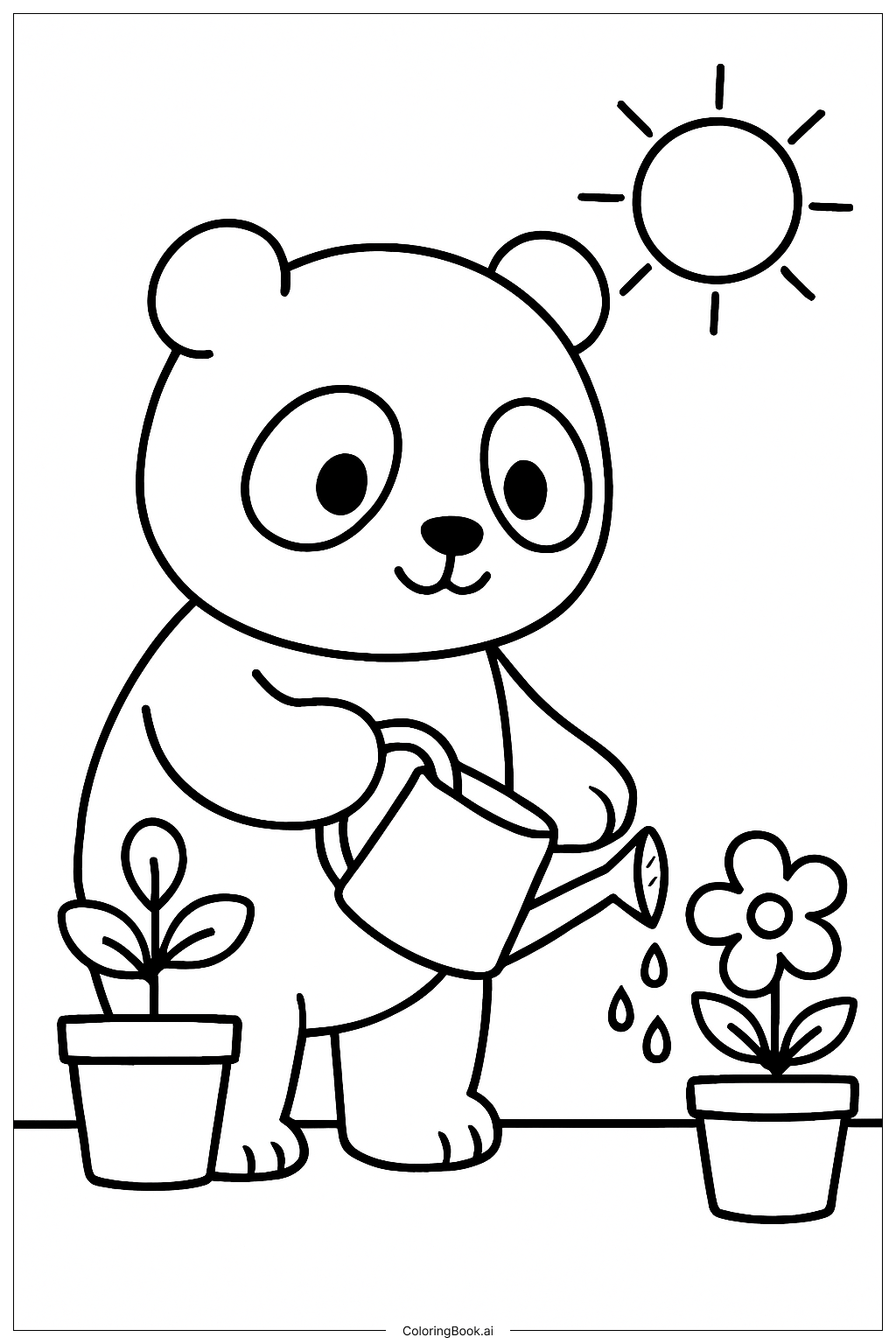
For the panda, consider using traditional black and white colors. You can add different shades of green for the leaves of the plants. For the flower, try bright colors like red, yellow, or pink to make it stand out. The sun can be painted bright yellow or orange, creating a lively atmosphere. You can use light blue or green for the background to depict the sky or grass, making the panda the star of the page. Get creative with your color choices!
Coloring challenges: Which parts are difficult to color and need attention for Panda Bear Gardening coloring page?
1. **Coloring the Panda**: The panda has distinct black and white areas. Ensuring clean lines between these colors can be tricky. Take your time to stay within the lines.
2. **Adding Details**: The plants have intricate leaves and petals. Coloring these details can be challenging as they require careful attention to avoid color bleeding.
3. **Balancing Colors**: Choosing the right shades for the plants and the panda can be difficult. Making sure the colors work well together is important for an appealing final look.
4. **Sunshine Effects**: Painting the sun can be challenging because you might want to blend colors for a glowing effect. Using gradients can be tricky for younger kids.
5. **Avoiding Smudging**: Working with various colors can lead to smudging. It's vital to be careful and let colors dry before touching other parts of the page.
Benefits of coloring books: Advantages of drawing Panda Bear Gardening coloring page
Coloring this page offers several benefits. It helps improve fine motor skills as children learn to hold crayons or colored pencils precisely. It also encourages creativity, allowing kids to explore color combinations and patterns. Coloring can be a relaxing activity, providing a break from screen time. It helps enhance focus and concentration, as children need to pay attention to their work. Additionally, coloring can boost self-esteem as kids take pride in their completed artwork. Ultimately, it’s a fun way to learn about nature and gardening!