Coloring tips: How to color Smiling Orca Face coloring page well?
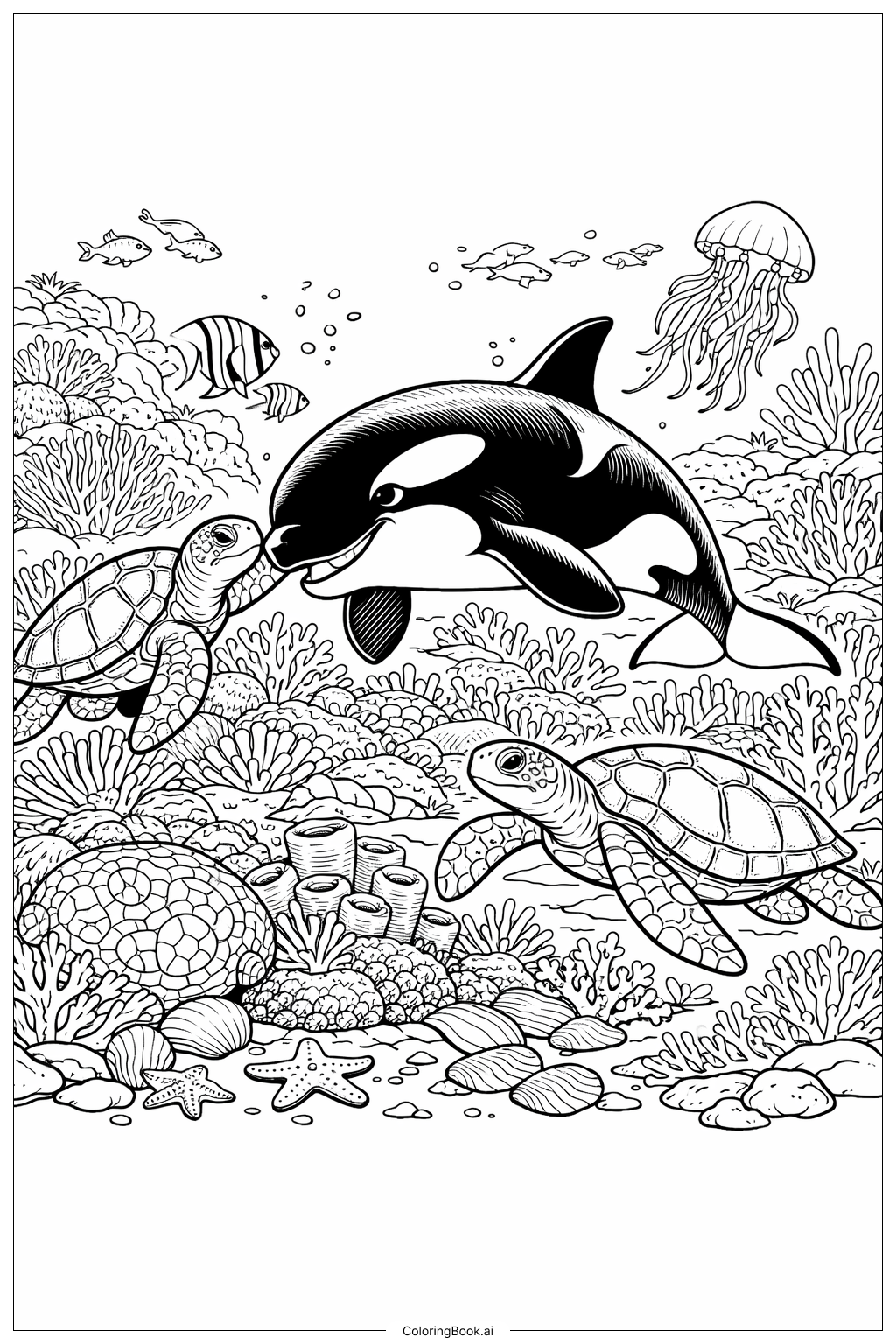
Use black for the orca’s large patches, especially on the body, dorsal fin, and around the eye. White spaces should stay white or can be colored very lightly in gray or pale blue for a watery effect. Bright colors like blue or turquoise can be used to fill the background to represent the ocean. Adding some shading with darker or lighter tones of these colors can make the picture more lively. You can also add little details, like bubbles or waves around the orca, in soft blue or white for more creativity.
Coloring challenges: Which parts are difficult to color and need attention for Smiling Orca Face coloring page?
1. Coloring the orca’s black patches evenly without going outside the lines can be tricky, as the areas are bold and large.
2. Balancing the black and white areas is important to keep the orca’s natural look, which may be a challenge for beginners.
3. Coloring the small fins and tail without overlapping to the body needs careful attention to detail.
4. Adding shading or creating water effects while staying inside the lines requires some practice.
5. Making the smile stand out while coloring around the mouth area needs neatness to preserve the facial expression.
Benefits of coloring books: Advantages of drawing Smiling Orca Face coloring page
Coloring this smiling orca helps improve fine motor skills because of the need to color inside the lines carefully. It encourages children to notice shapes and patterns, helping with their observation skills. This friendly image also inspires kids to learn about marine life and the beauty of orcas. The activity promotes creativity and color recognition as children choose how to decorate the background and different parts of the orca. Finally, finishing the picture can give a sense of achievement and boosts confidence.