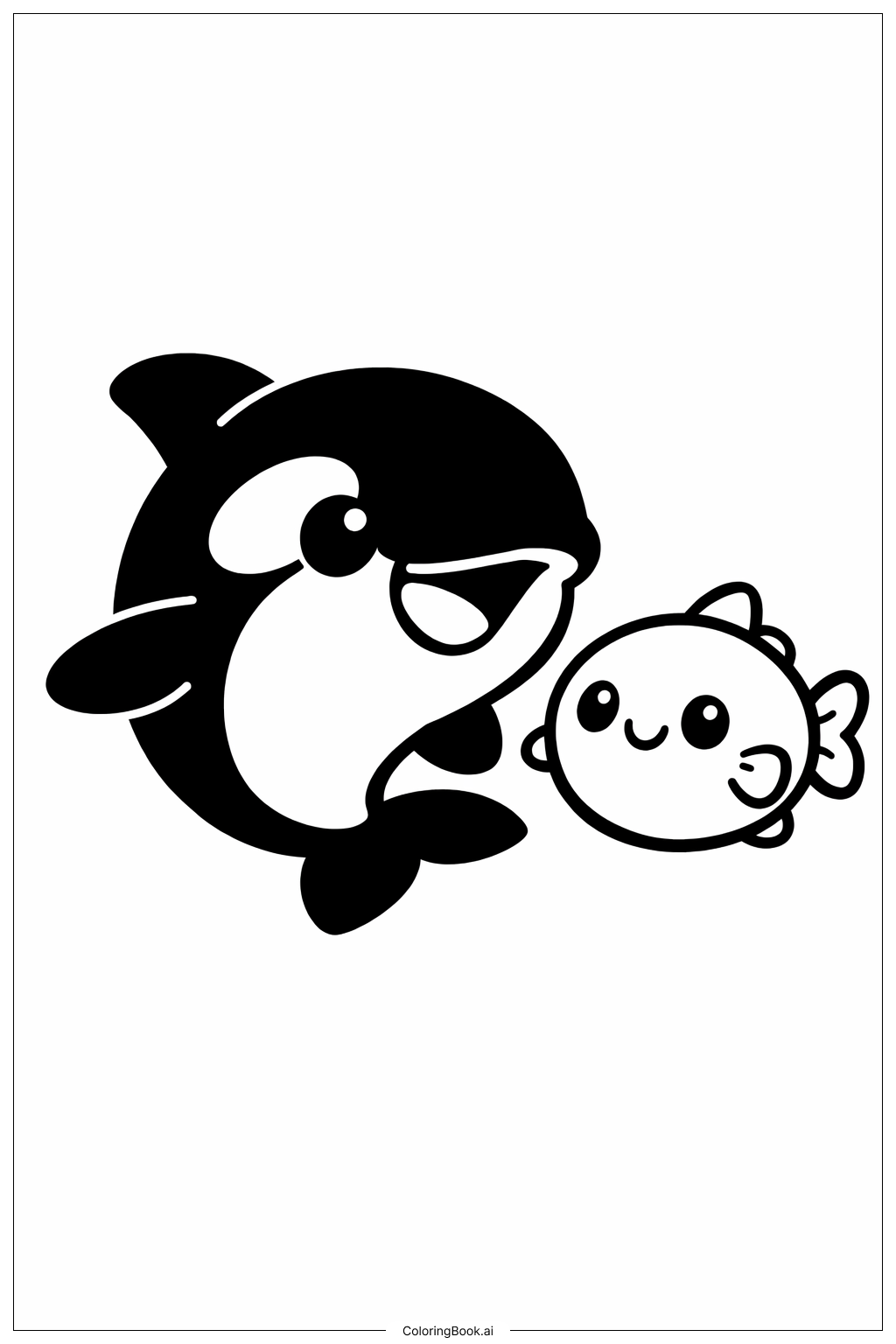
Coloring tips: How to color Playful Orca With Fish coloring page well?
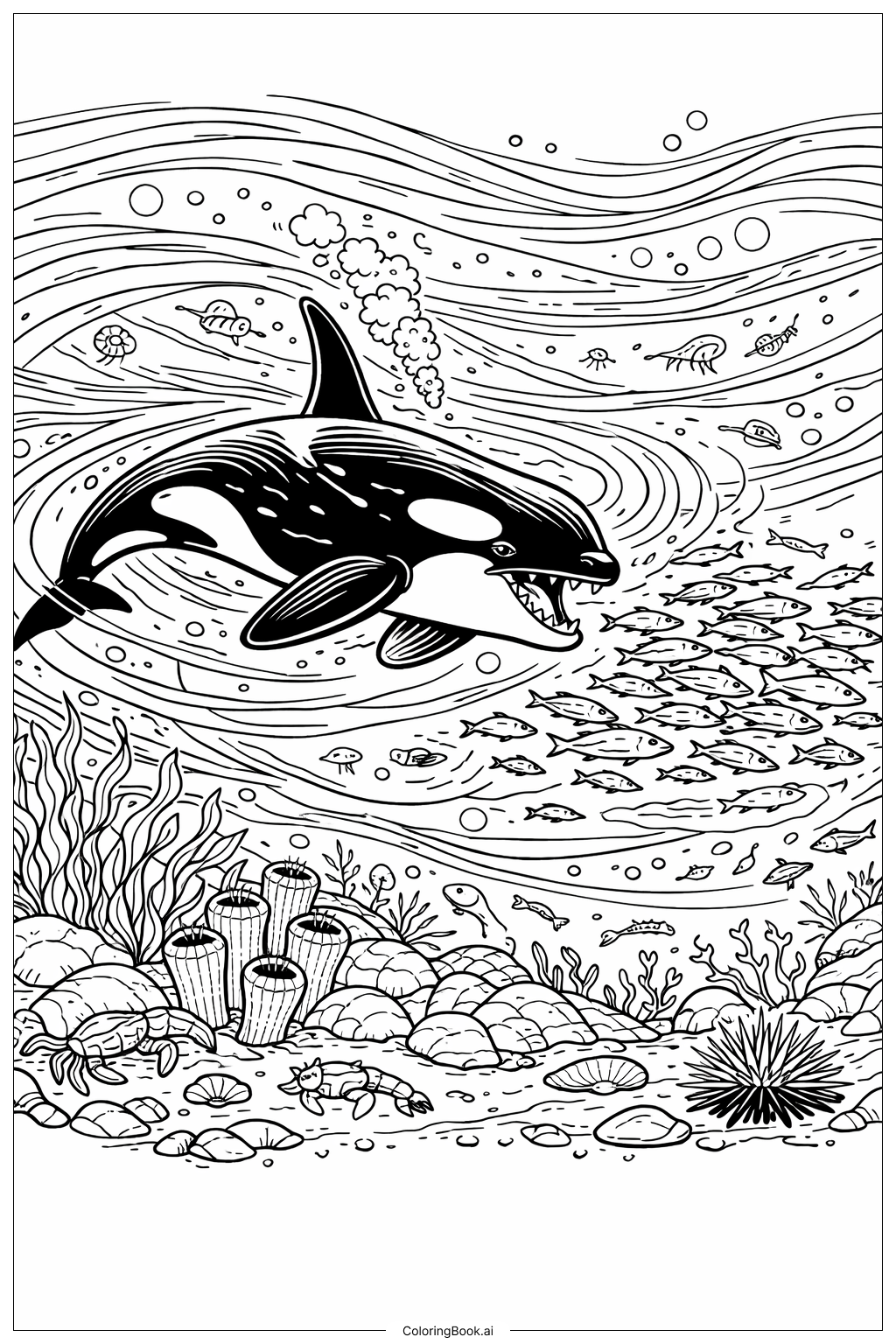
Start with the orca's body by using black for the dark patches on its back and sides. Leave the belly, saddle patch, and eye spot areas white or very light gray. For the fish, try bright and varied colors — orange, yellow, red, and green all work well to make them pop against the ocean setting. Use shades of blue and teal for the water, starting light near the surface and going deeper toward the edges. Add light blue or white for the bubbles and foam. Soft purple or dark blue can fill in any deeper background areas. Keep the orca's outlines bold and clean, and have fun mixing warm fish colors against cool ocean tones for a lively contrast. Children can use crayons, colored pencils, or markers — all work great here.
Coloring challenges: Which parts are difficult to color and need attention for Playful Orca With Fish coloring page?
• Orca Black and White Balance: The orca's two-tone coloring looks simple but requires careful attention. Colorists need to stay precisely within the dark back sections while keeping the belly and saddle patch clean and light. Accidentally blending the two zones can flatten the orca's iconic look and make it harder to recognize.
• Fish Detail and Variety: Each fish has small fins, subtle scale textures, and body curves that require a steady hand to color neatly. Because there are multiple fish in the scene, making each one feel distinct through color choices takes creative planning. Rushing through them can make the group look repetitive or muddy.
• Water Depth and Shading: Coloring the ocean convincingly means working with gradients — lighter blues near the top and richer, deeper blues below. Achieving a smooth transition with crayons or colored pencils can be tricky, especially for younger children who are still building blending skills.
• Bubbles and Foam: The small bubbles scattered around the orca are easy to overlook but add a lot of life to the scene. Leaving them uncolored or outlining them with a very light blue helps them stand out, but this requires precision to avoid accidentally filling them in with the surrounding water color.
• Spatial Awareness of Overlapping Elements: The orca, fish, and water elements overlap in several places. Deciding which element sits in front and using slightly different shades to separate them takes planning and a good eye for visual layering.
Benefits of coloring books: Advantages of drawing Playful Orca With Fish coloring page
Coloring this playful orca scene offers a wide range of benefits for children and young artists. First, it builds fine motor skills as kids carefully fill in the orca's distinct markings, small fish details, and flowing water lines. These precise movements strengthen hand-eye coordination over time. Second, the scene encourages creative thinking — choosing colors for multiple fish and deciding how to shade the ocean pushes young colorists to make real artistic decisions. Third, working on a detailed image like this builds focus and patience, helping children practice sitting with a task from start to finish. Fourth, learning about orcas and ocean life through the image sparks natural curiosity about marine animals and ecosystems, making coloring an educational experience as well. Fifth, completing a colorful, finished piece gives children a genuine sense of pride and accomplishment, which supports confidence and a positive attitude toward creative work. Overall, this image is a wonderful mix of fun, learning, and artistic growth.