Coloring tips: How to color Orca With Tiny Fish coloring page well?
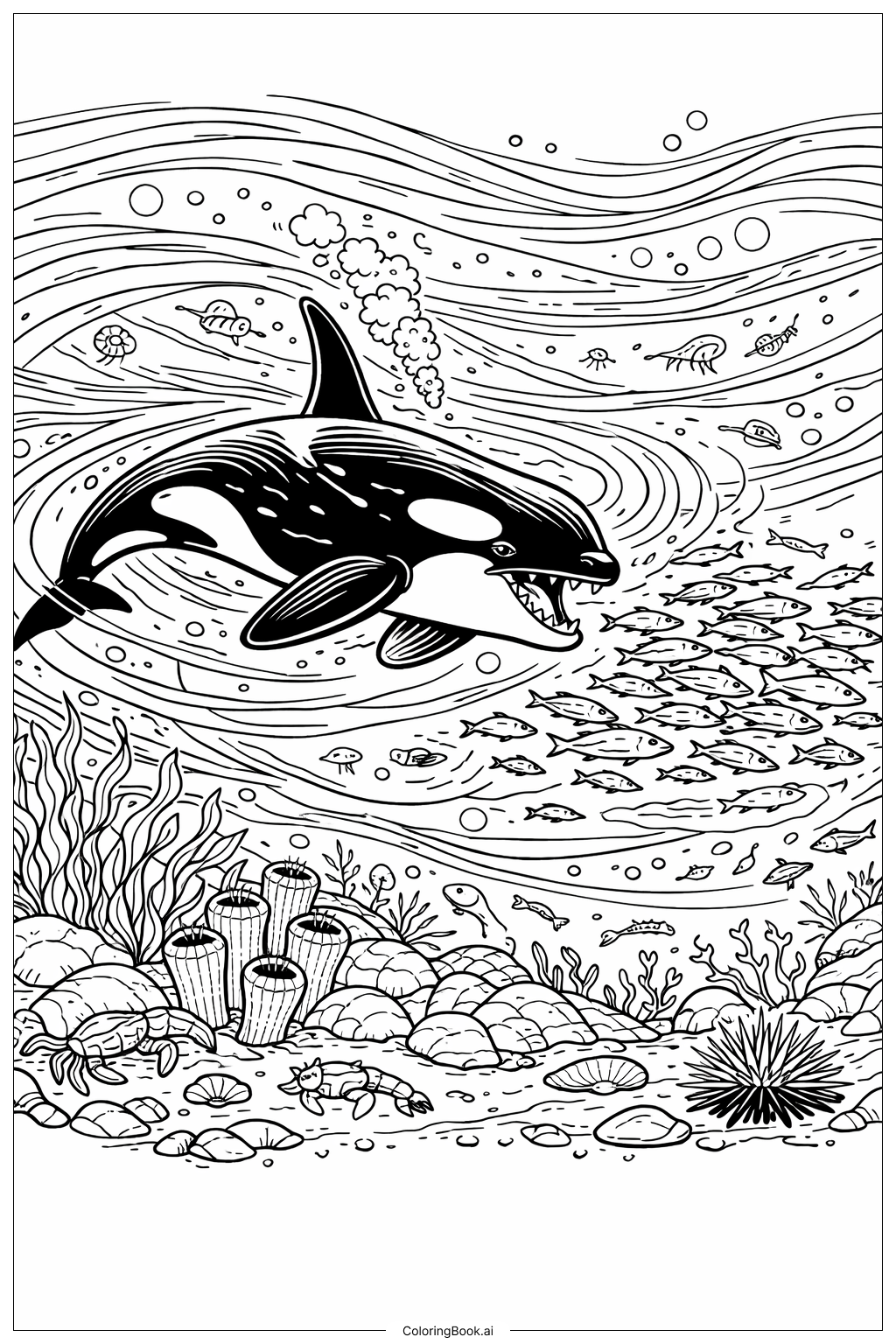
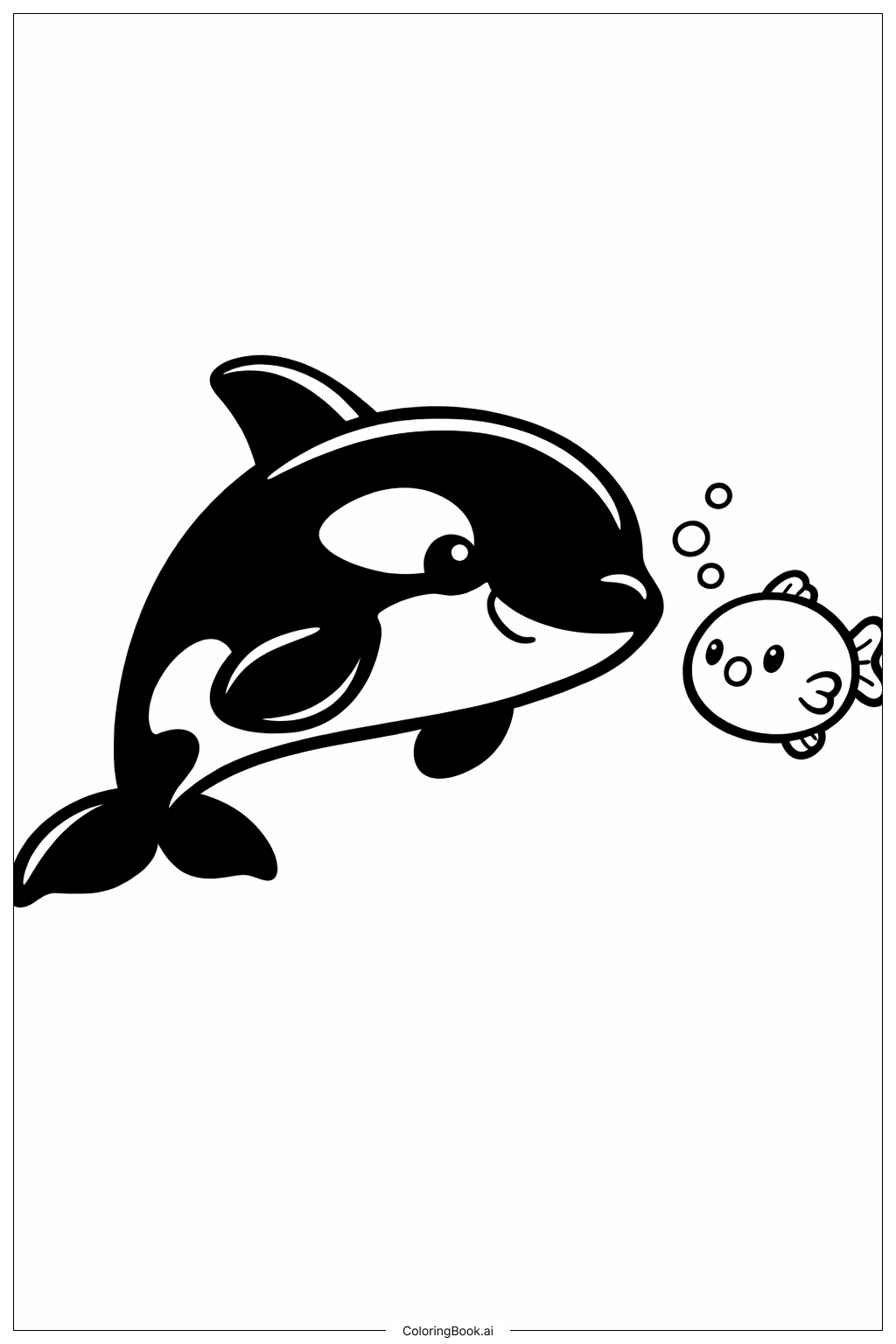
To color this image, start with the Orca’s classic colors: deep black for most of its body and bright white patches on its belly and near the eyes. You can use shades of gray to add soft shadows to show the Orca’s round shape. For the tiny fish, try using a variety of bright colors like yellow, orange, and light blue to make them stand out against the blue ocean background. Consider using light blues and greens for the water to give a fresh underwater feel. Adding some gentle swirls or small bubbles with lighter blues or whites can make the scene more dynamic and fun. Keep your colors smooth and try blending where the Orca’s body curves to create a natural look.
Coloring challenges: Which parts are difficult to color and need attention for Orca With Tiny Fish coloring page?
• Orca Pattern Precision: The Orca’s black-and-white patches have sharp edges and unusual shapes that require careful coloring to stay within each area clearly.
• Small Fish Detail: The many tiny fish vary in shape and direction, making it challenging to color each one distinctly without blurring their outlines.
• Curved Body Shading: Coloring the Orca’s rounded body to look three-dimensional involves blending shades of black, white, and gray smoothly, which can be tricky.
• Water Effects: Capturing the sense of flowing water and bubbles around the Orca requires careful use of light and transparent colors to avoid overpowering the main figures.
• Maintaining Contrast: Keeping the balance between the Orca’s dark body and bright spots, as well as the colorful fish, is important to create a lively, clear composition without colors muddying together.
Benefits of coloring books: Advantages of drawing Orca With Tiny Fish coloring page
Coloring this image helps develop fine motor skills and attention to detail, especially with the Orca’s distinctive markings and small fish. It encourages children to explore shading and blending techniques to create depth and texture. Working on the aquatic theme can expand knowledge about marine life and the beauty of ocean animals. It also boosts creativity by allowing color choices for the tiny fish and water effects. Overall, coloring this scene promotes focus, patience, and an appreciation for nature’s diversity.