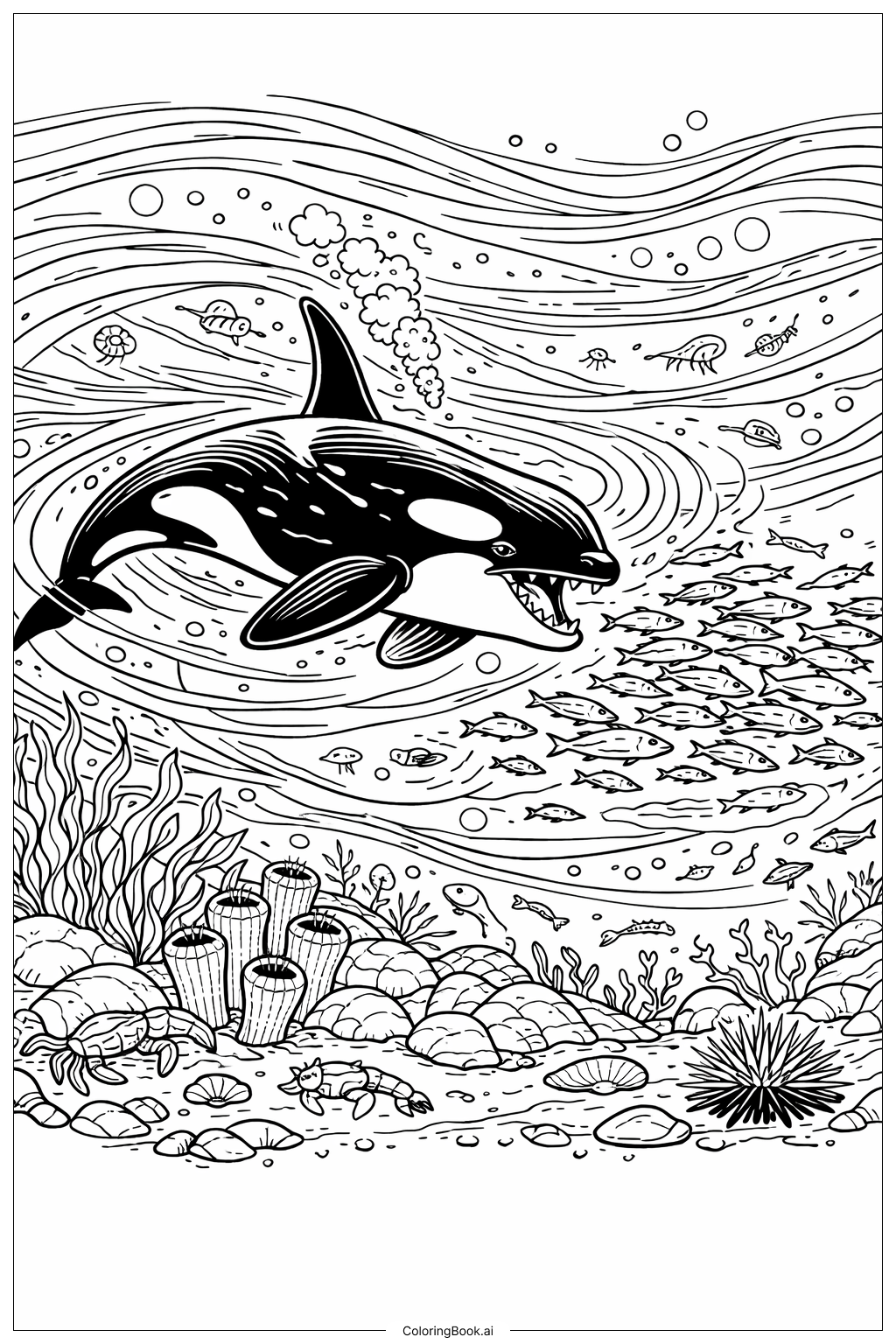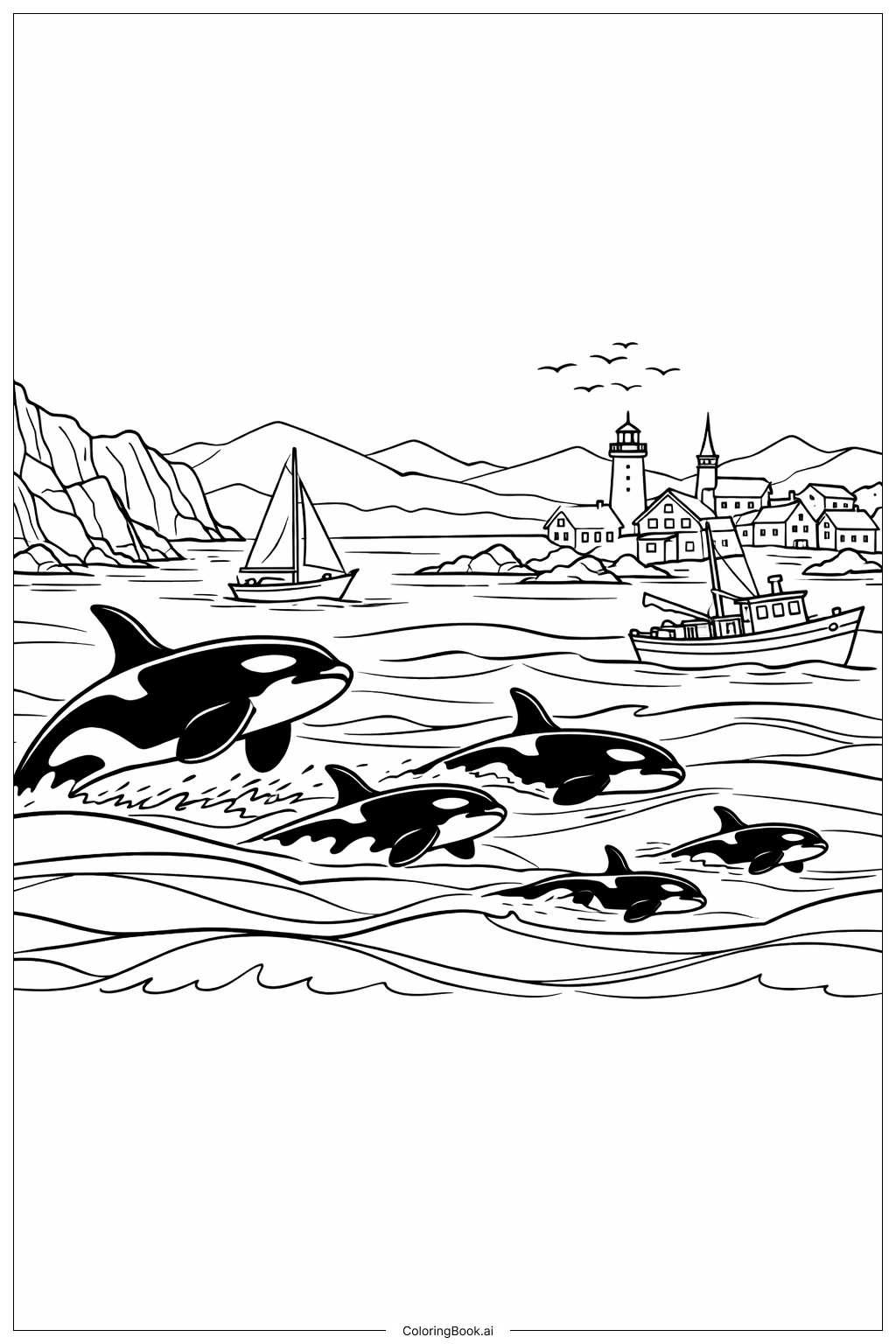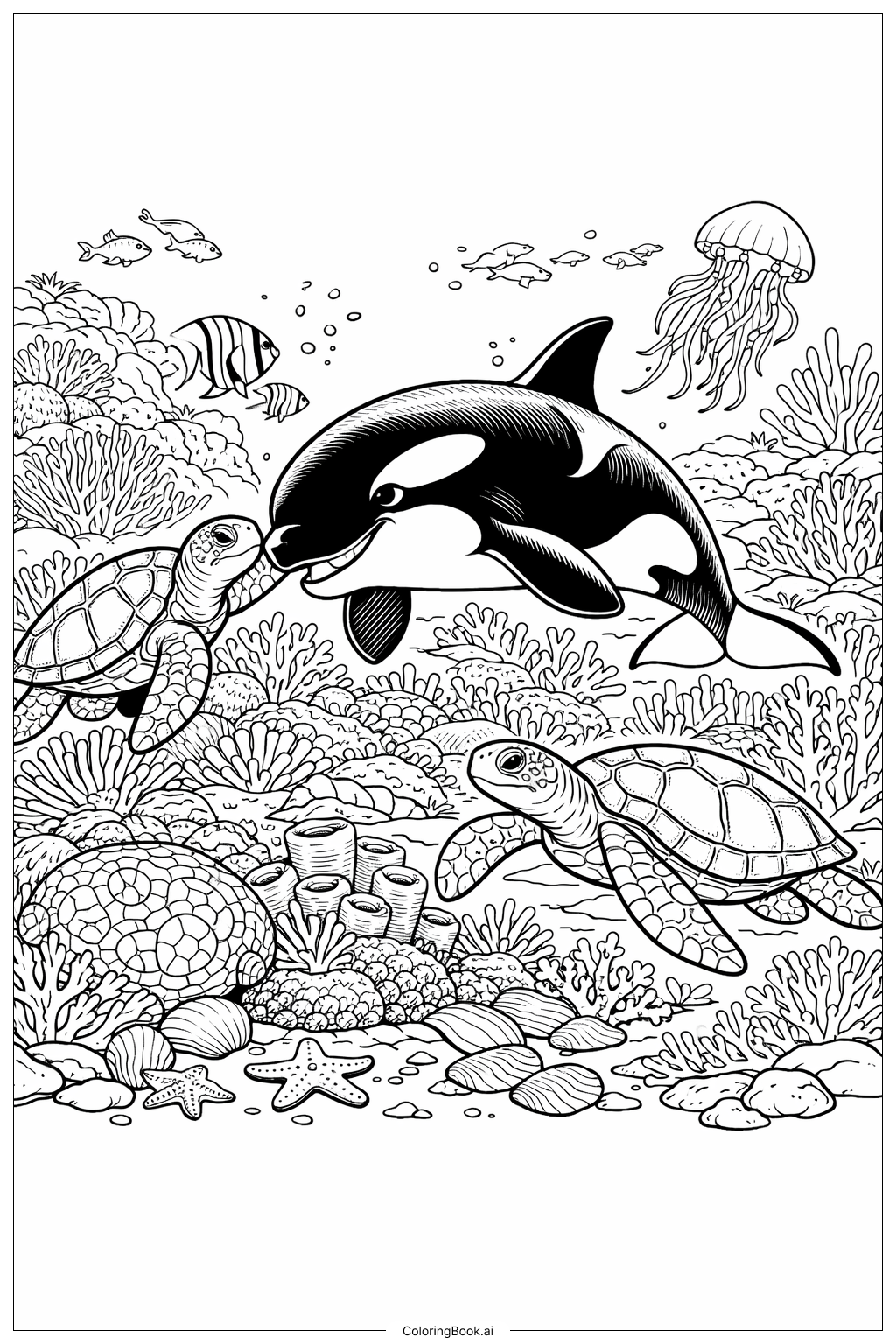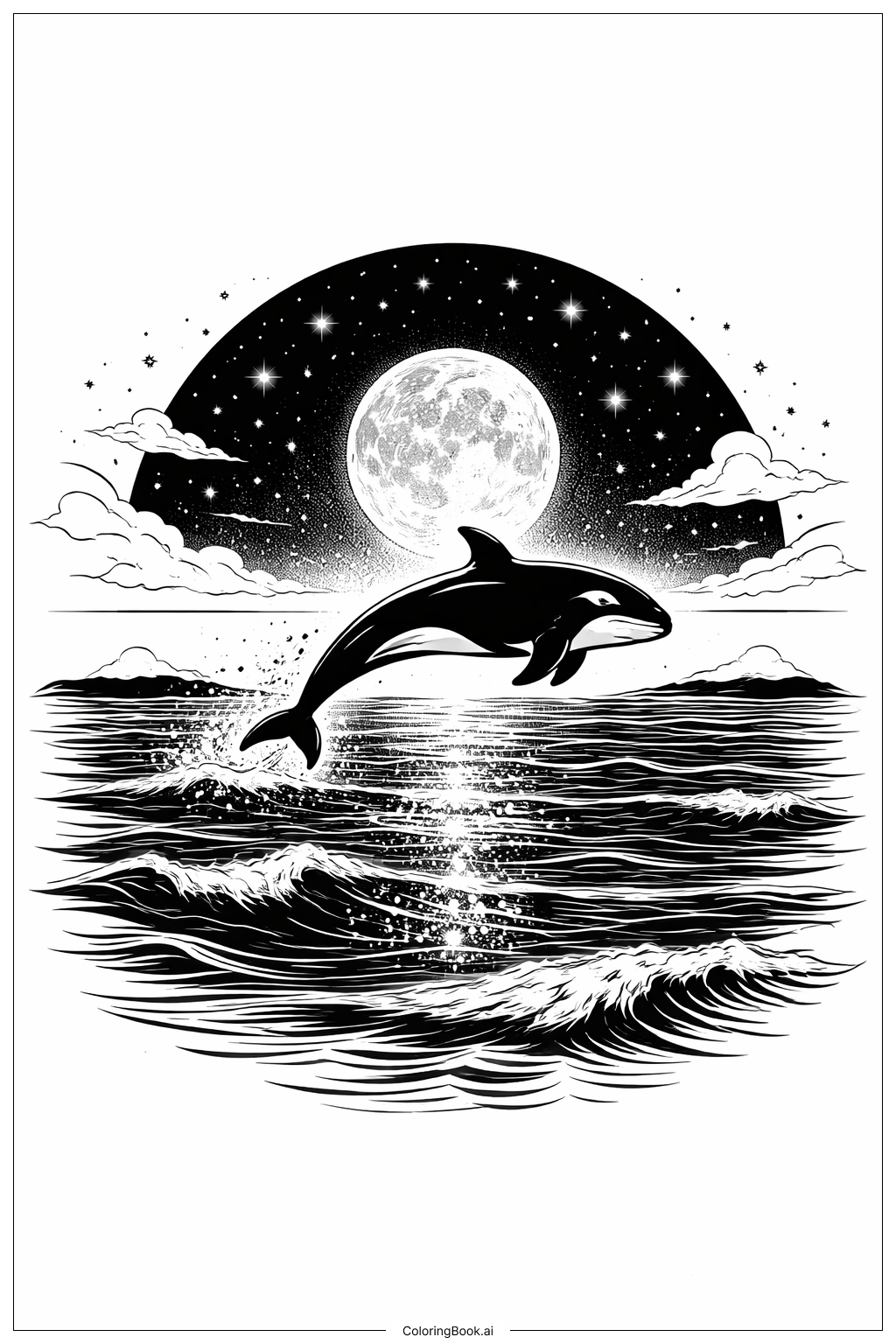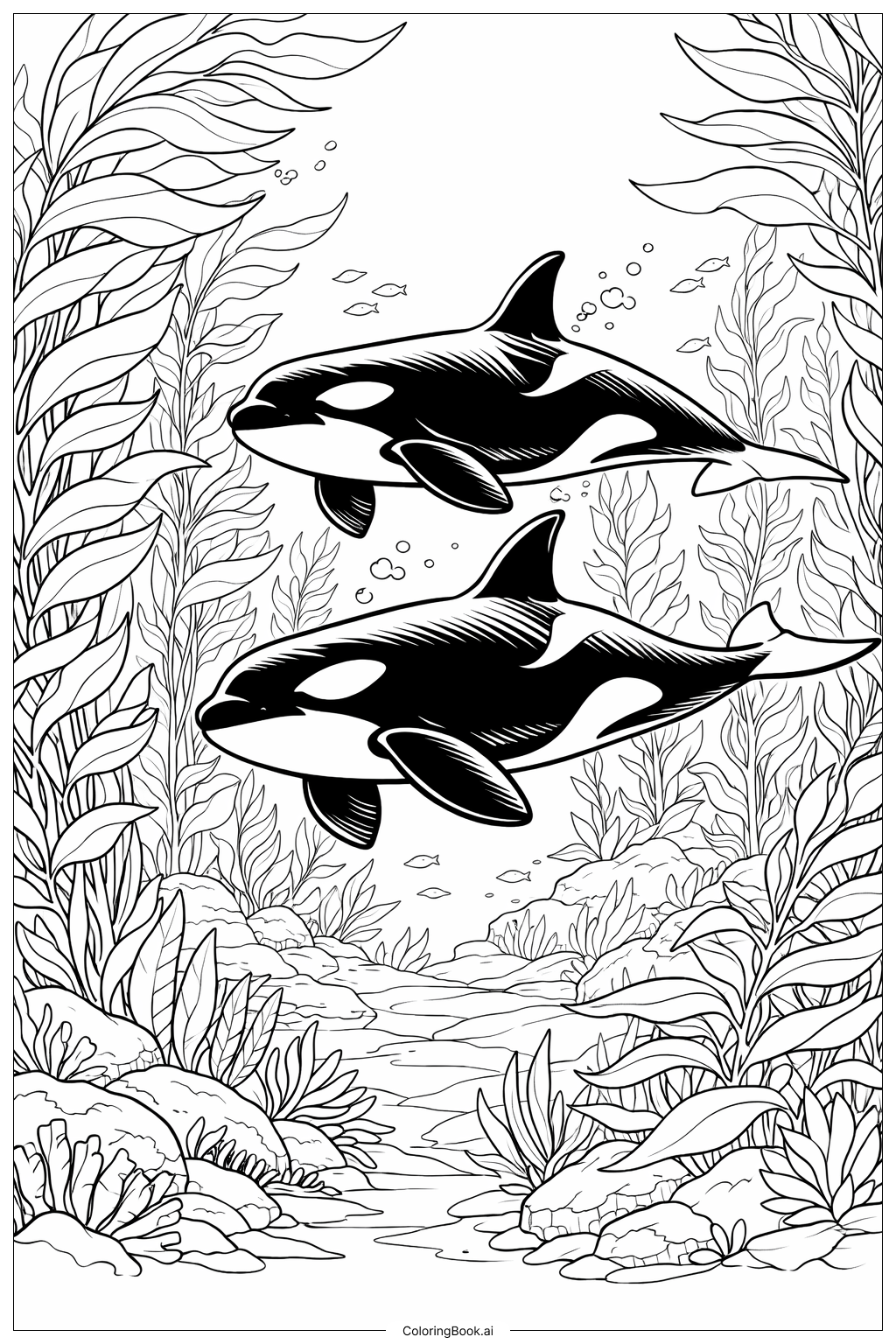
Coloring tips: How to color Orca Pair In Kelp Forest coloring page well?
Try using deep blacks and bright whites for the orcas to show their classic pattern clearly. For the kelp, use different shades of green to add depth—lighter green for the sunlit leaves and darker green for shadows. You can also add hints of brown or yellow to some kelp stems for variety. The water around the orcas and kelp can be colored in shades of blue, from light near the surface to darker in the deeper areas. Coloring the orca’s eyes with a tiny touch of blue or gray will make them look lively. Feel free to be creative with the background to make the underwater scene come alive.
Coloring challenges: Which parts are difficult to color and need attention for Orca Pair In Kelp Forest coloring page?
• Orca Pattern Details: The orcas’ unique black and white markings need careful coloring to keep the clean lines and correct proportions. Missing or mixing up the white patches can make the orcas look less realistic.
• Kelp Complexity: The many long, thin kelp leaves overlap and flow in different directions, requiring patience and attention to detail to color each strand distinctly and avoid mixing colors.
• Shading and Depth: Creating a sense of three-dimensional space with the kelp forest and water will challenge colorists to use multiple shades of green and blue smoothly.
• Small Spaces: Some areas, especially around the orcas’ fins and between kelp leaves, are narrow and need precise coloring to stay inside the lines without smudging.
• Balancing Contrast: Balancing the stark black and white of the orcas with the varied greens and blues of the environment is tricky but important for a vibrant final picture.
Benefits of coloring books: Advantages of drawing Orca Pair In Kelp Forest coloring page
Coloring this image helps develop focus and patience because of the fine details, like the orca’s patterns and the flowing kelp leaves. It encourages creativity in choosing colors and blending shades, especially when painting underwater scenes. Children can learn about marine life and the environment while having fun, fostering curiosity about ocean animals like orcas. This activity also improves hand-eye coordination and fine motor skills through carefully coloring small spaces and staying within the lines. Overall, it is a relaxing and educational way to build artistic confidence.