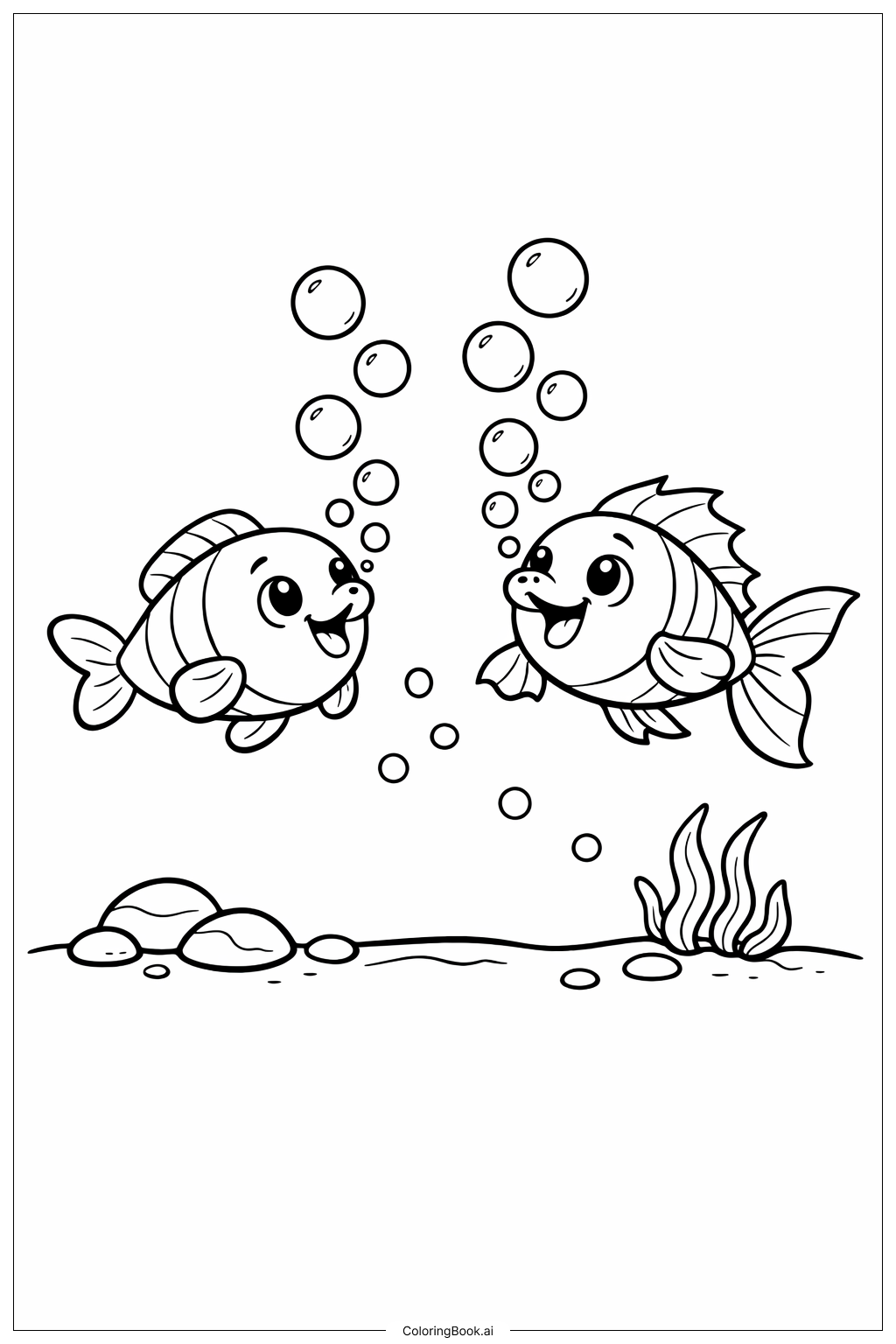
Coloring tips: How to color One Fish Two Fish With Bubbles coloring page well?
Start with the fish bodies. You can make them any color you like — red and blue are classic choices inspired by the original story, but orange, yellow, or purple work great too. Use a slightly darker shade of the same color for the fins and tails to add depth. For the bubbles, try leaving them white or coloring them in very light blue or lavender with a thin outline. This makes them look transparent and realistic. The background water can be filled with soft shades of light blue or teal. You can add darker streaks to show the water moving. If you want to make the scene pop, use bright, bold colors for the fish and keep the background soft and cool. For a fun twist, make each fish a completely different color and give the bubbles a rainbow gradient. There are no rules here — let your imagination lead the way!
Coloring challenges: Which parts are difficult to color and need attention for One Fish Two Fish With Bubbles coloring page?
• Coloring the Bubbles Neatly: The bubbles are small and round, which makes them tricky to color without going outside the lines. Using a thin-tipped colored pencil or a fine marker works best here. Keeping the pressure light helps create a soft, glassy look that suits bubbles perfectly. Take your time with each circle.\n\n• Blending Colors on the Fish Bodies: The fish have smooth, curved bodies that look best with gradual color blending. Going from a lighter shade near the belly to a darker shade along the back can be challenging for younger colorists. Practicing gentle strokes in one direction helps achieve a smooth finish.\n\n• Detailing the Fins and Tails: The fins and tails have thin, flowing shapes with small interior lines. Coloring inside these narrow areas without smearing onto the body of the fish requires a steady hand. Switching to a sharpened pencil for these sections gives you better control.\n\n• Keeping the Background Consistent: Filling in the water background evenly is harder than it looks. Large open areas can develop streaks or uneven patches when using colored pencils. Using broad, overlapping strokes in the same direction, or switching to watercolor paints, helps produce a smooth, uniform background.\n\n• Separating the Two Fish Visually: Since the two fish are close together, choosing clearly different colors for each one is important. If they end up too similar in tone, they may blend together visually. Planning your color choices before you start helps keep each fish looking distinct and lively.
Benefits of coloring books: Advantages of drawing One Fish Two Fish With Bubbles coloring page
Coloring this One Fish Two Fish With Bubbles page brings a fun mix of creative and developmental benefits for kids of all ages. Working through the fish bodies, fins, and bubbles helps build fine motor skills and hand-eye coordination. Carefully staying inside the lines of the small bubble shapes trains concentration and patience in a low-pressure, enjoyable way. Choosing colors for the fish encourages creative thinking and self-expression. Kids can follow the classic red and blue from the original story or invent their own color combinations, both choices building confidence in their decisions. The gentle, rounded shapes make this page approachable for younger children while still offering enough detail to keep older kids engaged. Coloring also provides a calm, focused activity that can reduce stress and help kids wind down after a busy day. Sharing the finished page with a family member or friend builds a sense of pride and accomplishment. For fans of Dr. Seuss, this page also deepens a connection to a beloved story, making reading and art feel naturally linked. Overall, it is a simple, joyful activity with real benefits for the mind and imagination.