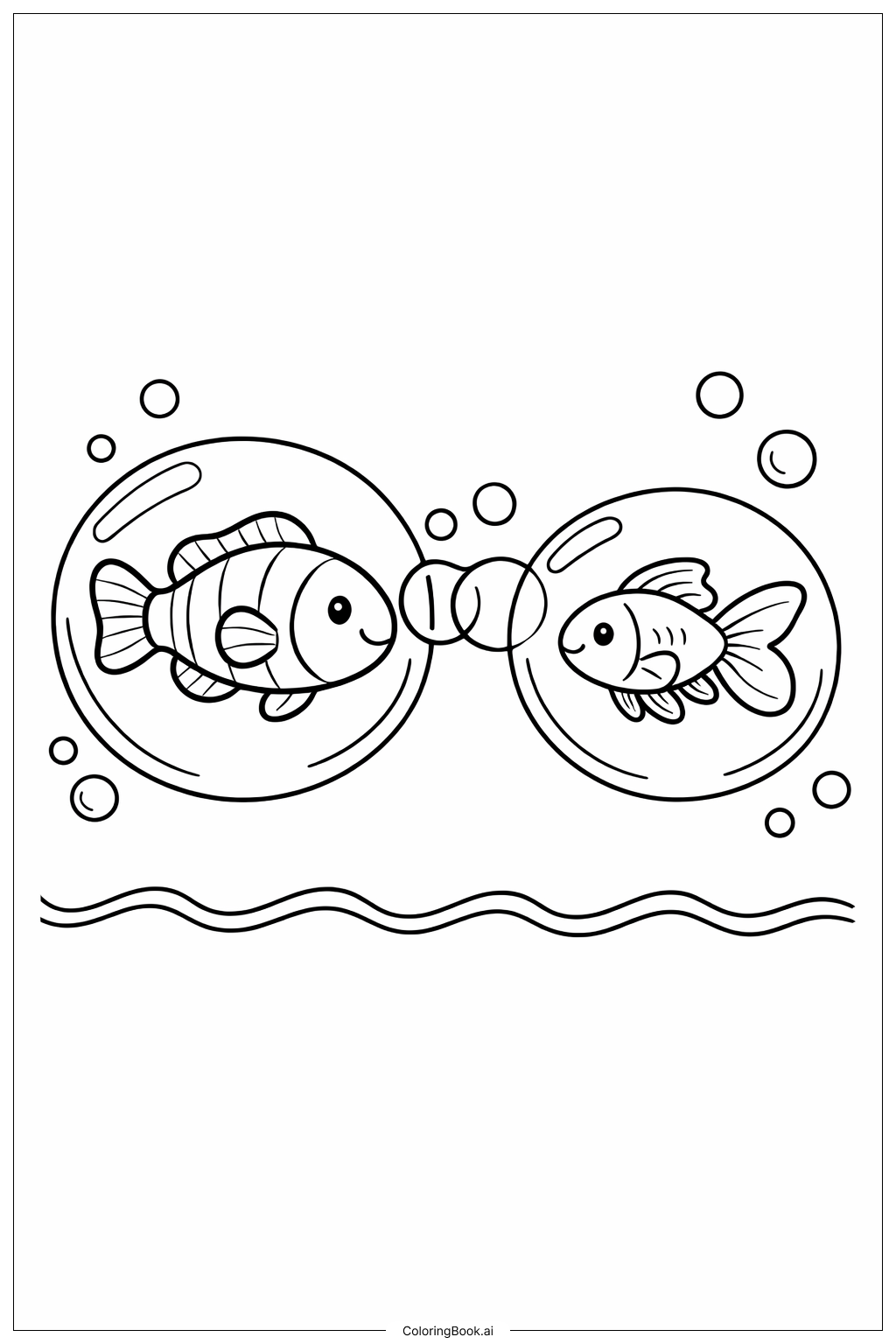
Coloring tips: How to color One Fish Two Fish Bubble Train coloring page well?
Start with the fish by using bright, fun colors like orange, yellow, red, or blue — mix and match to make each fish unique, just like in Dr. Seuss's book. For the bubble train itself, try light sky blue or soft purple to give it a dreamy, underwater feel. Use a slightly darker shade of the same color to add depth to the bubble windows and train body. The steam puffs look great in white or pale gray, with a soft lavender or pink edge. The train tracks can be colored brown or silver. For the background, a deep ocean blue or a soft aqua works beautifully and makes all the other colors pop. Try using circular, swirling strokes when filling in the bubbles to keep that round, floaty feeling. Let kids experiment freely — in Dr. Seuss's world, there are no wrong color choices!
Coloring challenges: Which parts are difficult to color and need attention for One Fish Two Fish Bubble Train coloring page?
• Bubble Shapes and Curves: The entire train is built from round, overlapping bubble forms. Staying neatly inside curved lines is harder than coloring straight edges. Young colorists may need to slow down and use the tip of their crayon or marker carefully around each circle's border to avoid going outside the lines.
• Small Fish Details: The fish passengers have tiny fins, expressive eyes, and small facial features tucked inside the bubble windows. These tight spaces require a sharp pencil, fine-tip marker, or a thin crayon to fill in accurately without smudging neighboring areas or losing the character's expression.
• Consistent Color Shading Across Repeated Shapes: The bubble train repeats similar round shapes across multiple cars. Keeping the coloring consistent — same shading direction, same pressure — across all the bubbles helps the image look polished. This is a great challenge for older kids who want a more finished, illustrated look.
• Steam and Background Separation: The swirling steam puffs float near the top of the image and can blend into the background if similar colors are used. Colorists need to choose clearly contrasting colors for the steam versus the sky or water background so each element reads as separate and distinct.
• Floating Bubble Details: Small decorative bubbles are scattered throughout the scene. These tiny circles are easy to miss or accidentally color over. Taking time to identify all of them before starting and reserving a light, translucent color — like pale blue or white — for them will help preserve the airy, floaty atmosphere of the whole scene.
Benefits of coloring books: Advantages of drawing One Fish Two Fish Bubble Train coloring page
Coloring this One Fish Two Fish Bubble Train page offers a wonderful range of benefits for children of all ages. The scene's many rounded bubble shapes give young kids great practice in controlling their coloring tools along curved lines, building fine motor skills in a fun and pressure-free way. Choosing colors for the fish passengers and the bubbly train cars encourages creative thinking and self-expression — there are no rules in Dr. Seuss's world, so kids feel free to experiment. Working through the small details, like the fish faces and the layered bubble windows, helps older children develop patience, focus, and attention to detail. The repetitive nature of coloring multiple similar bubble shapes can also have a calming, almost meditative effect, making it a great activity for winding down. Connecting the image to the beloved One Fish Two Fish story adds a literacy dimension, sparking conversations about the book, its characters, and imaginative storytelling. Overall, this page turns a simple coloring activity into a rich experience that supports creativity, concentration, and a love of reading.