Coloring tips: How to color A Train With Each Car A Number coloring page well?
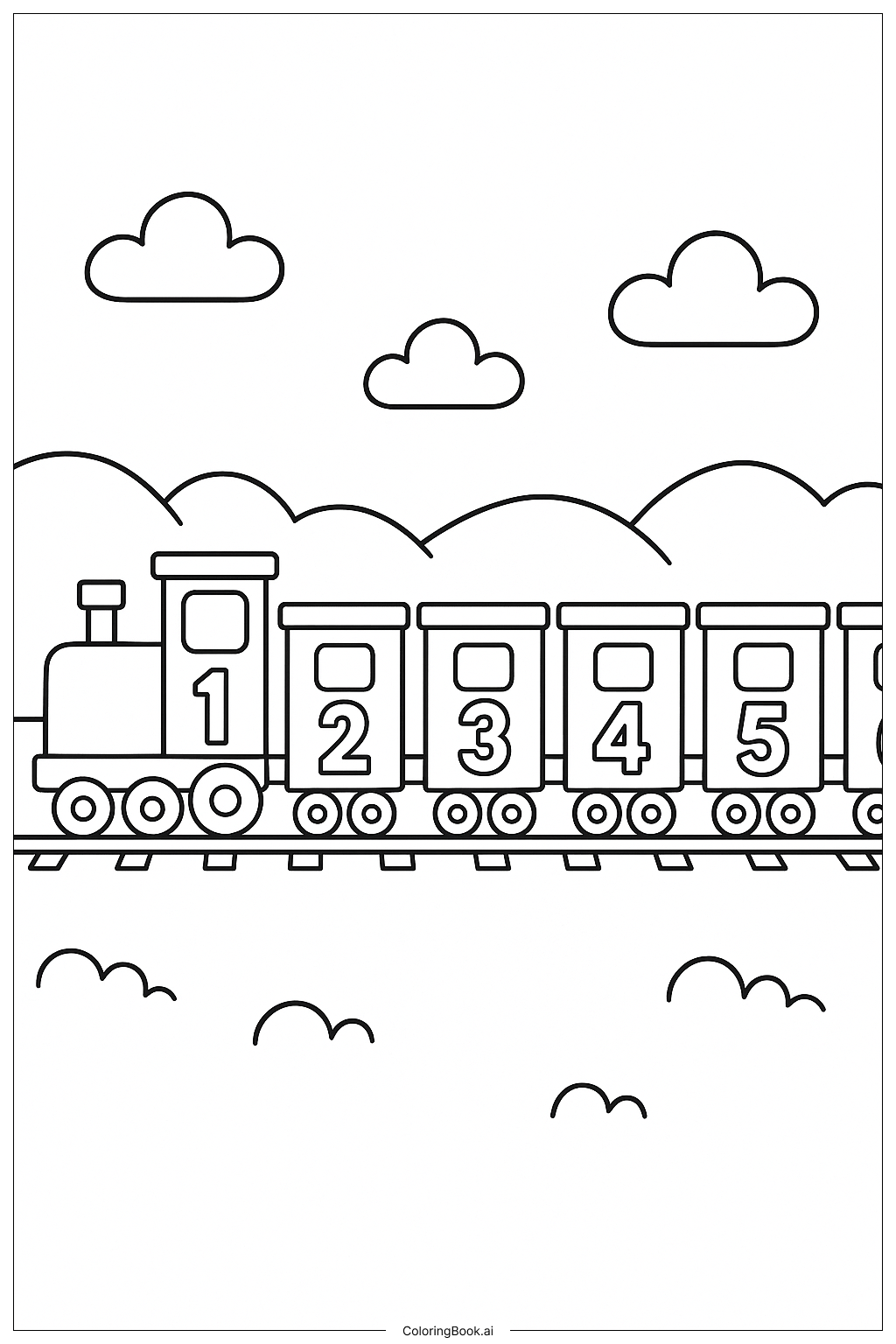
Start with the locomotive. Give it a bold, bright color like red or blue to make it stand out as the leader of the train. For each numbered car, try using a different color so the train looks fun and rainbow-like. This also helps kids visually separate each car. Use yellow, green, orange, purple, and pink for variety. Color the numbers in a contrasting shade so they pop against the car body. For example, if a car is orange, color its number dark blue or brown. Use light gray or white for the steam clouds. Color the wheels dark gray or black to look realistic. The train tracks can be brown or gray. Keep the sky behind the train light blue if you want to add a background. Try not to use the same color for two cars right next to each other. This page is a great chance to practice color patterns.
Coloring challenges: Which parts are difficult to color and need attention for A Train With Each Car A Number coloring page?
• Staying Inside the Number Outlines: The numbers on each car are drawn with bold lines, but their inner curves and corners can be tricky for younger children. Letters like 6, 8, and 9 have rounded loops that require careful control of the crayon or marker to stay within the lines without smearing into the surrounding car body.
• Choosing Contrasting Colors for Cars and Numbers: Each car has both a body area and a number printed on it. Picking colors that contrast well enough so the number is still visible takes some thought. If a child chooses two similar shades for the car and the number, the design can look muddy or hard to read.
• Maintaining Consistent Wheel Coloring: The train has multiple wheels across several cars. Keeping all the wheels the same color for a neat, realistic look requires patience and attention. Younger colorists may accidentally switch colors mid-way or miss small wheel sections.
• Managing Small Detail Areas Around the Locomotive: The front engine car often has more details than the other cars, including a face, windows, a smokestack, and steam lines. These smaller sections require a finer tool like a thin marker or a sharpened colored pencil to fill in cleanly without going outside the lines.
• Keeping a Balanced Color Scheme Across the Whole Train: Since the train has many cars, it can be easy to run out of good color ideas halfway through. Planning which colors to use before starting helps avoid repeating the same shade on neighboring cars and keeps the finished image looking lively and well-balanced.
Benefits of coloring books: Advantages of drawing A Train With Each Car A Number coloring page
Coloring this number train page offers a wonderful mix of creative and educational benefits, especially for young children. As kids color each car, they naturally practice number recognition in a relaxed and enjoyable way. Seeing the numerals in a fun train format helps reinforce early math skills without feeling like a lesson. The act of choosing a different color for each car also encourages logical thinking and basic decision-making. Children learn to plan ahead and consider how colors look next to each other, which builds early design awareness. Filling in the bold outlines of wheels, car bodies, and numbers strengthens fine motor skills and hand-eye coordination. These skills directly support handwriting development. The repetitive nature of coloring car after car also promotes focus and patience, helping children build the ability to sit with a task and see it through to completion. For older kids, the challenge of keeping a consistent color scheme across the whole train adds a layer of creative problem-solving. Overall, this page turns coloring into a multi-layered activity that supports cognitive growth, artistic expression, and number learning all at once.