Coloring tips: How to color A Simple Addition Number Problem coloring page well?
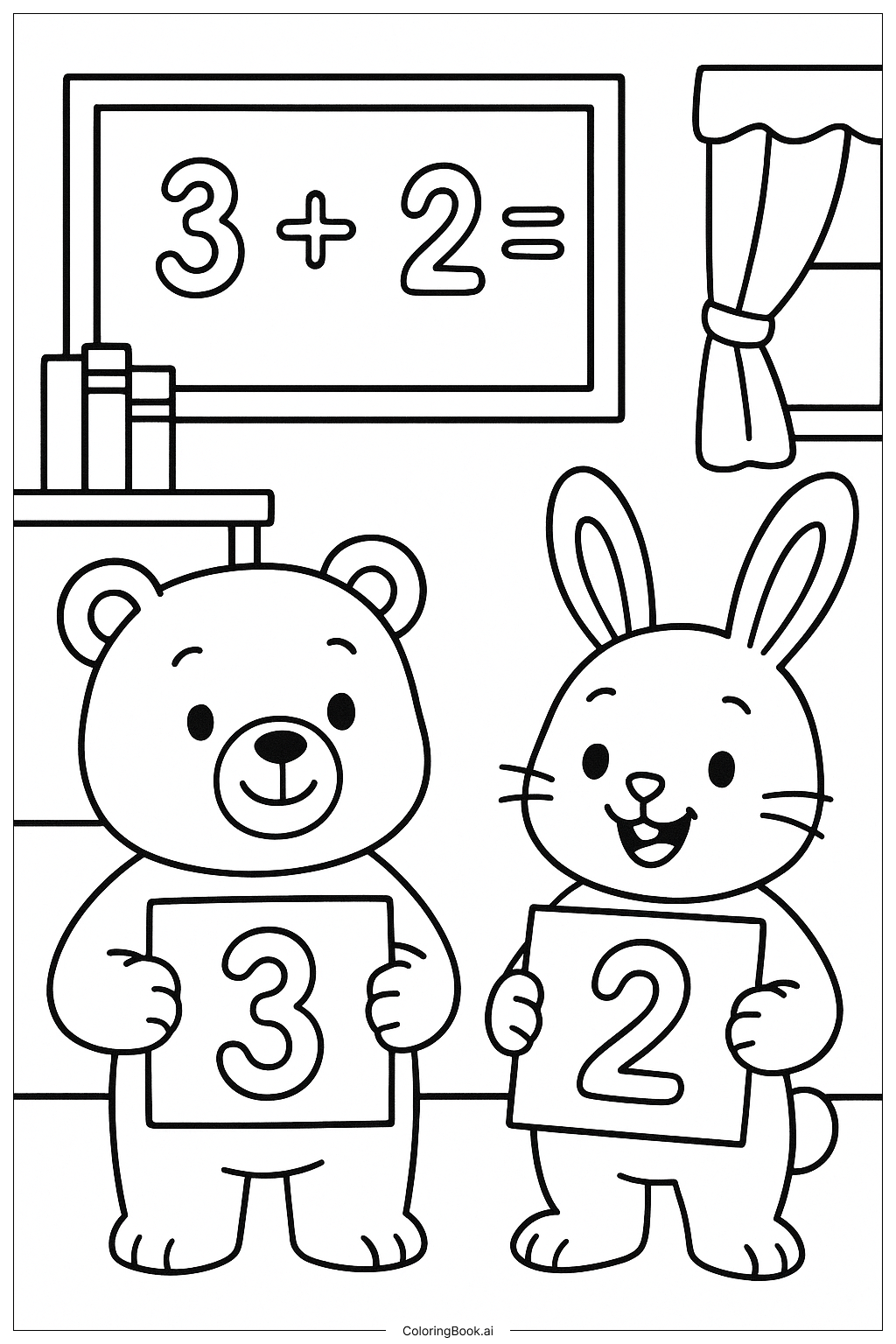
Start by coloring the numbers and mathematical symbols in bright, bold colors like blue, red, or purple to make them stand out clearly. Choose vibrant colors for the apples such as red, green, or even yellow to create variety and visual interest. Color the leaves on each apple in different shades of green to add natural detail. Consider using one color for the three apples on the left, a different color for the two apples in the middle group, and mixing both colors for the five apples at the bottom to reinforce the addition concept visually. You might also add a light background color or leave it white for contrast. Use colored pencils or crayons for smooth, even coverage within the bold outlines. Encourage children to experiment with color combinations while keeping the numbers clear and readable.
Coloring challenges: Which parts are difficult to color and need attention for A Simple Addition Number Problem coloring page?
• Number Recognition and Coordination: The large numerals and symbols require steady hand control to color within the bold outlines without crossing over the lines. Young children aged 4-6 may find it challenging to stay within the boundaries of the numbers, especially with curves in the number 3 and 5. This requires developing fine motor skills and hand-eye coordination, which takes practice and patience.
• Apple Details and Repetition: While the apples have simple shapes, coloring nine individual apples with consistent quality can be tedious for younger colorists. Each apple includes a small leaf detail that requires precision to color separately from the apple body. Children may struggle with maintaining focus and applying even color across all the apples, especially when trying to create different color schemes for different groups.
• Visual Balance and Color Planning: Deciding how to color the different groups of apples to reinforce the mathematical concept adds a planning challenge. Children need to think about whether to use matching colors for apples in the same group or create variety, which involves decision-making skills beyond simple coloring. Balancing color intensity between the numbers and the apples so both elements remain clear and visible requires thoughtful color selection.
• Leaf and Stem Precision: The small leaves on top of each apple present a fine detail challenge. These tiny areas require careful coloring with the tip of a crayon or pencil, which can be difficult for younger children with less developed fine motor control.
Benefits of coloring books: Advantages of drawing A Simple Addition Number Problem coloring page
Coloring this addition problem page offers multiple educational benefits for young learners. It combines mathematical learning with creative expression, helping children visualize and understand basic addition concepts while engaging in a fun artistic activity. The visual representation of apples reinforces number sense and counting skills. As children color each group of apples, they practice one-to-one correspondence and learn to associate abstract numbers with concrete quantities. The activity strengthens fine motor skills and hand-eye coordination through controlled coloring within defined spaces. It also promotes focus, patience, and attention to detail as children work carefully on both the numbers and the illustrated objects. Color choice and planning encourage decision-making and creative thinking. This type of coloring page makes math feel less intimidating and more approachable, building positive associations with learning numbers and arithmetic from an early age.