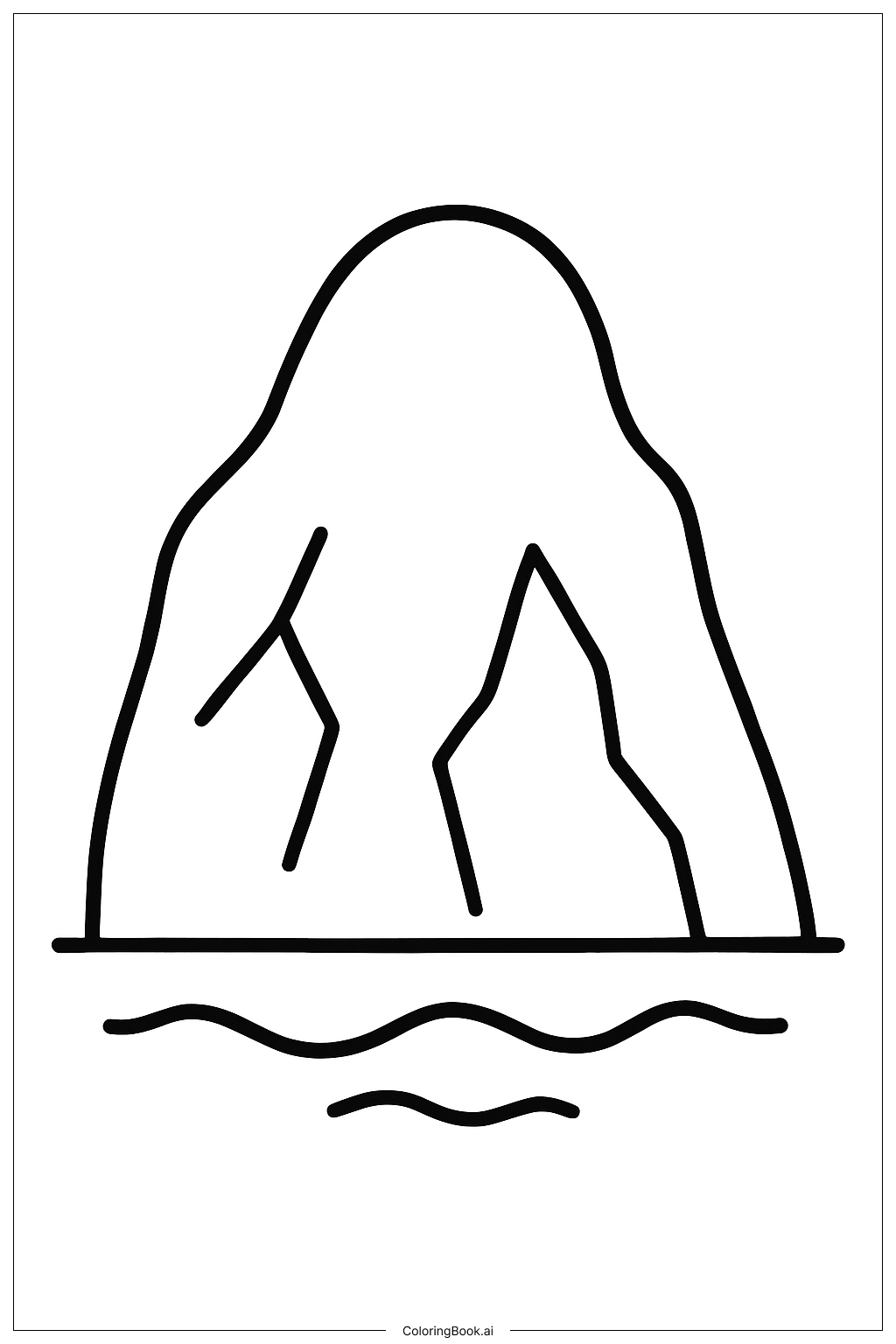
Coloring tips: How to color Nature Iceberg coloring page well?
Use various shades of blue and white to bring the iceberg to life. Try light blue and icy turquoise on the smooth faces, and deeper blues or gray tones for shaded areas to create a 3D effect. For the surrounding water, use darker blues with hints of green to show depth and movement. Soft gray or pale blue can be nice for the clouds, keeping them light and fluffy. To make the smaller floating ice pieces stand out, color them in bright white or very light blue. You can add touches of light purple or silver to give an icy sparkle. Don’t hesitate to use blending techniques or colored pencils to create smooth transitions between shades on the iceberg.
Coloring challenges: Which parts are difficult to color and need attention for Nature Iceberg coloring page?
• Complex Ice Shapes: The iceberg features many sharp and irregular edges that may be challenging to color carefully without going outside the lines. It requires steady hand control.
• Subtle Shading Differences: Capturing the realistic look of ice means using smooth gradients of blues and grays. It can be hard to blend colors evenly to avoid harsh lines or blotches.
• Water Reflections: Coloring the water surface with reflections and ripples takes attention to detail and understanding of light and shadow to make it look natural.
• Small Ice Fragments: The tiny chunks of ice around the giant iceberg demand precision to color without smudging neighboring parts.
• Cloud Texture: Though simple, creating soft, airy clouds needs light strokes and layering to keep them delicate, which might be tricky for younger children.
Benefits of coloring books: Advantages of drawing Nature Iceberg coloring page
Coloring this Nature Iceberg image helps improve fine motor skills and hand-eye coordination due to its detailed shapes and borders. It encourages focus and patience as children work on areas requiring careful shading and blending. Coloring icy textures introduces kids to different ways to use color and light to create depth and realism. This activity also sparks curiosity about nature, icebergs, and polar environments, making it a fun educational experience. Lastly, it promotes creativity by inviting children to choose color mixes and experiment with effects that capture the beauty of ice and water.