Coloring tips: How to color Nature Garden Patch coloring page well?
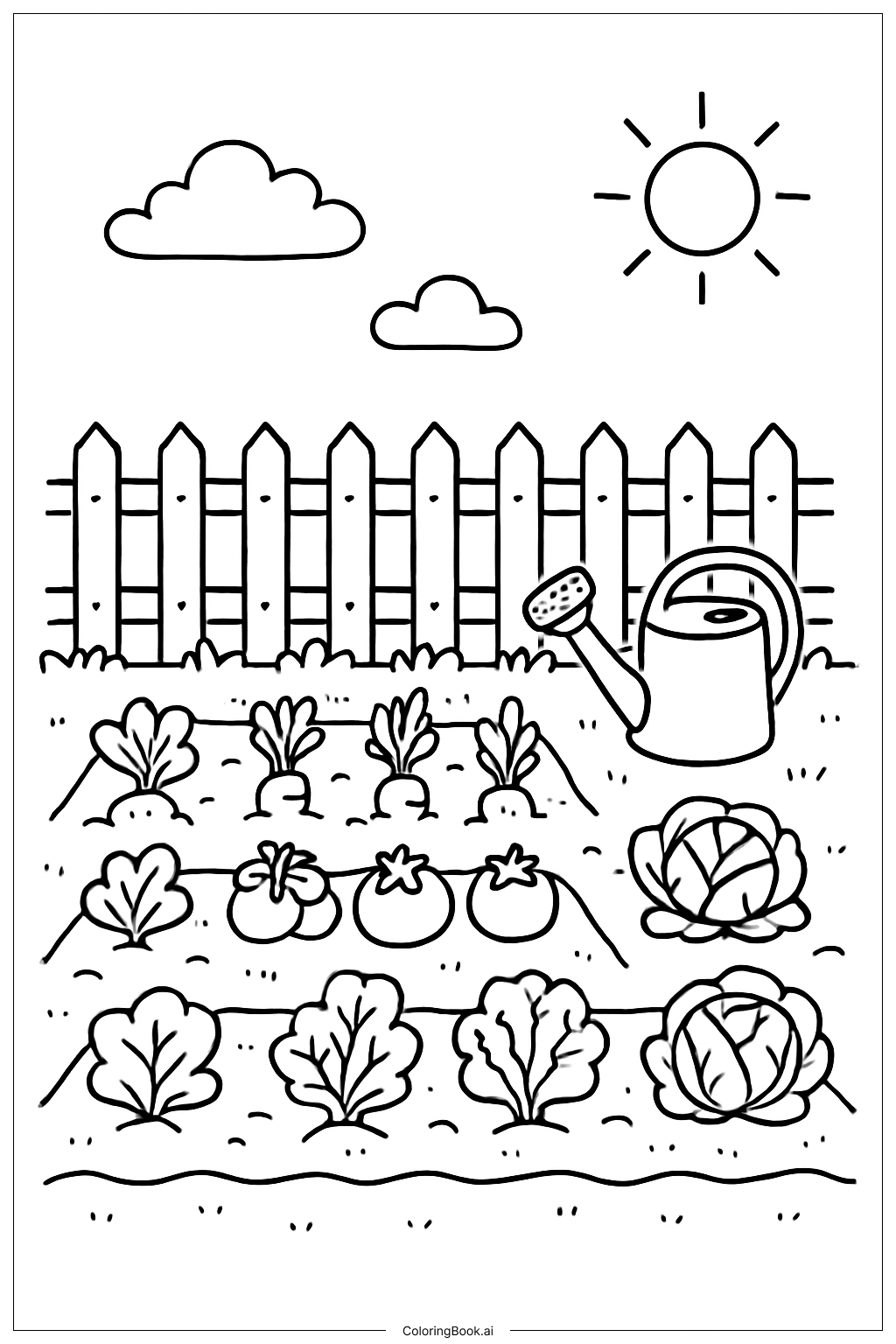
For this garden scene, use vibrant colors to make the vegetables pop. Bright red for tomatoes, orange for carrots, and green shades for lettuce will create a lively atmosphere. The fence can be a warm brown or soft gray. The sky can be a light blue, with soft white for the clouds. You might want to add some yellow for the sun to represent a sunny day. Consider using different shades of green for the plants to show depth and variation. Let your imagination run wild with flowers or insects as well!
Coloring challenges: Which parts are difficult to color and need attention for Nature Garden Patch coloring page?
1. **Detail in Vegetables**: The vegetables have intricate shapes and textures, which can be challenging. It might be hard to stay within the lines while coloring the leafy parts or the skins of the fruits.
2. **Layering Colors**: To create dimension, kids might want to layer colors on the vegetables. Understanding which colors to layer can be tricky for younger ones.
3. **Sky and Clouds**: Blending colors for the sky and clouds can be tough. Children may find it challenging to create a smooth transition from blue to white without streaks.
4. **Fencing Texture**: The fence has multiple lines, which require careful coloring to avoid missing spots. Making sure it's uniform yet natural might be difficult.
5. **Balancing Brightness and Shades**: Kids might struggle with balancing bright colors and more muted tones for the background, ensuring all elements stand out without clashing.
Benefits of coloring books: Advantages of drawing Nature Garden Patch coloring page
Coloring this nature-themed page has many benefits. First, it enhances creativity. Children can choose their colors and make the scene uniquely theirs. Second, it improves focus and concentration. As they color within the lines, they develop fine motor skills. Third, this activity encourages relaxation. Coloring can be calming, helping kids unwind and de-stress. Fourth, it sparks an interest in gardening and nature, as they visualize the plants and flowers they color. Lastly, this activity promotes sharing and social interaction, especially if kids color together or discuss their work.