Coloring tips: How to color Cute Mushroom House coloring page well?
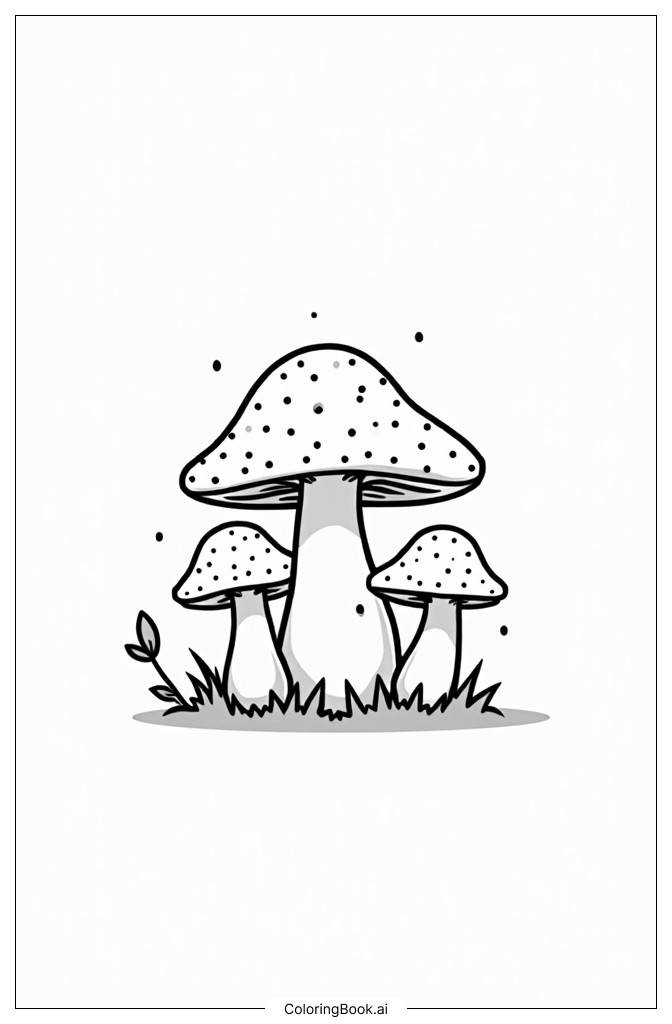
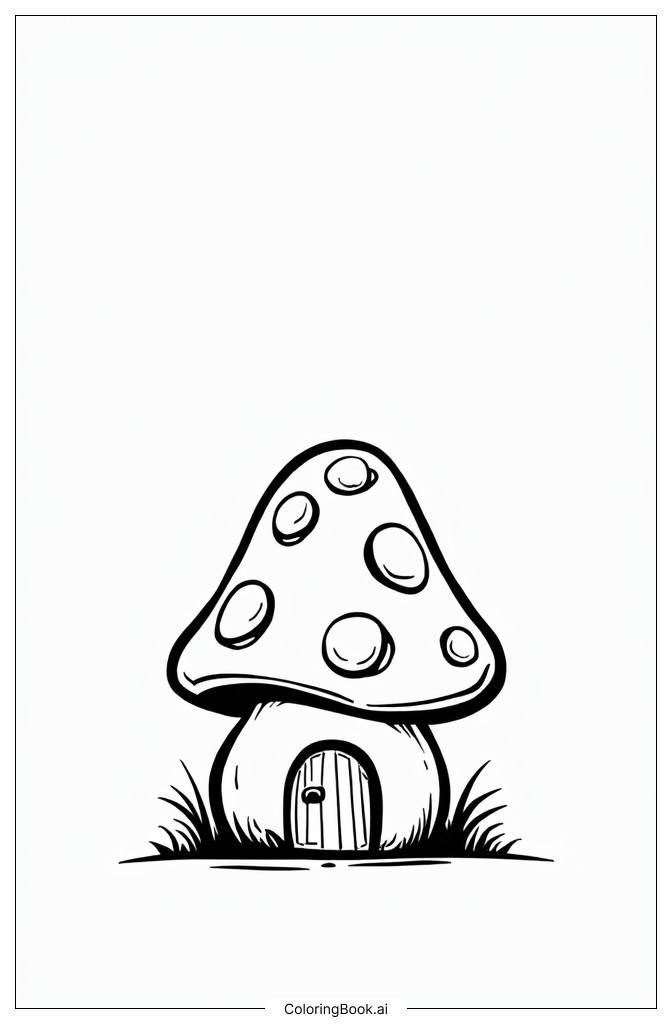
Use warm reds, oranges, or yellows for the mushroom cap to give it a lively and cheerful look. The spots on the cap can be a lighter shade or even white to stand out nicely. For the house walls, consider soft earthy tones like beige or light brown to keep a natural feel. The door might look great in a rustic wood color such as medium brown. Green shades are perfect for the vines and leaves, with variations of light and dark green to add depth. The small flowers could be colored in bright pinks or purples to add a pop of color. You can use different tones of grey and brown for the stones on the path. Remember to add gentle shading around edges to make the house feel more three-dimensional and cozy.
Coloring challenges: Which parts are difficult to color and need attention for Cute Mushroom House coloring page?
• Small Details: The tiny plants, vines, and flowers around the house require careful coloring to stay within their thin outlines, which can be challenging for younger children or beginners. • Texture Variations: Different parts like the mushroom cap, wooden door, and stone path have distinct textures that are hard to represent accurately with simple coloring but make the image more interesting. • Shading Effects: To create the illusion of roundness and depth on the mushroom cap and curved door, shading is needed, which might be tricky without blending tools or advanced techniques. • Spot Pattern: The spots on the mushroom cap vary in size and need contrasting colors to stand out properly, requiring attention to detail to avoid colors bleeding together. • Overlapping Elements: The vines wrapping around the house and intertwining with other plants could cause confusion about boundaries, so careful coloring is needed to differentiate each element clearly.
Benefits of coloring books: Advantages of drawing Cute Mushroom House coloring page
Coloring this Cute Mushroom House helps develop fine motor skills by requiring careful hand control to stay inside the small and detailed areas. It fosters creativity as colorists decide on color combinations for the natural and fantasy elements. The varying textures and shapes encourage visual observation and the practice of shading techniques to create depth. Completing the image promotes focus, patience, and a sense of accomplishment, which build confidence in young artists. Additionally, coloring nature-related subjects like mushrooms and plants can boost appreciation and curiosity about the natural world.