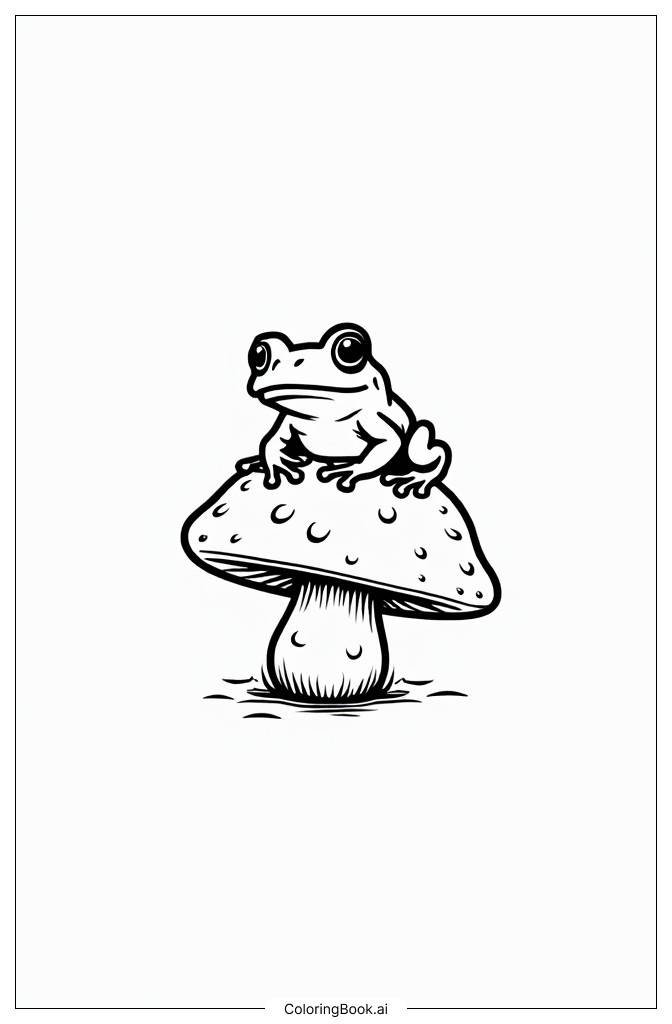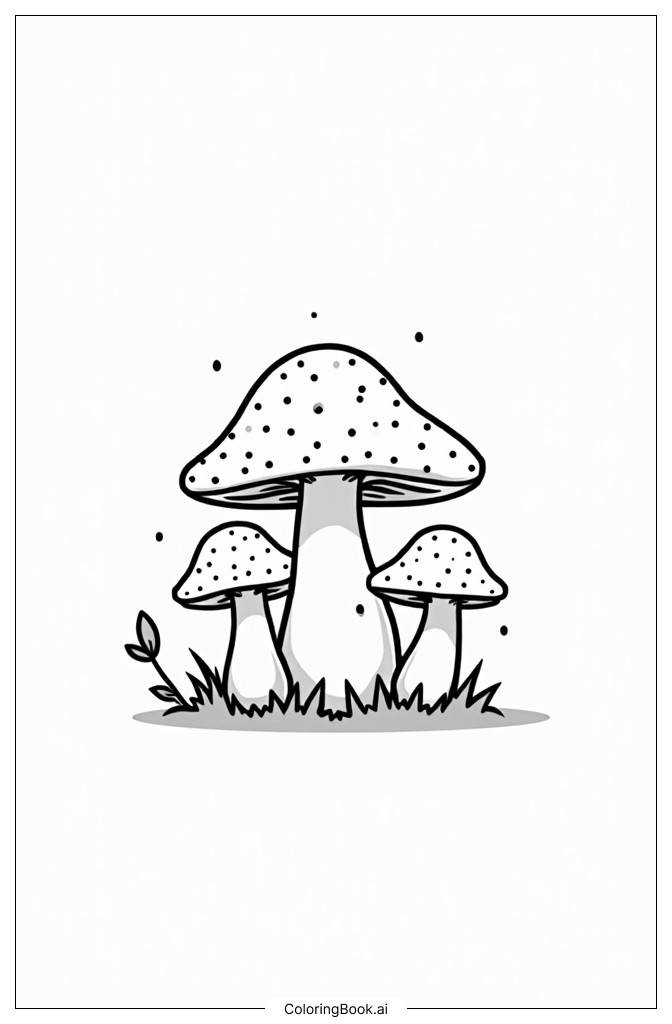
Coloring tips: How to color Little Mushroom Garden coloring page well?
To color this image, try using warm, earthy tones for the mushrooms such as reds, oranges, and browns. Use lighter shades of cream or white for the spots and mushroom stems to create contrast. Green shades of various brightness can be used for the leaves and grass to make the garden feel fresh and lively. You can add some yellow or golden highlights to show the sunlight falling gently on the scene. For the small insect, bright colors like yellow or red will make it stand out. Remember to blend colors softly on curved surfaces like mushroom caps to make them look round and three-dimensional.
Coloring challenges: Which parts are difficult to color and need attention for Little Mushroom Garden coloring page?
• Small Details: The tiny spots on the mushroom caps require careful coloring to keep them neat without spilling over onto the mushroom’s body. This needs steady hands and patience.
• Layered Elements: The mushrooms overlap each other and the plants, so it can be tricky to decide which colors to use to keep the different parts distinct and clear.
• Shading Curves: The mushrooms have rounded caps and curved stems which can be challenging to shade realistically because you must create smooth color changes to show the shape.
• Background Variety: The grasses and leaves have many thin lines and shapes, so coloring within these small lines without coloring outside can be difficult for young children.
• Contrast Balance: Choosing colors that make the mushrooms stand out from the background but still feel natural requires a good understanding of color combinations and contrast.
Benefits of coloring books: Advantages of drawing Little Mushroom Garden coloring page
Coloring this Little Mushroom Garden helps develop fine motor skills by practicing precision on small details. It encourages creativity in choosing colors to bring life to the natural scene. The curved shapes teach children how to blend and shade to create volume and depth. Coloring plants and mushrooms also introduces them to the beauty of nature and fungi. This activity can be calming and relaxing, helping to improve focus and patience. Overall, it is a fun way for children aged 4 to 16 to connect with the outdoors and enhance artistic skills.