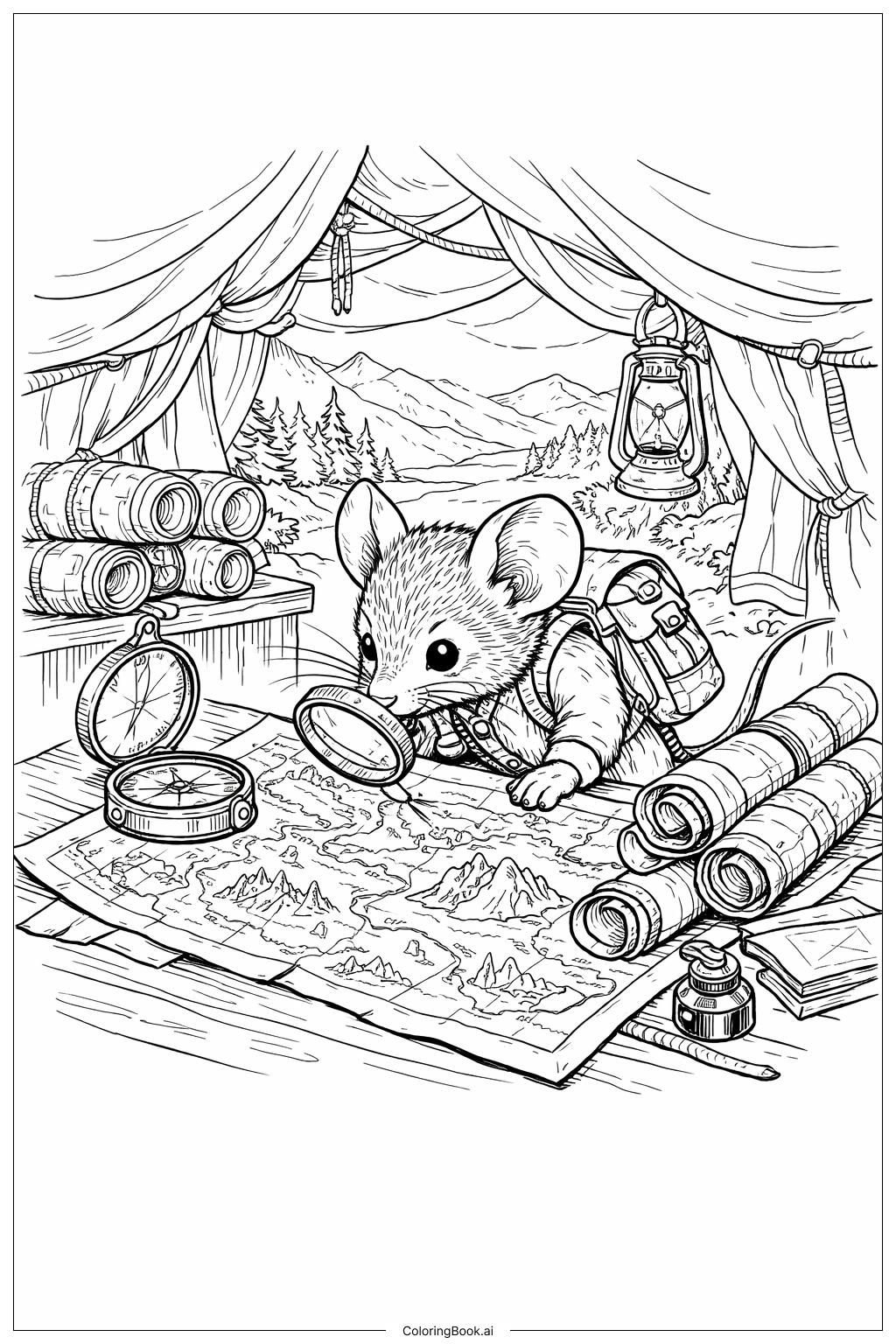
Coloring tips: How to color Mouse Explorer Map Journey coloring page well?
Start with the mouse itself. Use warm browns or soft grays for its fur, and add a pop of color to its explorer outfit — deep green or tan works great for an adventure feel. Color the map in warm parchment tones like light yellow or beige, with red or brown lines for the trails. For the landscape, use different shades of green for the trees and hills to give them depth. The sky can be a gentle blue with soft white clouds. Add golden yellow to the treasure chest and compass to make them stand out. Use darker shades around the edges of each section to create a sense of shadow and dimension. Do not worry about staying perfectly inside the lines — this image is all about having fun and expressing creativity. Kids can try blending two colors together on larger areas like the hills and sky for a cool gradient effect.
Coloring challenges: Which parts are difficult to color and need attention for Mouse Explorer Map Journey coloring page?
• Mouse Fur Texture: The mouse has small, rounded body shapes with subtle fur details along the edges. Coloring these tiny curves neatly without smudging requires a sharp pencil or a fine-tipped marker. Younger colorists may find it tricky to stay within such small areas, so using a short, light stroke technique helps keep things tidy.
• Explorer Outfit Details: The mouse wears a detailed outfit with small buttons, a collar, and a satchel strap. These tiny clothing elements sit very close together, making it easy for colors to bleed into one another. It helps to color each piece one at a time and let each section dry before moving on to the next.
• Map Design Complexity: The oversized map the mouse holds is filled with small lines, symbols, and path markers. Coloring each route or region a slightly different shade adds realism, but requires careful attention and patience. A thin marker or colored pencil with a sharp tip is the best tool for this section.
• Landscape Layering: The background includes trees, hills, and mountains all overlapping at different depths. Choosing slightly different shades of the same color family — like light green for the foreground and darker green for the back — helps separate each layer visually. This technique, called color layering, takes some practice but makes the scene look much more alive.
• Small Landmark Symbols: Tiny details like the compass rose, treasure chest, and distance markers are scattered throughout the scene. These elements are small and densely illustrated, making precision coloring a real challenge. Use the finest tip available and take your time with each one.
Benefits of coloring books: Advantages of drawing Mouse Explorer Map Journey coloring page
Coloring this Mouse Explorer Map Journey page offers a wonderful mix of fun and learning for kids of all ages. As children carefully fill in the tiny details of the mouse's outfit and the winding map, they naturally strengthen their fine motor skills and hand-eye coordination. Deciding which colors to use for the fur, the landscape, and the adventure landmarks encourages creative thinking and builds confidence in making artistic choices. The adventurous theme also sparks imagination — kids may find themselves inventing stories about where the little mouse explorer is headed and what treasures it might find. Working through the more complex sections, like the layered landscape or the small map symbols, teaches patience and focus in a relaxed, low-pressure way. For older kids, experimenting with color gradients and shading adds an extra layer of artistic challenge that feels rewarding to complete. Overall, this page turns coloring into a mini adventure of its own, blending art, storytelling, and skill-building into one enjoyable activity.