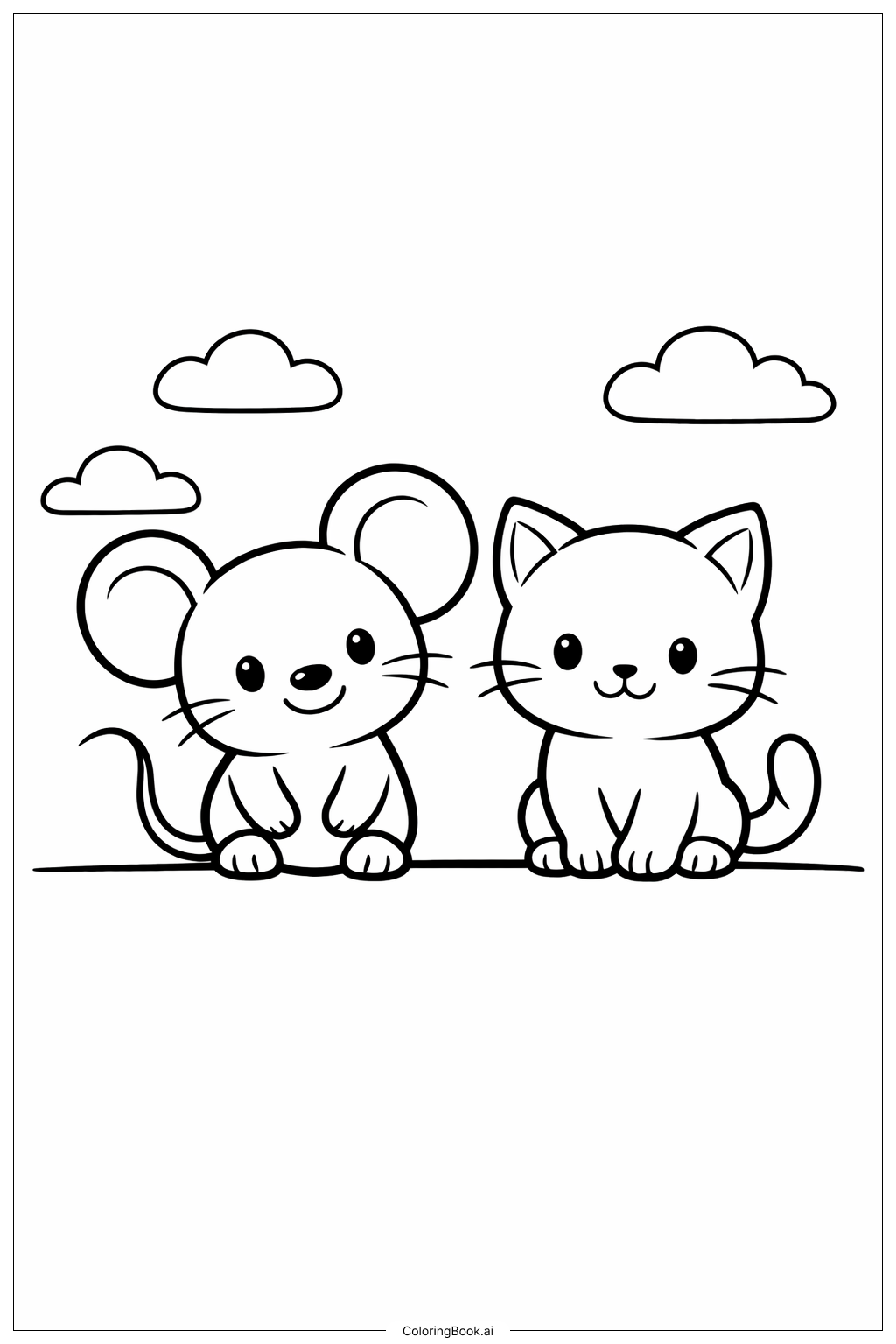
Coloring tips: How to color Mouse and Little Cat coloring page well?
Start with the mouse by choosing a classic warm gray or soft brown for its body. Use a lighter pink or cream shade for the inner ears, nose, and the tip of its tail to add contrast. For the little cat, try a gentle orange tabby look with stripes, or go for a soft white and gray coat — both work beautifully. Add a light pink blush to each character's cheeks to bring out their sweet expressions. Use a darker shade of the base color to add gentle shading along the sides and beneath the belly to create a sense of depth. Keep the eyes bright — a deep black pupil with a tiny white highlight dot makes them pop. Feel free to get creative with the background. A soft yellow, sky blue, or mint green can make both characters stand out without overwhelming them. Colored pencils work well for fine fur details, while markers are great for bold, flat areas of color.
Coloring challenges: Which parts are difficult to color and need attention for Mouse and Little Cat coloring page?
• Tiny Facial Features: Both the mouse and the little cat have small, delicate faces with eyes, noses, and mouths packed closely together. Staying within the lines in these areas requires a sharp pencil tip or a fine-tipped marker. Young colorists may find it tricky to fill these features neatly without colors bleeding into each other. Take it slowly and work on one feature at a time.
• Fur Texture Details: The outlines suggest soft, fluffy fur on both characters. To capture this texture realistically, colorists need to layer colors and use short, directional strokes that follow the shape of the body. Flat, uniform coloring can make the characters look stiff, so blending two close shades — such as light gray and mid gray — helps bring the fur to life.
• Overlapping Areas Where Characters Touch: Where the mouse and the cat sit side by side, their bodies may overlap or sit very close together. Choosing colors that are different enough to clearly separate the two characters while still looking harmonious can be a challenge. Planning your color palette before you begin will help avoid confusion in these shared spaces.
• Tail and Limb Edges: The mouse's long curling tail and the cat's slender limbs have thin, curved outlines. These narrow areas are easy to color outside of accidentally. Use a well-sharpened tool and work slowly along the edges first, then fill in the center.
• Balancing Light and Shadow: Adding shading to round, soft bodies like these requires a gentle touch. Too much dark shading can make the characters look muddy, while too little can make them appear flat. Practice light pressure and gradual blending for the best results.
Benefits of coloring books: Advantages of drawing Mouse and Little Cat coloring page
Coloring this Mouse and Little Cat page offers a wonderful range of benefits for children and beginners alike. The friendly subject matter — two small, lovable animals sitting together — makes the activity feel fun and emotionally engaging right from the start.
For younger children, filling in the rounded, simple shapes of the mouse and cat helps build fine motor control and hand-eye coordination. Carefully navigating small details like the ears, eyes, and tails strengthens pencil grip and precision, skills that directly support handwriting development.
The scene also invites creative thinking. Choosing colors for fur, deciding whether to add a background, and experimenting with shading all encourage kids to make independent artistic decisions and develop their own sense of style and color awareness.
Beyond the physical and creative benefits, coloring this gentle image is a naturally calming activity. Focusing on a quiet, cheerful scene helps children slow down, reduce stress, and practice staying present — a form of mindfulness that is especially valuable after a busy day.
Finally, completing the page gives a real sense of accomplishment. Seeing a finished, colorful picture that they created themselves boosts confidence and motivates kids to keep exploring art. It is a simple, screen-free activity that delivers meaningful developmental value while being genuinely enjoyable.