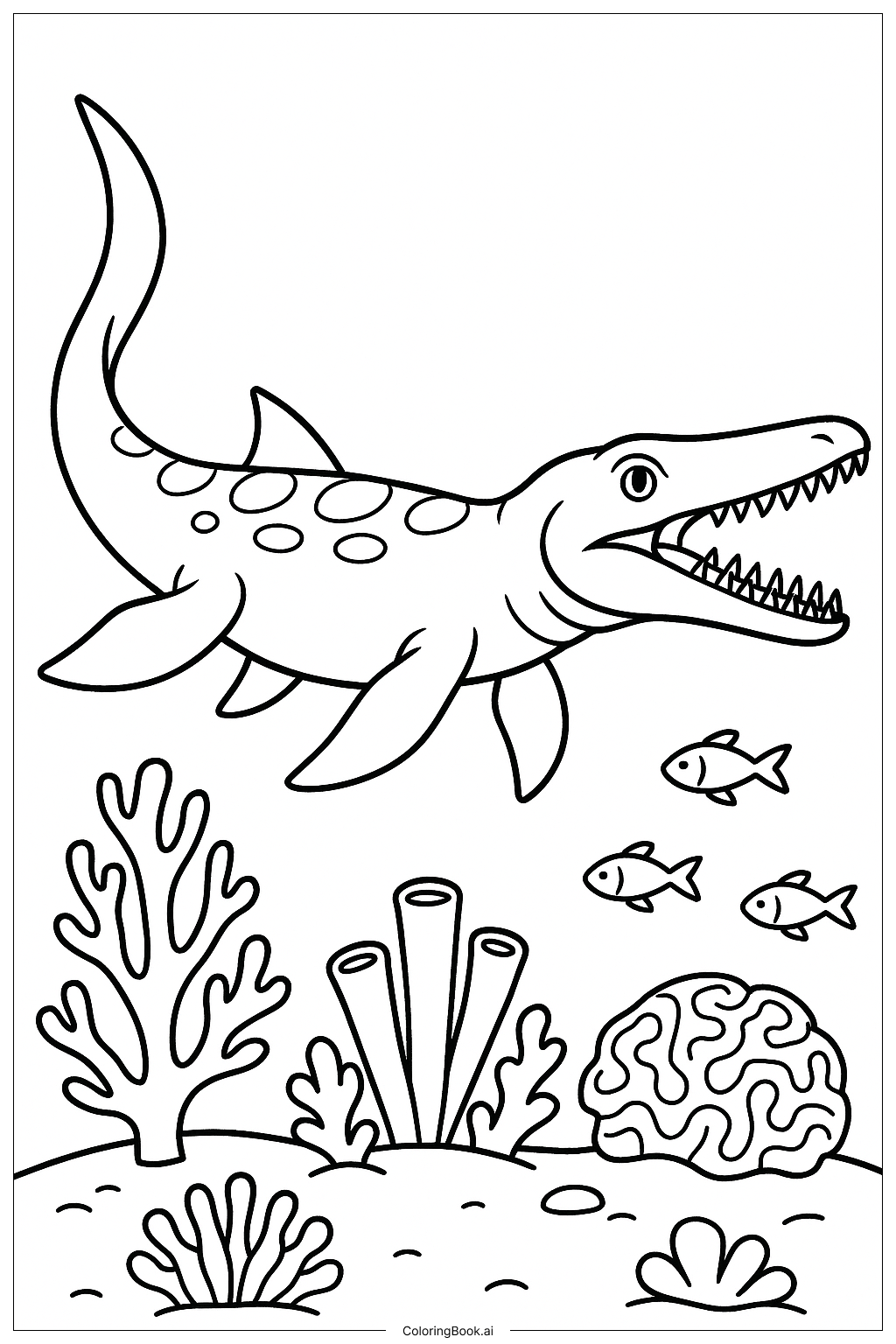
Coloring tips: How to color Mosasaurus With Coral Reef coloring page well?
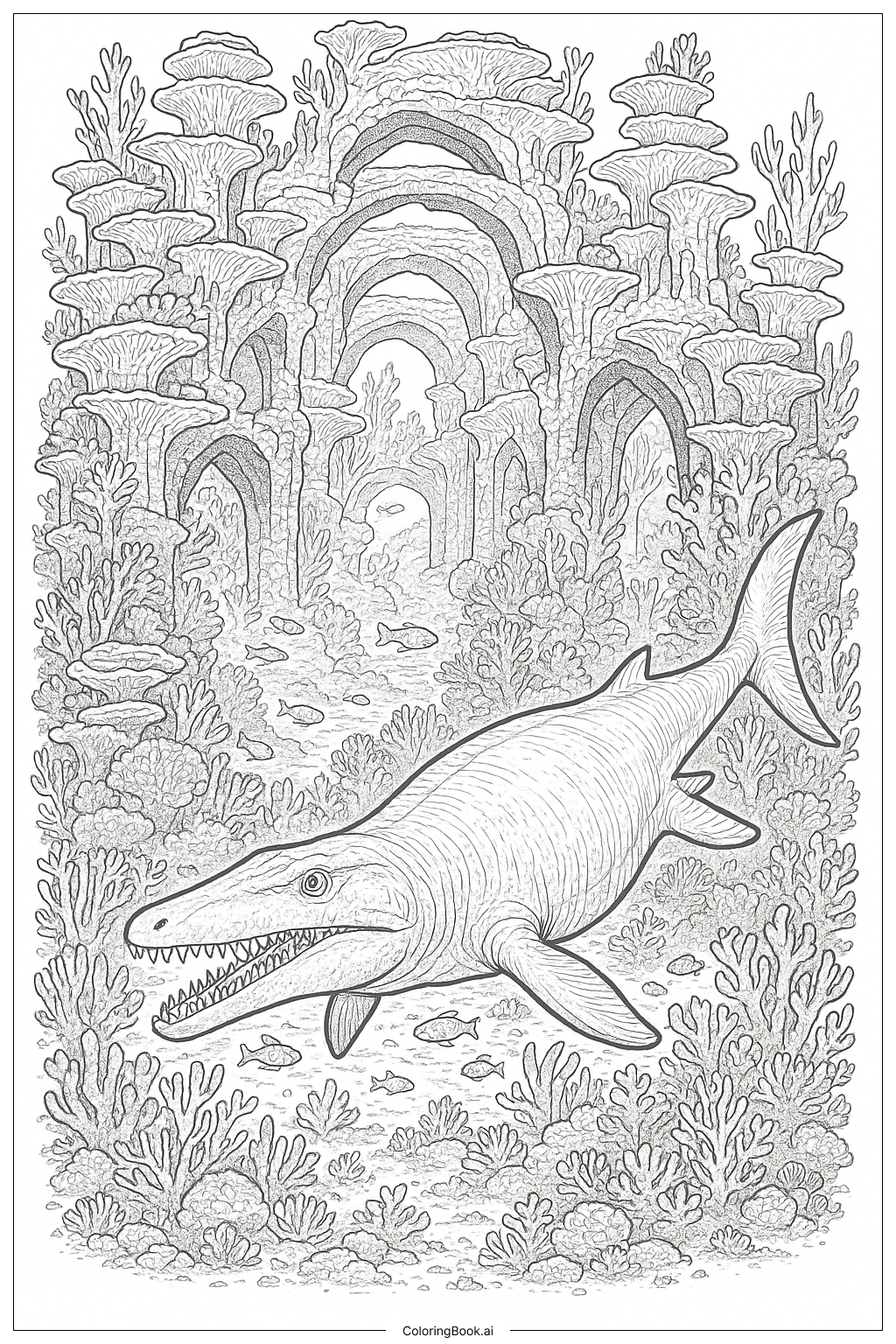
Suggested colors: use ocean blues and greens for water, with lighter shades near the surface and deeper tones toward the bottom. Color the mosasaurus in cool grays or greens, adding a touch of yellow or teal to highlight the muscles and curves. The coral reef can be rainbow-hued: oranges, pinks, purples, and reds to create a vivid contrast. The small fish can be silver or bright yellow, with dark stripes for personality. Shading techniques: color the largest areas first (body, tail, fins), then add shadows along the underside and near overlaps to show depth. Use a light touch to color the background and avoid overpowering the main creature. Blend colors gently where water light changes, and keep the teeth white or light gray for emphasis. Finish with highlights on the mosasaur’s eye and glossy scales.
Coloring challenges: Which parts are difficult to color and need attention for Mosasaurus With Coral Reef coloring page?
- Complex outlines and many shapes. The mosasaurus has a long, curvy body with sharp teeth, a big tail, and several rounded spots on its back. The reef shows branching coral, tubular columns, and a brain-like coral ball. Small fish dart around. For children, it can be tricky to color the large creature and the tiny details without going outside the lines. Take your time, use light pencil strokes, and go back to another color to fix mistakes.- Color harmony underwater. Water changes color with depth. Beginners should plan light-to-dark shading: light blues near the surface, medium greens or grays around the mosasaur, and darker tones in the distant background. Avoid choosing too many bright colors for every object, which can make the scene busy. Instead pick a color theme and stick to it, adding highlights to suggest sunshine and water reflections.- Textures and patterns. The mosasaurus skin, the fish scales, the coral textures, and the brain-like ball all have distinct looks. Replicating scales and the wavy brain pattern requires careful line work and patience. Use stippling or tiny short strokes to suggest texture without overwhelming the main shapes. Keep teeth white with a thin dark edge to show sharpness.- Depth and layering. Some objects lie behind the mosasaur while others are in front. Use color intensity and value to separate layers: lighter, cooler colors for distant coral and darker, warmer tones for foreground elements. A simple background wash can help separate the water from the seabed. Rely on consistent light direction, so highlights and shadows feel believable.
Benefits of coloring books: Advantages of drawing Mosasaurus With Coral Reef coloring page
Coloring this page helps kids strengthen fine motor skills by staying inside lines and controlling small coloring motions. It also builds color recognition as they name and match blues, greens, and coral tones. Planning and sequencing become easier when they decide which large areas to color first, then fill in details. Focusing on the mosasaurus, corals, and fish invites attention to shapes, patterns, and textures, improving concentration and patience. The underwater scene encourages creativity: children can choose a unifying color scheme or experiment with bright, contrasting hues to make the reef pop. They practice shading by adding lighter colors where light hits the creature and darker tones in the shadows, learning how light changes in water. Talking through colors with friends or adults supports language and storytelling about underwater life. Finally, the activity provides relaxation and a sense of accomplishment when the whole page comes alive with color.