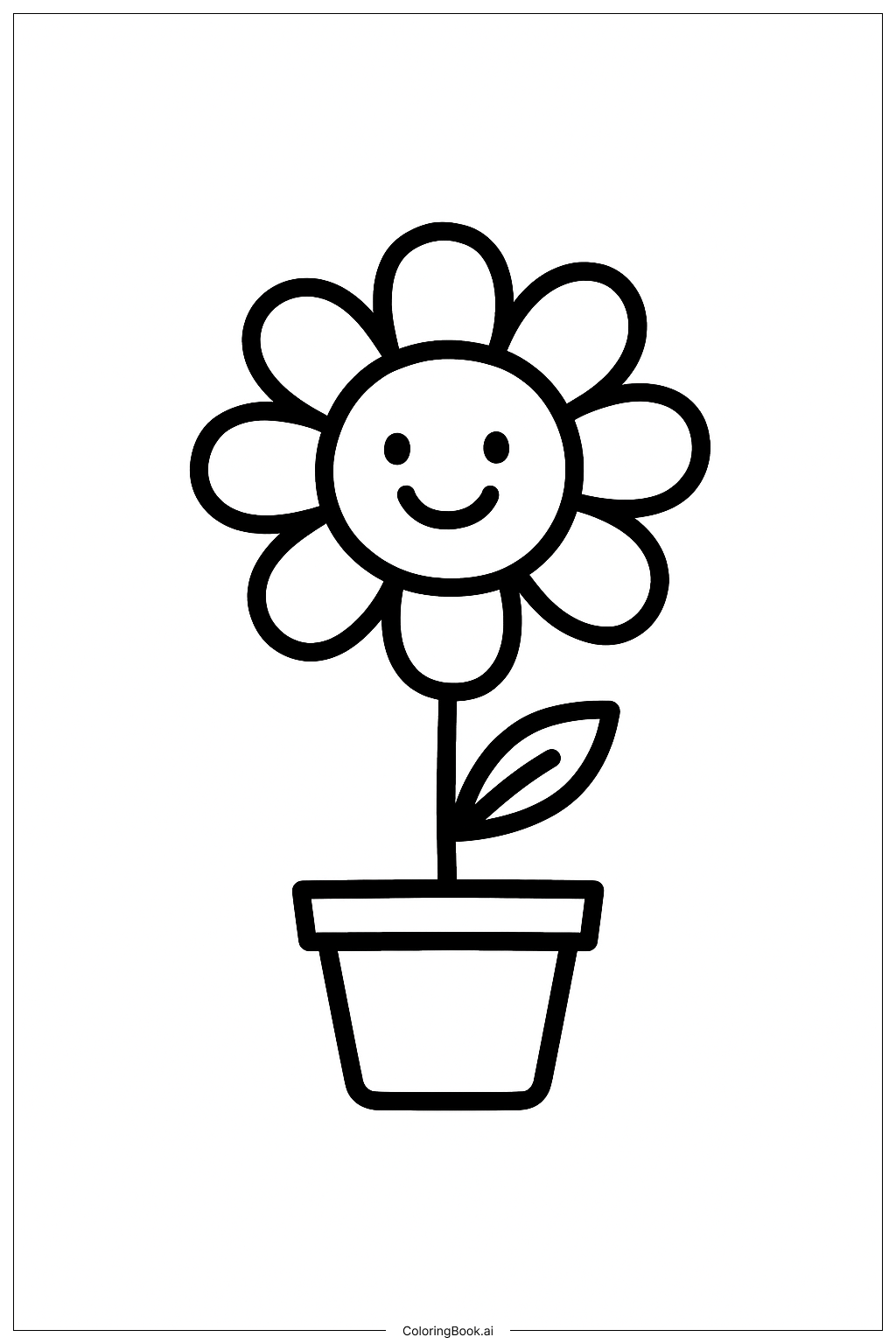
Coloring tips: How to color Tiny Garden Mental Health coloring page well?
Use bright colors for the flower petals like yellow, pink, or orange to make the flower look lively. Color the face with a light color to keep the smile clear and easy to see. The pot can be colored brown or terracotta to look like real flower pots. For the leaf and stem, use different shades of green to bring the plant to life. Try to use colors that make you feel happy and calm. You can also try blending colors to add depth and fun to the image.
Coloring challenges: Which parts are difficult to color and need attention for Tiny Garden Mental Health coloring page?
1. Coloring inside the small petals neatly can be tricky for younger kids due to the size and shape. 2. Keeping the face of the flower clear and smiling requires careful coloring to avoid covering the eyes or mouth. 3. Choosing the right green shades for the leaf and stem might be confusing as there are many green tones. 4. Coloring the pot in a way that looks realistic while keeping it simple can be challenging. 5. Blending colors smoothly on such simple shapes can be difficult but adds nice effects when done well.
Benefits of coloring books: Advantages of drawing Tiny Garden Mental Health coloring page
Coloring this happy flower helps children relax and feel joyful. It encourages fine motor skills as they carefully color small parts like petals and the face. The smiling flower can boost mood and make kids think about positivity and mental health. Using different colors improves creativity and color understanding. This activity also gives a sense of accomplishment and builds focus and patience as kids complete the picture.