Coloring tips: How to color Emotion Wheel Mental Health coloring page well?
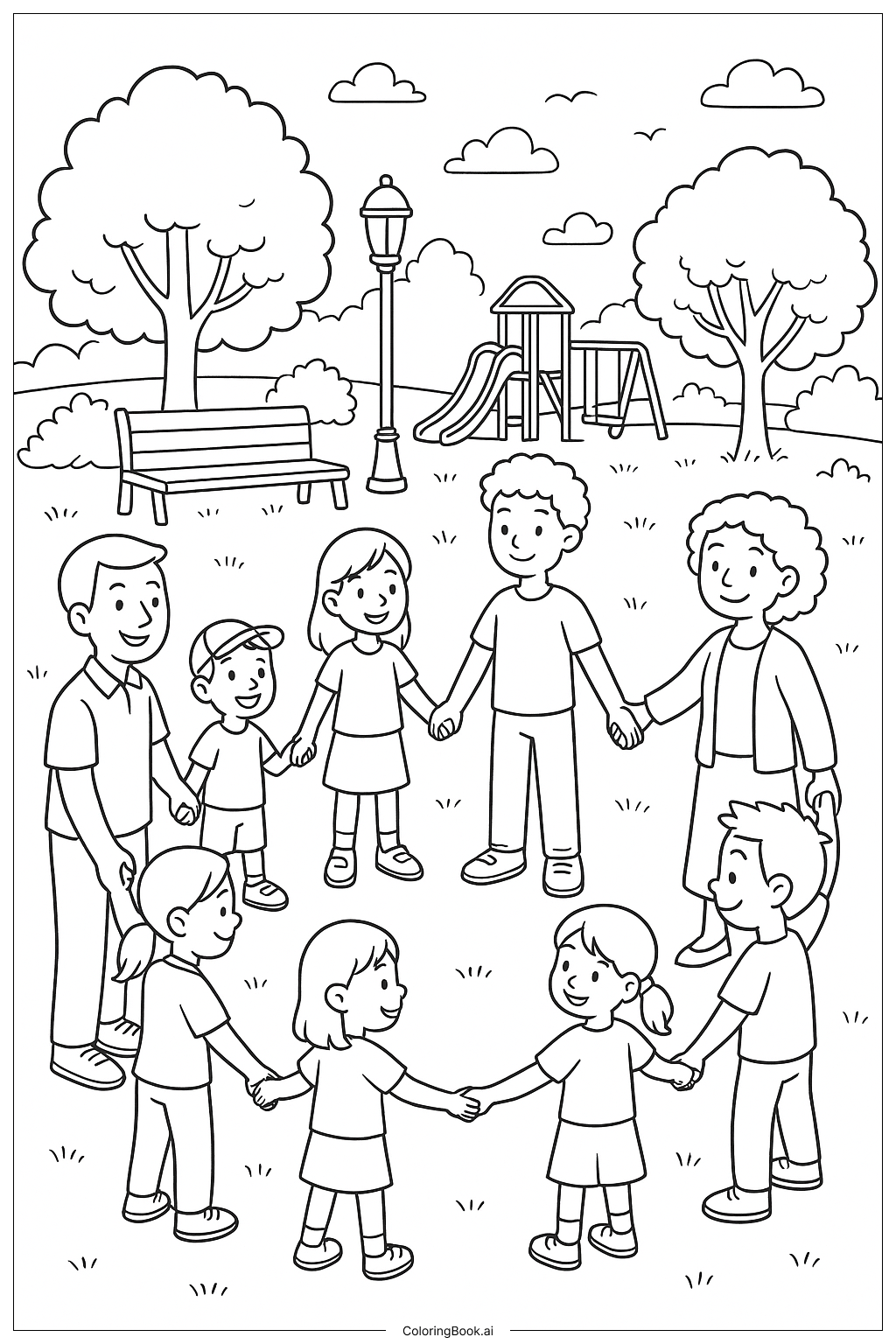
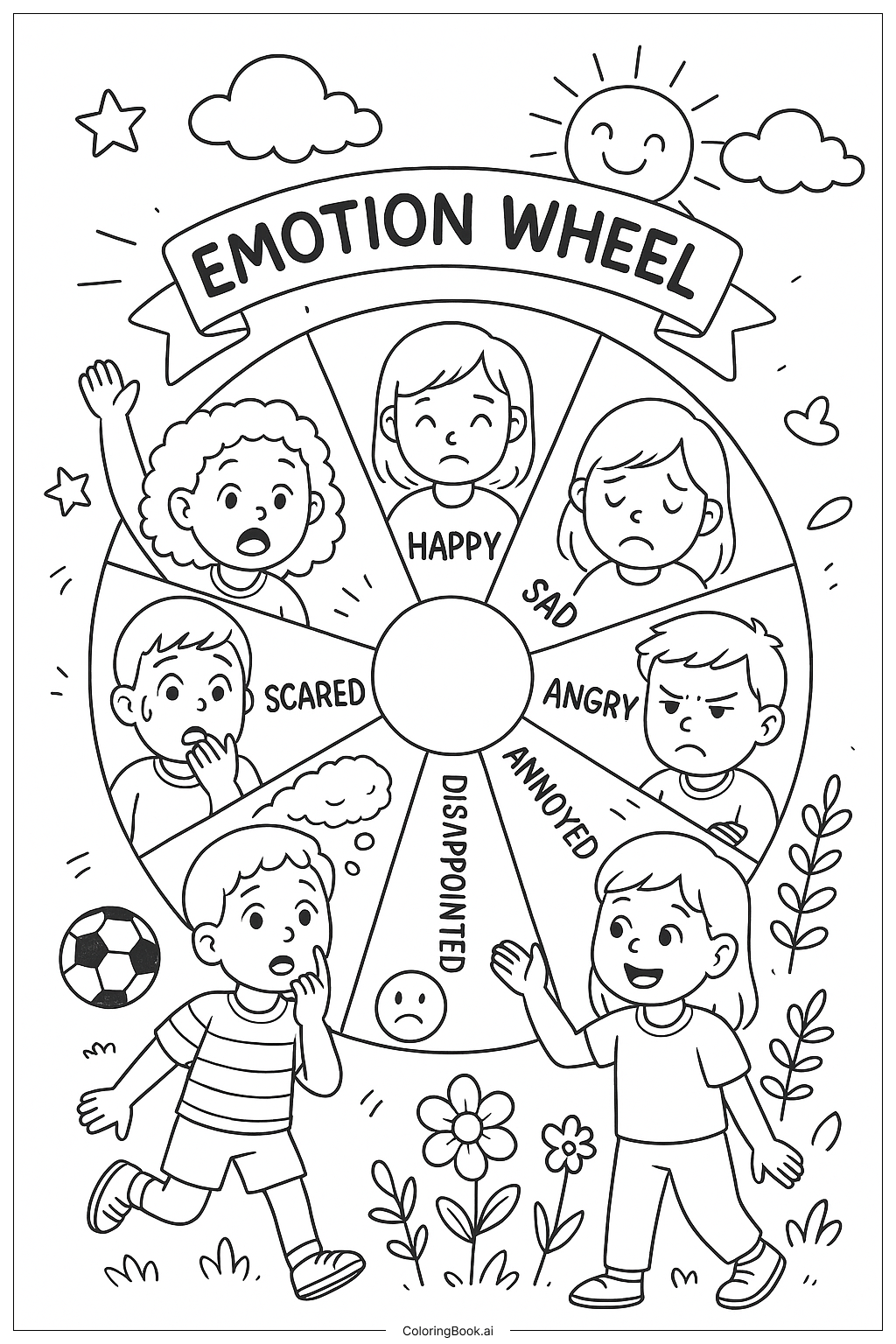
Use bright colors like yellow and orange for the happy sections to show joy and energy. Use blue and grey for sad and disappointed feelings to show calmness or sadness. Red and dark colors work well for angry and annoyed feelings to express strong emotions. Use soft colors like light purple or pink for scared to show a quiet mood. Color the children’s clothes and hair in varied colors to make the page lively and interesting. Add green to the plants and colorful shades to the flowers and sky to make the picture bright and cheerful.
Coloring challenges: Which parts are difficult to color and need attention for Emotion Wheel Mental Health coloring page?
1. Small spaces: The areas inside the emotion wheel are small and need careful coloring to stay inside the lines. 2. Different facial expressions: Coloring each child's face requires understanding how to show different emotions through subtle color choices. 3. Detail balance: There are many small details like stars, flowers, and leaves that need attention but should not overwhelm the main picture. 4. Color consistency: Choosing colors that match the feelings but still look good together can be tricky. 5. Overlapping lines: Some parts where the children overlap with the wheel or decorations may make it hard to color neatly.
Benefits of coloring books: Advantages of drawing Emotion Wheel Mental Health coloring page
Coloring this image helps children learn about different emotions and how to recognize them. It improves focus and fine motor skills as they carefully fill in small spaces. Using colors to express feelings can support emotional development and encourage self-awareness. The variety of details keeps children engaged and allows creativity to flow. Overall, this activity makes learning about mental health fun and interactive.