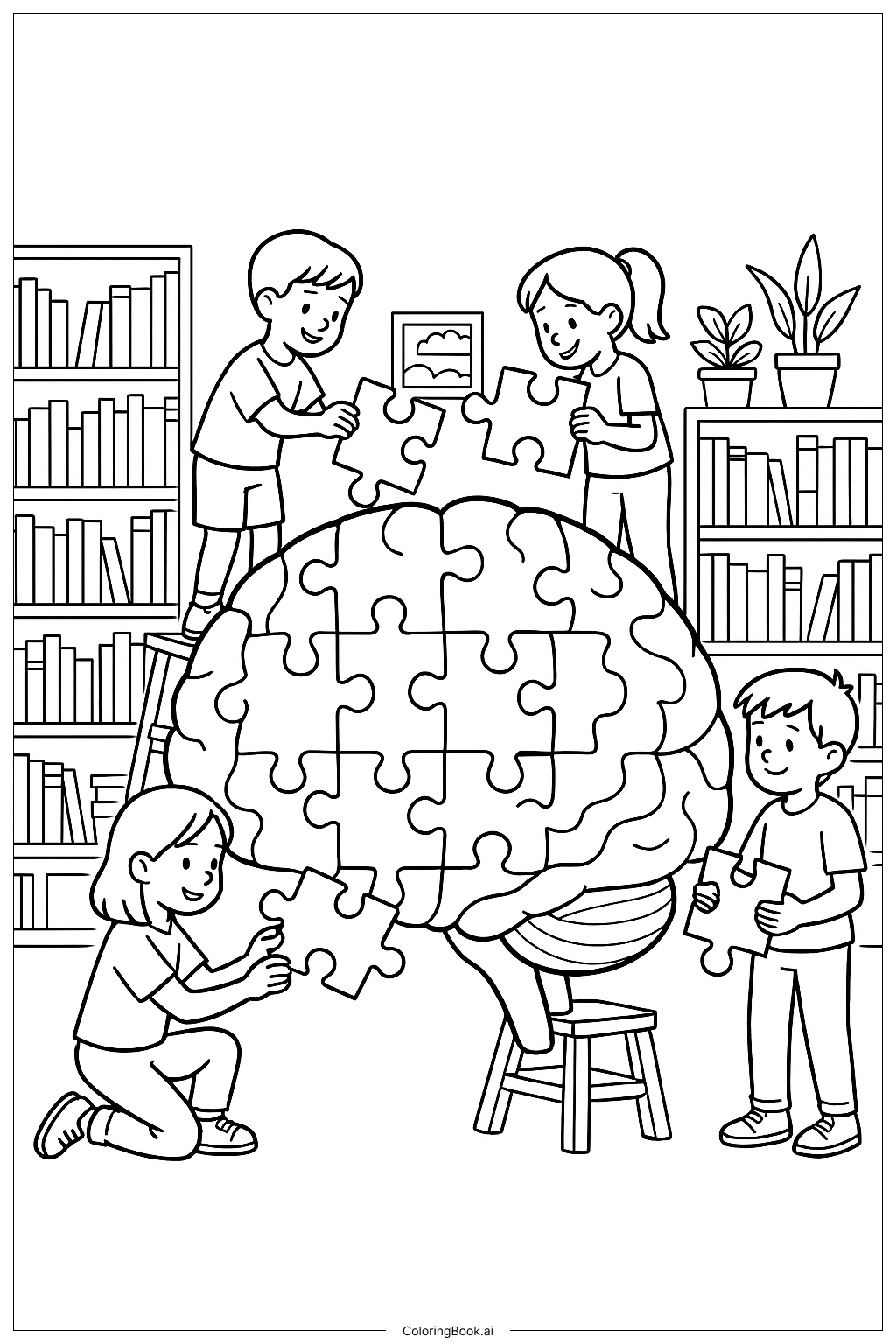
Coloring tips: How to color Thoughtful Brain Puzzle Mental Health coloring page well?
Start with a light, warm base color for the brain, like soft pink or peach. This makes it look natural and friendly. Color each puzzle piece slightly differently to show they are separate but connected. You can use shades of the same color, like light blue, medium blue, and sky blue, to keep it feeling calm. For the small symbols around the brain — hearts, stars, and clouds — use cheerful colors like yellow, lavender, and mint green. These pops of color make the page feel uplifting. Try not to use too many dark colors. Soft, pastel tones work best for a Mental Health theme. Take your time with each piece. There is no rush. Enjoy the process and let your colors tell your own story about how you feel inside.
Coloring challenges: Which parts are difficult to color and need attention for Thoughtful Brain Puzzle Mental Health coloring page?
• Puzzle Piece Boundaries: The brain is divided into many interlocking puzzle pieces, each with curved edges and tabs that fit tightly together. Staying inside each individual piece without accidentally coloring over the lines into a neighboring piece requires steady hands and careful attention. Younger children may find this especially tricky and might benefit from using fine-tipped coloring tools.
• Creating Color Variety Without Chaos: Because the puzzle pieces are meant to look distinct yet unified as one brain, choosing colors that are different enough to tell each piece apart, while still looking harmonious together, is a real challenge. Picking colors that clash or are too similar can make the image look confusing rather than organized and beautiful.
• Small Decorative Details: The tiny stars, hearts, and swirling symbols scattered around the brain are small and delicate. Coloring them neatly takes patience and a sharp pencil or fine marker. If these details get filled in too heavily, they can get lost against the background.
• Maintaining Consistent Shading: If you choose to add shading or depth to the brain shape, keeping the light source consistent across all the puzzle pieces is difficult. Uneven shading can make the brain look flat in some areas and too heavy in others.
• Background Balance: Deciding how to color the background without overpowering the brain itself is a subtle but important challenge. A background that is too dark or too bright can draw attention away from the main subject and reduce the calm, reflective mood of this Mental Health themed image.
Benefits of coloring books: Advantages of drawing Thoughtful Brain Puzzle Mental Health coloring page
Coloring this brain puzzle image offers wonderful benefits for kids and adults alike. First, it helps build focus and concentration. Following the puzzle piece outlines carefully trains your eyes and hands to work together, which strengthens fine motor skills. Second, the Mental Health theme of this image makes it a great tool for starting conversations about feelings, thinking, and emotional well-being. As you color, you can think about what makes your mind feel healthy and happy. Third, choosing colors and filling in each piece one at a time is naturally calming. It slows your breathing and quiets busy thoughts, almost like meditation. Fourth, finishing the image gives a strong sense of accomplishment. Seeing the completed brain, full of your chosen colors, reminds you that even complex things can be handled one small piece at a time. This is a powerful and gentle message for anyone working through challenges. Finally, this page encourages creativity. There is no single right way to color it, so every person's finished page will be uniquely their own.