Coloring tips: How to color Pet Care Mental Health coloring page well?
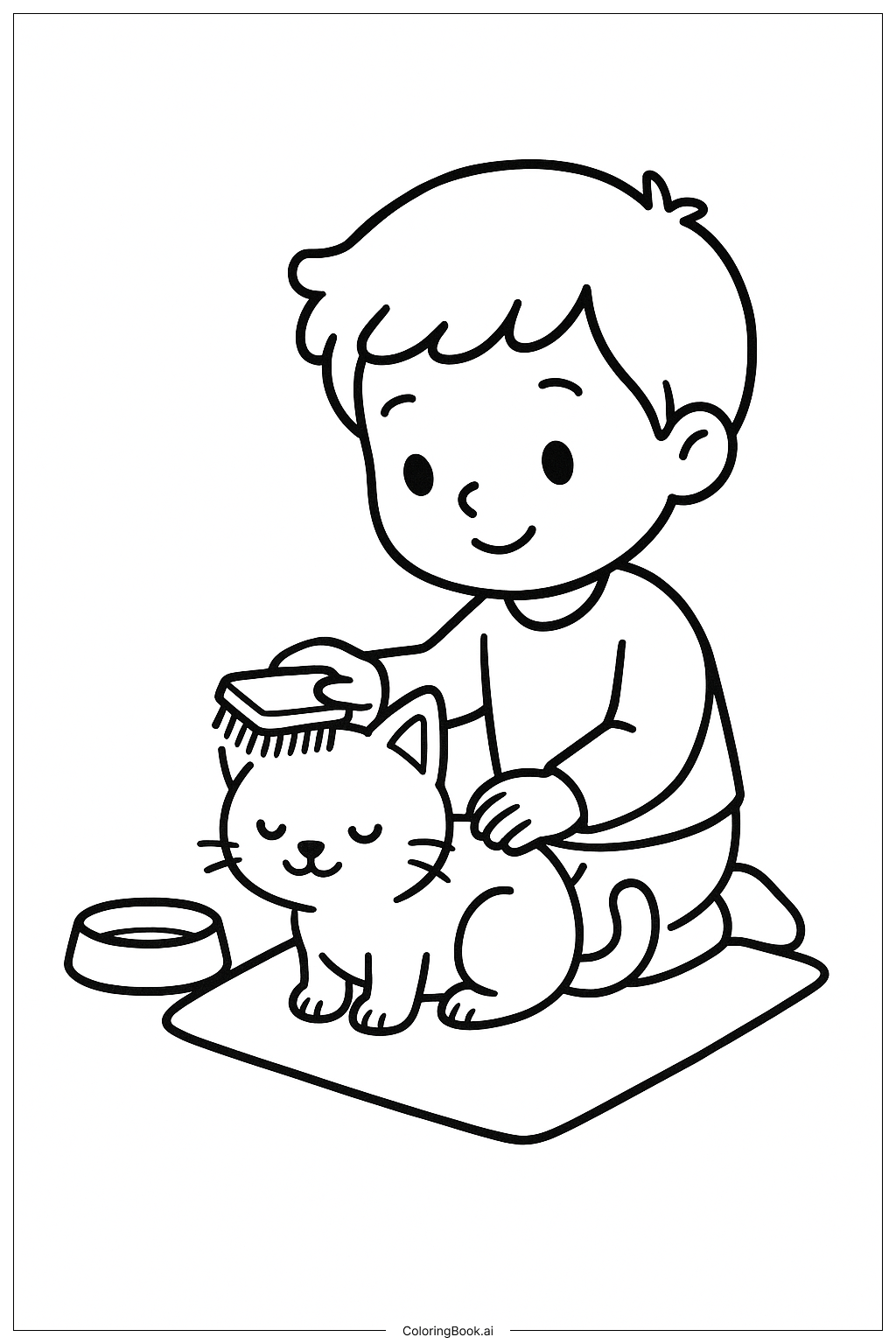
Use soft and warm colors for the child’s clothes to show comfort and care. The cat can be colored in natural shades like gray, orange, or white with patches for a realistic look. Color the mat in a bright color to make the scene lively. The pet bowl can be given a shiny, metallic or colorful look to add detail. Use gentle shading on the child’s face and the cat’s fur to show softness and warmth. Try pastel tones for a calm and soothing effect that matches the theme of care and mental well-being.
Coloring challenges: Which parts are difficult to color and need attention for Pet Care Mental Health coloring page?
1. Coloring the small details like the cat's whiskers and the brush bristles may be tricky for younger children because these require precision. 2. Capturing the soft texture of the cat’s fur can be challenging to make it look fluffy and gentle. 3. Coloring the child’s facial features carefully, such as the eyes and smile, needs attention to maintain the warm expression. 4. Balancing colors between the child, cat, and background objects like the mat and bowl to avoid making the picture too busy or dull. 5. Using shading effectively to show depth without overwhelming the simple lines of the drawing may require practice.
Benefits of coloring books: Advantages of drawing Pet Care Mental Health coloring page
Coloring this picture helps children relax and focus, promoting mental calmness. It teaches them about the importance of caring for pets and being gentle. Coloring fine details improves hand-eye coordination and concentration. The act of choosing colors encourages creativity and personal expression. The theme of kindness and pet care supports positive emotions and empathy, which are good for mental health. Overall, it’s a fun way to learn about responsibility while enjoying art.