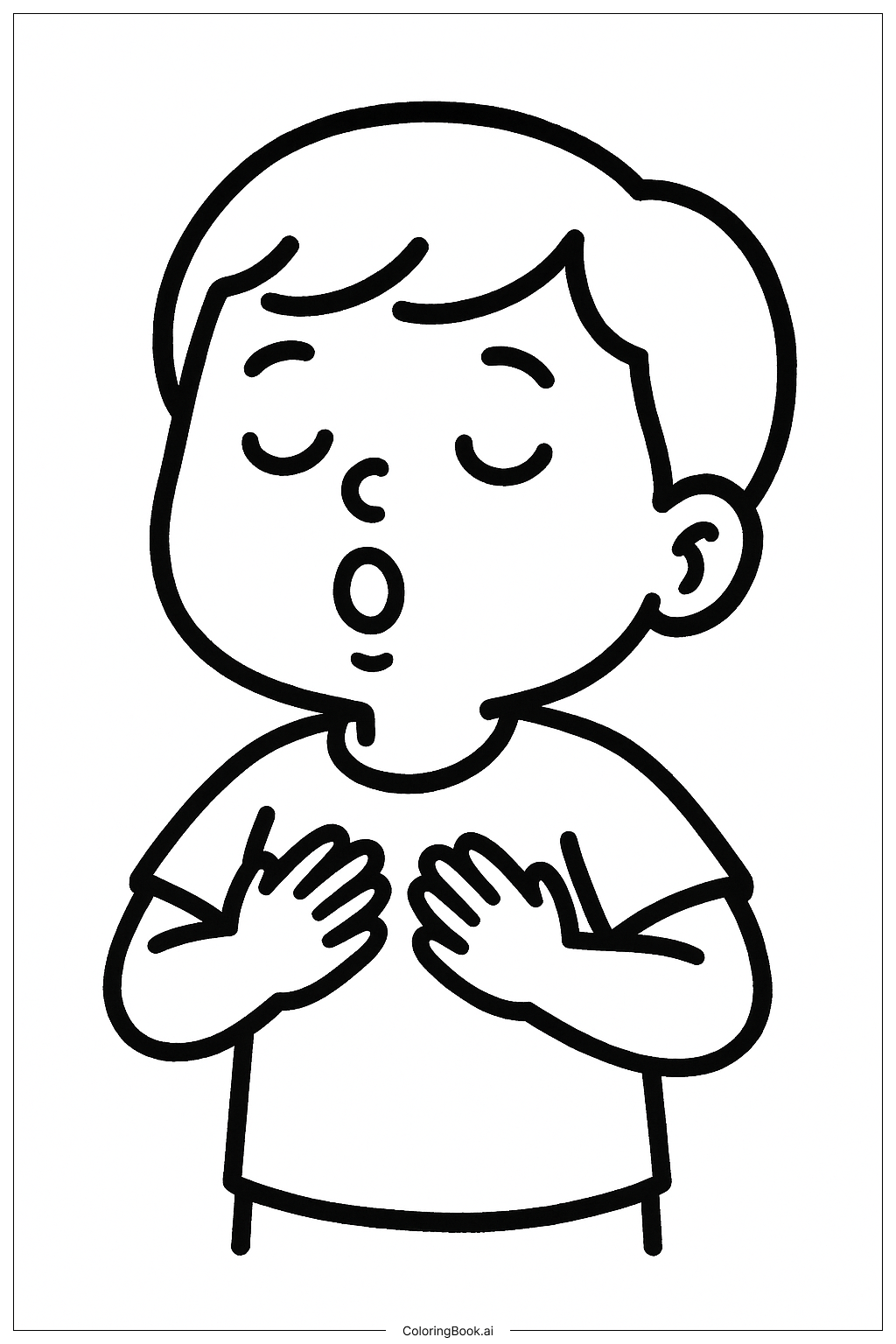
Coloring tips: How to color Breathing Child Mental Health coloring page well?
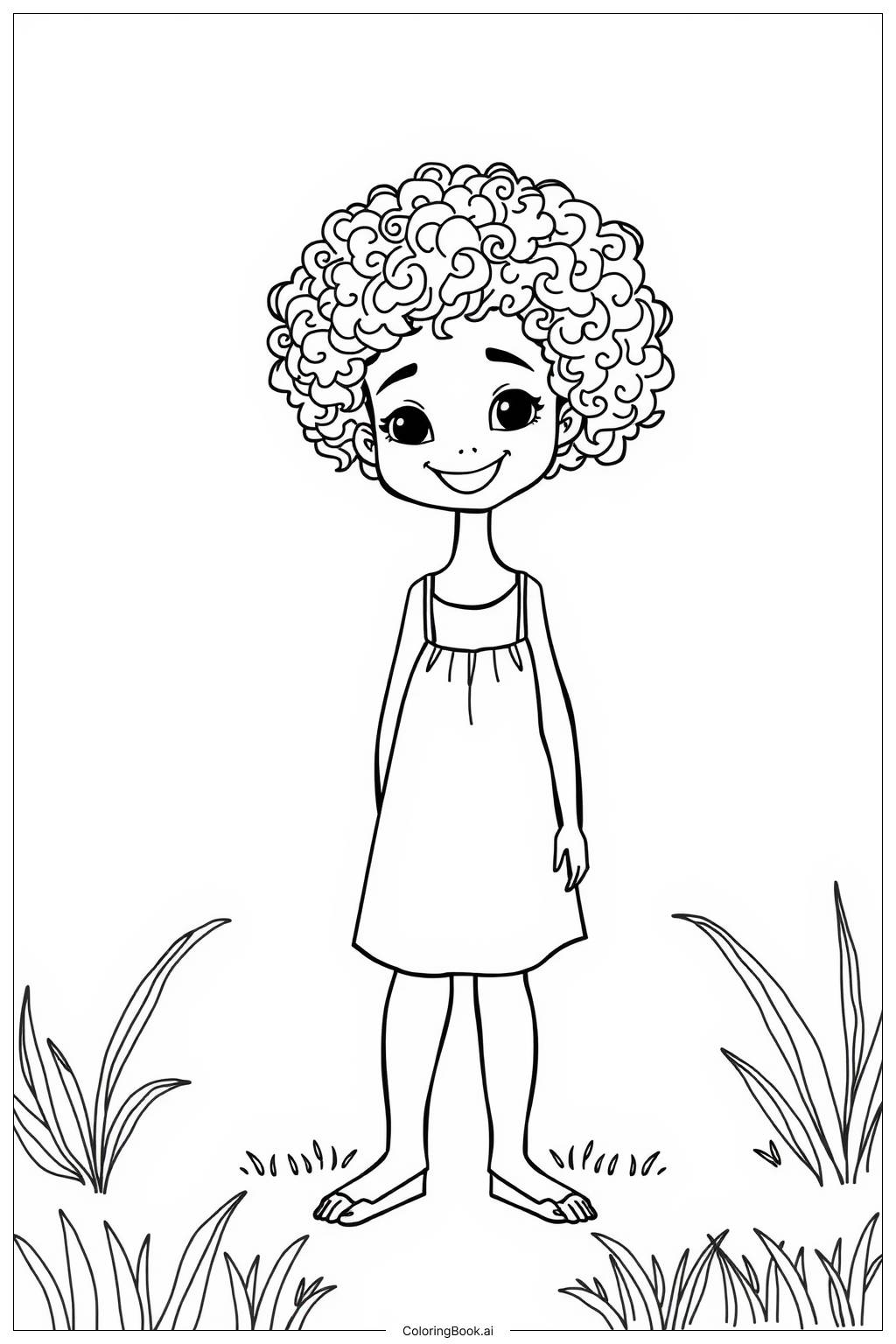
Use soft and calming colors to fill the child’s face and clothes, such as light blues, greens, or pastel shades. These colors create a peaceful feeling that matches the breathing exercise theme. For the skin, choose natural and warm tones. You can use different shades of blue or green in the background to represent calmness and sky or nature. Keep the colors smooth and gentle to reflect the quiet moment. Try to color inside the lines carefully, especially on the hands and face. If you want, add a gradient effect to show light and shadow on the child’s hair and shirt. This will add a nicer look to the picture while still keeping it simple.
Coloring challenges: Which parts are difficult to color and need attention for Breathing Child Mental Health coloring page?
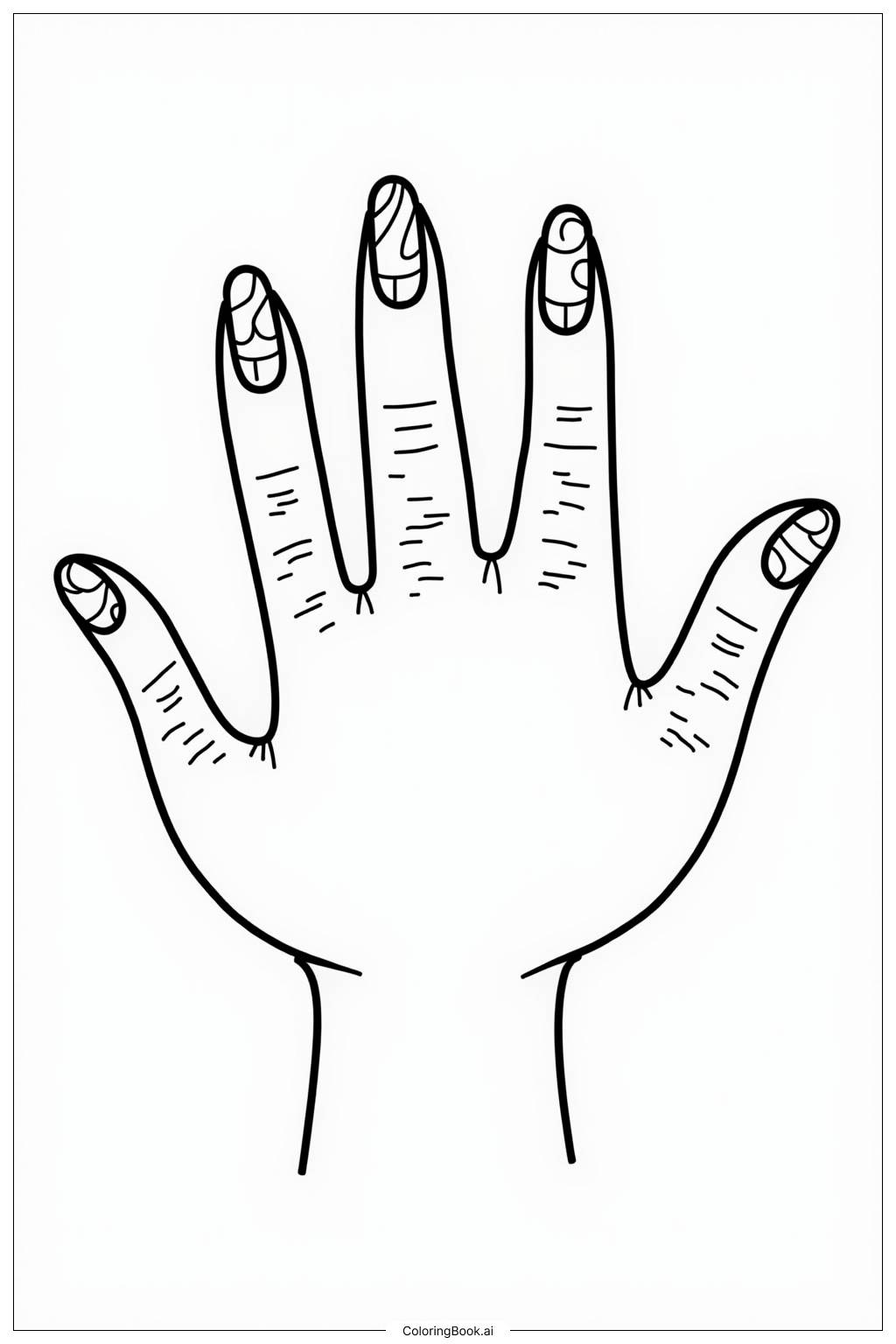
1. Coloring the hands and fingers may be tricky because they are close together and need careful brush control to stay inside the lines.
2. The child’s face has many small curved lines, like closed eyes and lips, which require attention to avoid coloring over them.
3. Keeping the colors soft and smooth to match the calming mood can be difficult; harsh or bright colors might spoil the peaceful feeling.
4. Adding shading or gradients gently without making the picture look too busy could challenge beginners.
5. Balancing color on the child’s hair to show volume without using too many dark or bright spots may need extra care.
Benefits of coloring books: Advantages of drawing Breathing Child Mental Health coloring page
Coloring this picture helps children focus and feel calm, much like the breathing exercise the child in the picture is doing. It teaches patience and careful hand control while coloring inside small spaces. The image encourages kids to learn about mental health and self-care by connecting coloring with relaxation and mindfulness. Coloring gently with soft colors can reduce stress and promote creativity. This activity also helps kids recognize the importance of taking deep breaths to manage emotions and feelings. Overall, it’s a fun and peaceful way to practice mental health care.