Coloring tips: How to color Bedtime Routine Mental Health coloring page well?
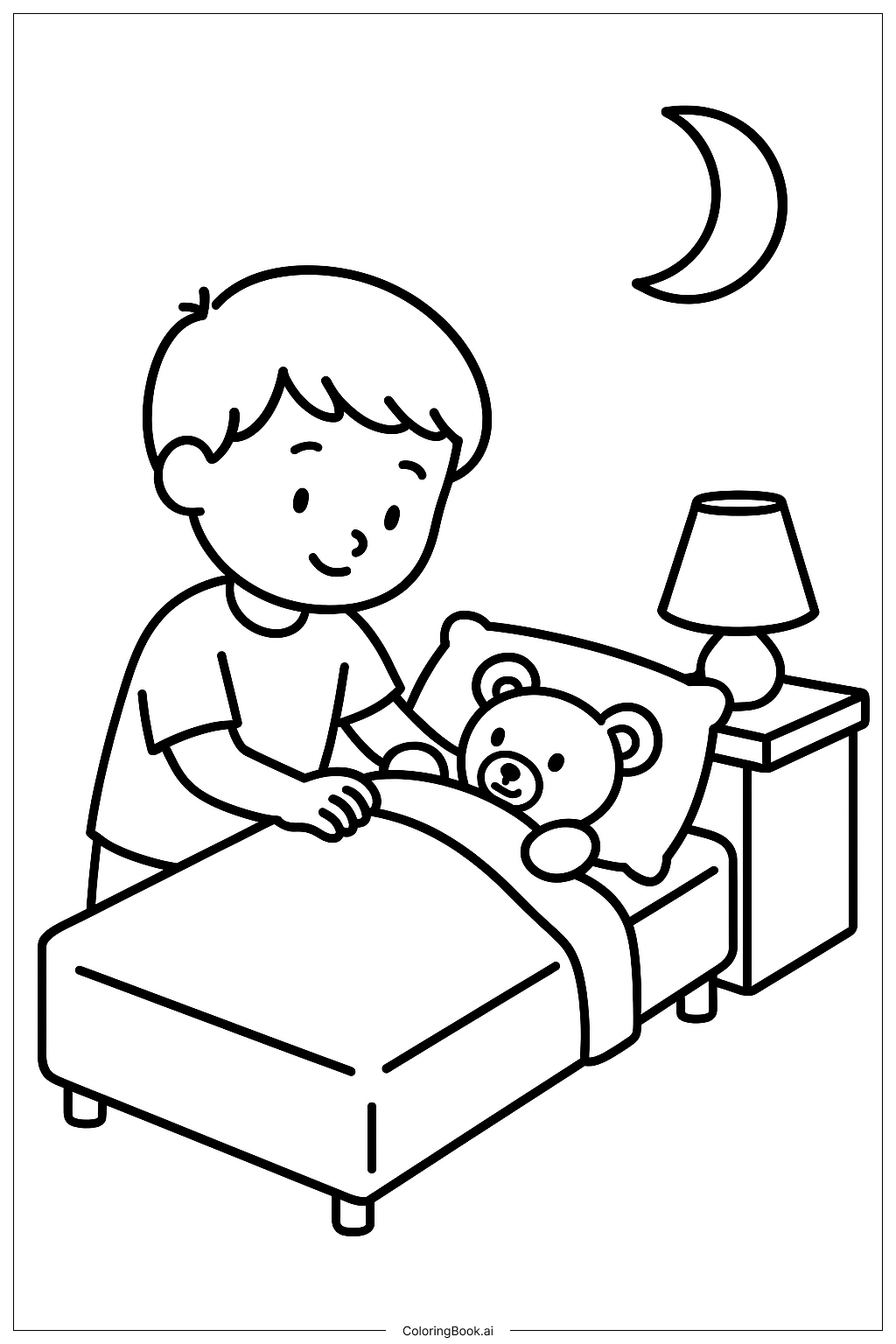
Use soft and warm colors like light blues, purples, and pinks for the bedroom to create a calm, peaceful atmosphere. The child’s clothes can be bright and cheerful colors like yellow or green to show happiness. The teddy bear can be colored in warm browns or tans to look cuddly and inviting. The blanket and pillow can be colorful patterns or simple pastel shades. The lamp might have a soft yellow light glow, and the moon can be a gentle white or pale yellow to represent night. Try blending colors gently to give a soothing feeling.
Coloring challenges: Which parts are difficult to color and need attention for Bedtime Routine Mental Health coloring page?
1. Coloring the teddy bear’s face requires attention to small details like eyes, nose, and mouth to keep the friendly expression clear. 2. The child’s hair and face need careful coloring to maintain the soft and gentle look. 3. The bed and blanket have larger areas that might need smooth, even coloring to look neat and cozy. 4. The lamp and nightstand have simple shapes but need consistent coloring to avoid breaking the calm mood. 5. Coloring the moon might require shading to give it a glowing effect, which can be tricky for younger children.
Benefits of coloring books: Advantages of drawing Bedtime Routine Mental Health coloring page
Coloring this picture can help children relax and focus. It encourages mindfulness as they choose soft colors that promote a peaceful bedtime mood. Coloring small details like the teddy bear’s face can improve fine motor skills. Creating a nighttime scene also teaches the value of bedtime routines for mental health. Overall, coloring this image supports calmness, creativity, and caring feelings, which are good for emotional well-being.