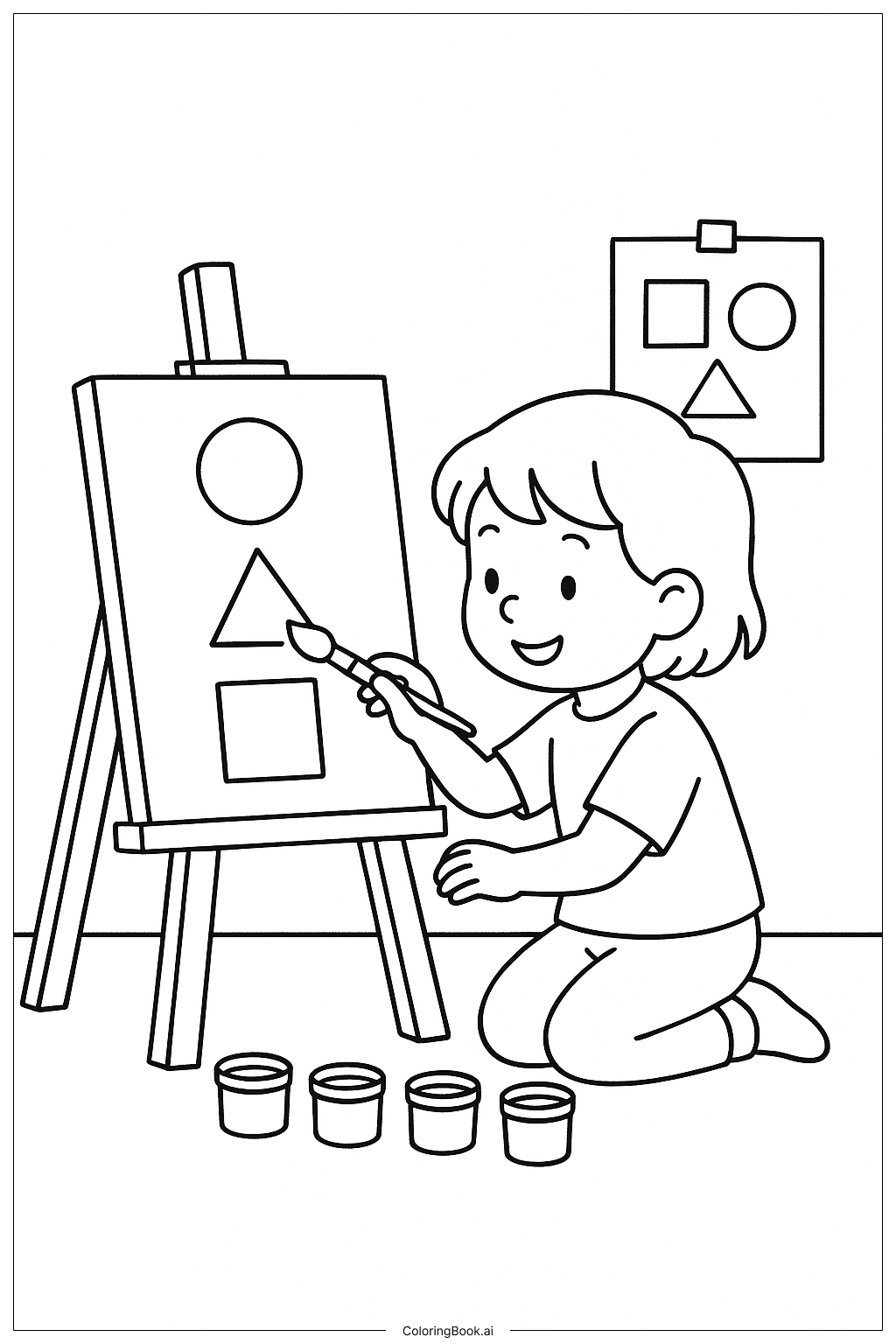
Coloring tips: How to color Art Therapy Mental Health coloring page well?
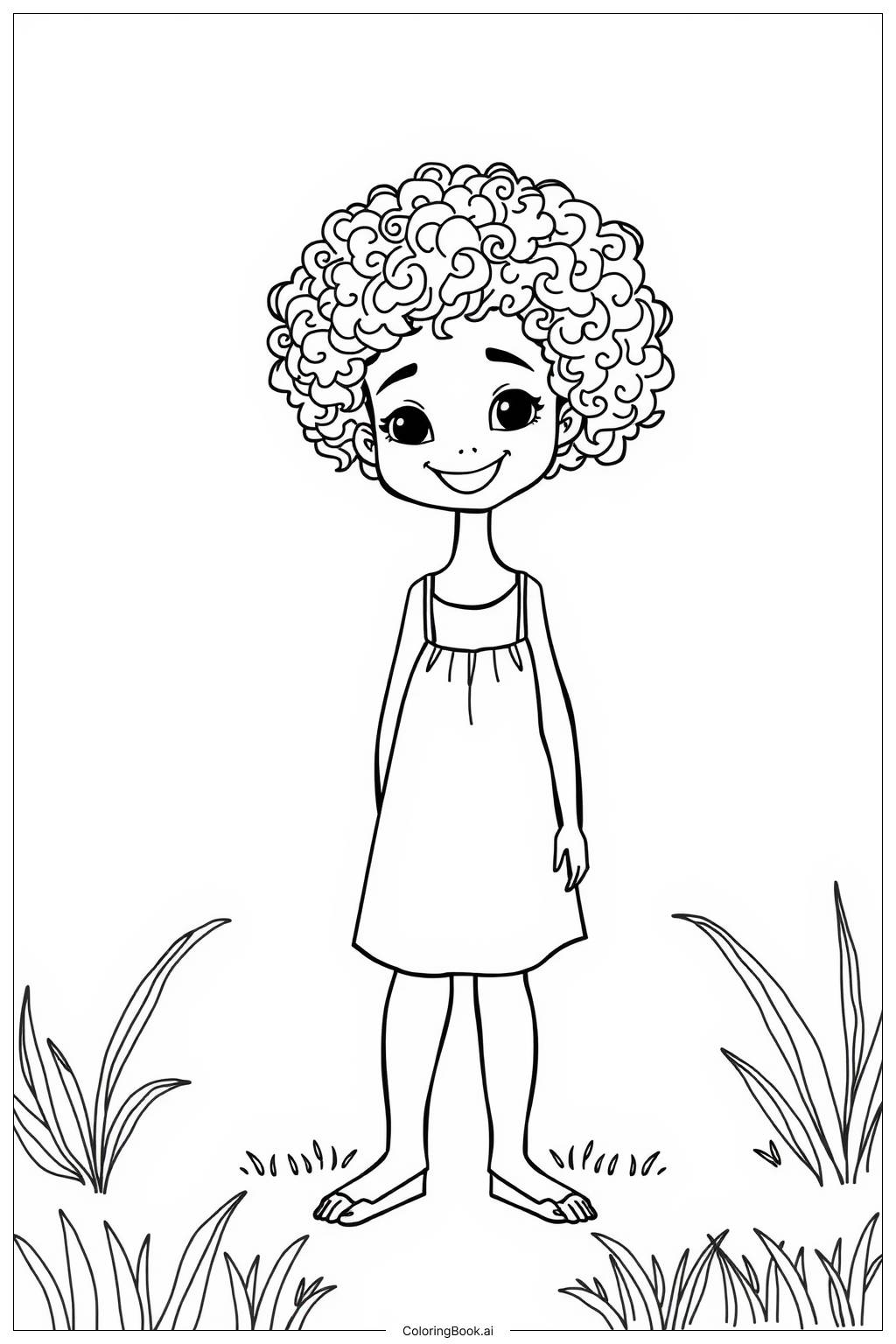
You can use bright and cheerful colors to make the picture lively. For example, paint the circle red, the triangle yellow, and the square blue to create a nice contrast. Color the child's clothes with soft colors like light blue or green. Use different colors for the paint containers to make them stand out. For the hair, choose a natural color like brown or black. Keep the background light to focus on the child and the painting. Try using smooth strokes to stay inside the lines and make the shapes clear and neat.
Coloring challenges: Which parts are difficult to color and need attention for Art Therapy Mental Health coloring page?
1. Coloring the small shapes on the canvas and reference paper can be tricky because they require careful attention to stay inside the lines.
2. The child's hands and fingers are small, needing precise strokes to avoid coloring outside the lines.
3. The paint containers have small details that might be hard to color neatly.
4. Balancing bright and soft colors to keep the picture vibrant without overwhelming it can be challenging.
5. Coloring the floor and background simply while ensuring they don’t distract from the main focus might need thoughtful color choices.
Benefits of coloring books: Advantages of drawing Art Therapy Mental Health coloring page
Coloring this picture helps children practice fine motor skills by carefully coloring small shapes and details. It encourages creativity as they choose colors to express the artwork. The activity promotes relaxation and reduces stress, making children feel calm and happy. Focusing on painting shapes also helps improve concentration and attention to detail. Overall, coloring this page supports mental health by combining fun with art therapy.