Coloring tips: How to color March Tulip Field coloring page well?
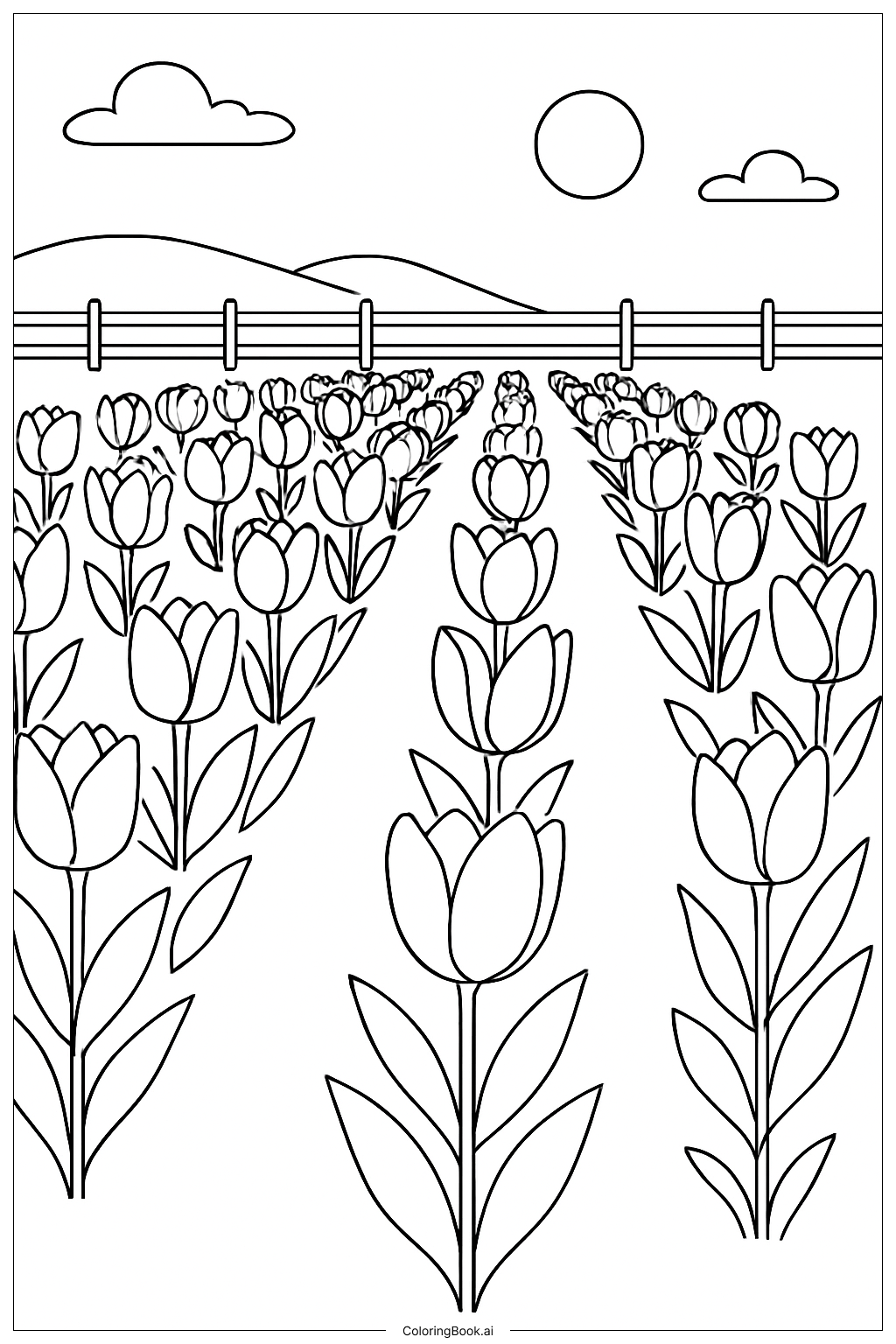
For this March Tulip Field image, use bright and lively colors to bring the tulips to life. Try different shades of red, pink, yellow, orange, and purple for the flowers to make the field look rich and varied. Color the stems and leaves in fresh green tones to show new spring growth. The sky can be colored light blue with soft white clouds for a sunny day effect. You can add different shades of brown or green for the ground and hills to create depth. Encourage mixing colors lightly to give a natural and cheerful springtime look.
Coloring challenges: Which parts are difficult to color and need attention for March Tulip Field coloring page?
• Fine Tulip Petal Details: The many small petals require careful coloring to keep edges neat and avoid smudging. Precision helps flowers look clear and vibrant. • Repeating Rows: Coloring the long rows of tulips evenly can be challenging since the flowers appear similar; maintaining consistent color while adding variety is needed to keep interest. • Layering Greens: The leaves and stems overlap in many places, so overlapping shades of green need balancing to clearly show each part without blending into a solid color. • Background Depth: Coloring the distant hills and trees calls for softer, lighter tones to create a sense of space and distance, which may require blending or shading skills. • Sky and Ground Contrast: Achieving a natural contrast between the bright blue sky and earth tones of the field involves choosing colors that complement but do not clash or overwhelm the tulips.
Benefits of coloring books: Advantages of drawing March Tulip Field coloring page
Coloring this March Tulip Field image helps improve fine motor skills by practicing careful coloring within many small flower petals. It encourages attention to detail and patience while working on repeated patterns like rows of tulips. Choosing different colors for flowers supports creativity and decision-making. Coloring the background with gradual tones teaches concepts of shading and depth, enhancing artistic perception. Overall, this image offers a fun way for children and adults alike to connect with the beauty of nature and the joy of spring through art.