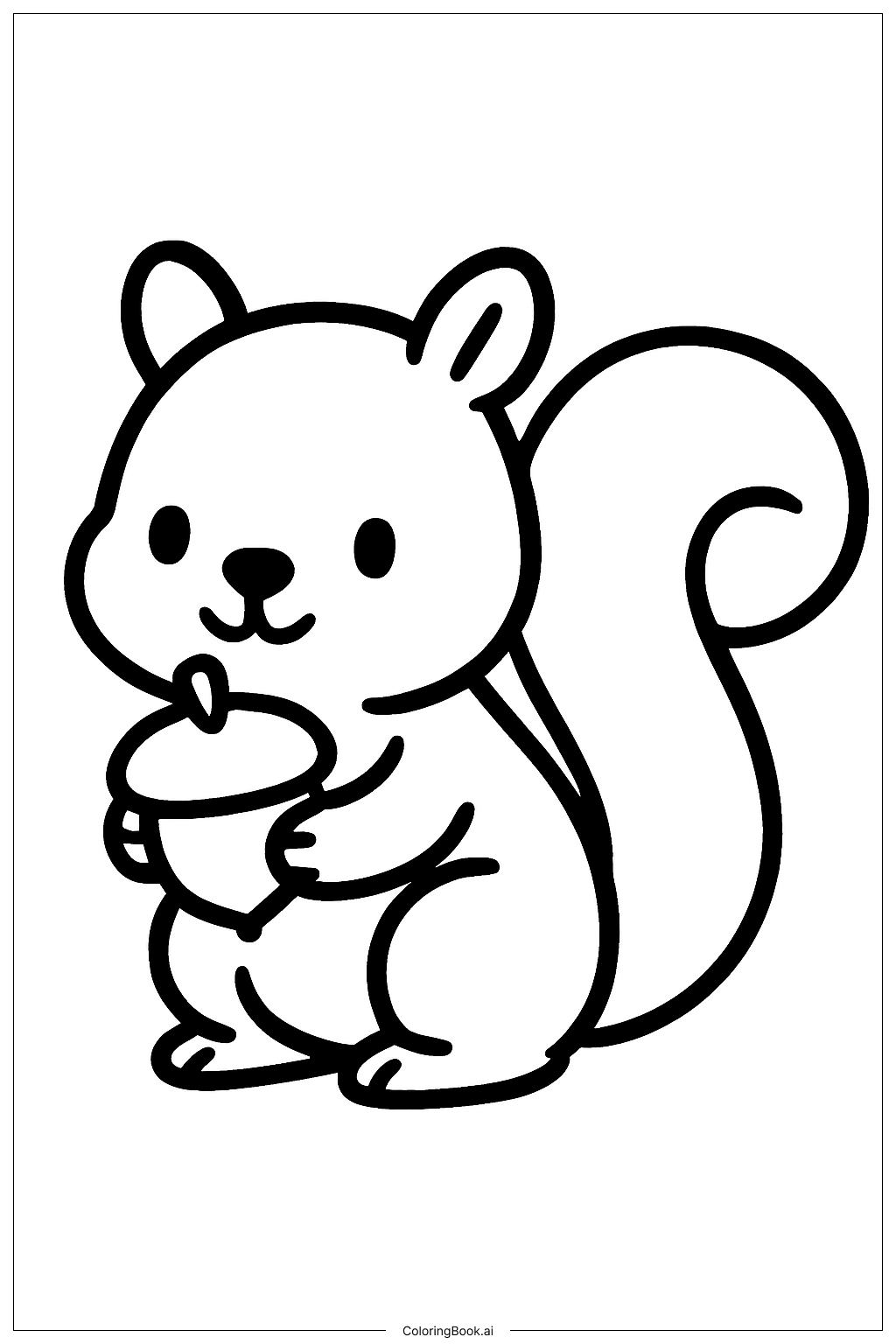
Coloring tips: How to color March Squirrel With Acorn coloring page well?
Start with the squirrel's body. Use warm shades of brown, tan, or russet to bring its fur to life. Add a slightly lighter tone on the belly and inner ears for a natural, soft look. For the fluffy tail, try layering two or three shades of brown with gentle strokes to show texture and depth. Color the acorn with a rich golden-brown cap and a warm chestnut body. The acorn cap can use a slightly darker shade to separate it from the nut. For the March background, use soft greens for new leaves and light pinks or whites for early spring blossoms. A pale blue or cream background keeps the focus on the squirrel. Let kids experiment freely with color choices — there are no wrong answers here. Encourage them to try colored pencils for fine details and broader markers or crayons for filling larger areas quickly.
Coloring challenges: Which parts are difficult to color and need attention for March Squirrel With Acorn coloring page?
• Squirrel Fur Texture: The squirrel's body is covered in fine line details that suggest soft, layered fur. Coloring within these small lines requires patience and a sharp pencil or fine-tipped tool. Blending two or three shades of brown smoothly can be tricky, especially for younger colorists who are still developing control over their strokes.
• Fluffy Tail Shading: The large, bushy tail is one of the most eye-catching parts of the image, but it also presents a challenge. The curved lines and layered fur patterns inside the tail need careful attention. Shading the tail so it looks rounded and three-dimensional — lighter at the center and darker at the edges — takes some practice and color-blending skill.
• Acorn Cap Detail: The acorn cap features a crosshatch or bumpy texture that is made up of many tiny shapes packed closely together. Staying within each small section while keeping a consistent color is difficult, especially for children with smaller hands or less coloring experience.
• Spring Background Elements: The budding branches, small leaves, and floral details in the background contain many overlapping shapes. Deciding which areas get which color — and keeping neighboring sections from blending into each other — requires planning ahead and working carefully from one section to the next.
• Small Facial Features: The squirrel's eyes, nose, and mouth are drawn with fine, closely spaced lines. These tiny areas are easy to smudge or color outside of, so using a sharpened colored pencil or a fine-point marker is strongly recommended for clean, expressive results.
Benefits of coloring books: Advantages of drawing March Squirrel With Acorn coloring page
Coloring this March Squirrel With Acorn page offers a wonderful range of benefits for children and young colorists. Working through the squirrel's detailed fur, the textured acorn, and the lively spring background helps build fine motor skills and improves hand-eye coordination. Carefully coloring small areas trains the hand to move with precision and control, which also supports handwriting development.
The seasonal theme sparks curiosity about nature. Kids may start asking questions about squirrels, acorns, and what happens in March as spring begins — turning a simple coloring activity into a gentle nature lesson.
Choosing colors for the squirrel's fur, tail, and background encourages creative thinking and decision-making. There is no single right answer, so children feel free to experiment and express themselves confidently.
Focusing on a detailed image like this also supports concentration and patience. Completing the page gives kids a real sense of accomplishment, which builds self-esteem and a positive attitude toward creative work.
For older kids and teenagers, the layered details in the fur and background offer a satisfying challenge that can introduce basic shading and blending techniques. Overall, this page is a joyful, calming, and enriching activity that blends creativity with learning.