Coloring tips: How to color March Garden Tools coloring page well?
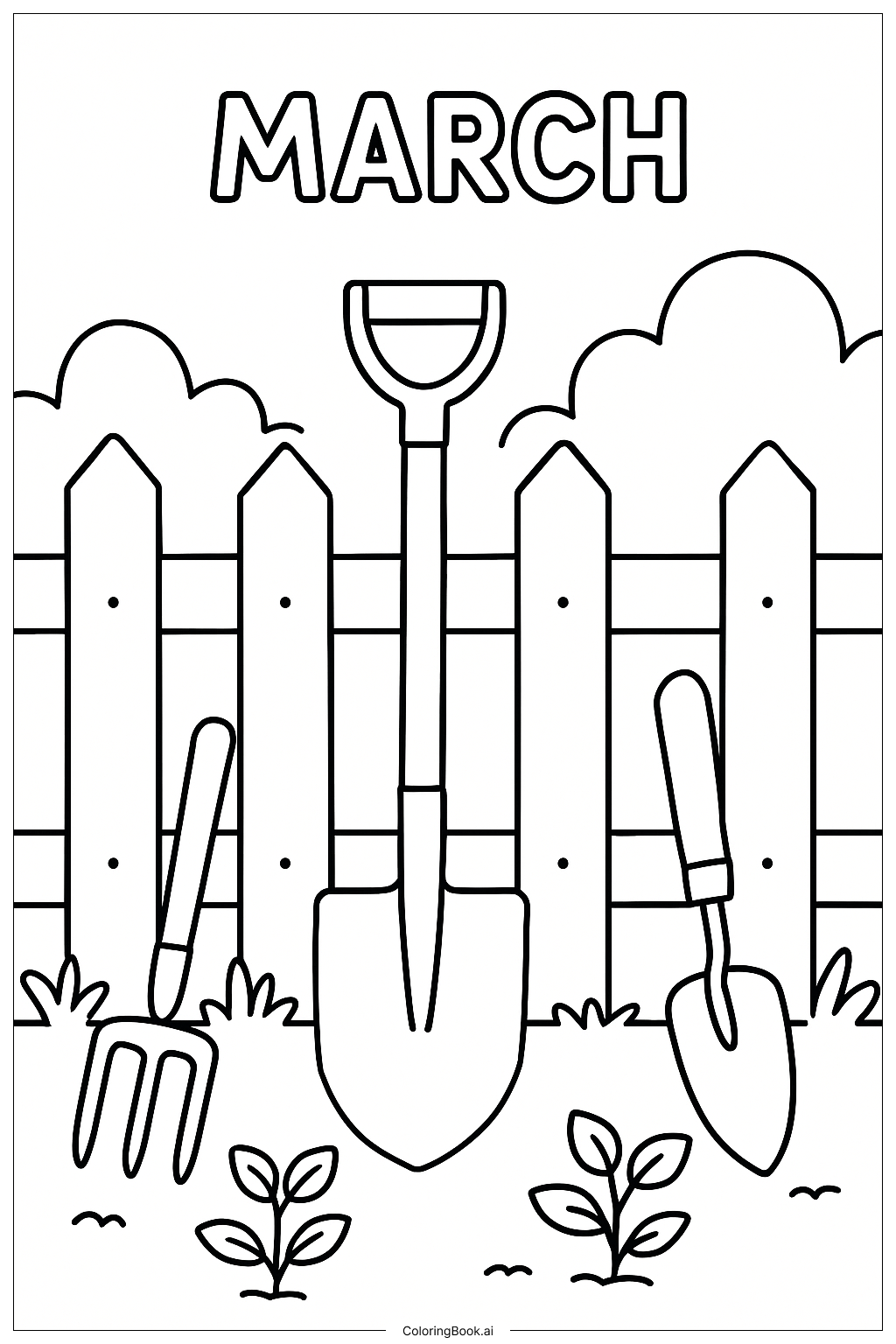
Use bright and fresh colors to bring this March garden scene to life. For the watering can, try vibrant blue or green to make it stand out. The gloves could be a cheerful yellow or orange to show they are ready to protect little hands during gardening. The flower pots and seed packets can be colored with contrasting reds, purples, and pinks to highlight new growth. Leaves and plants should be various shades of green, mixing light and dark for more depth. You can add soft brown or gray tones for the bench and earth to maintain a natural feel. Feel free to add your own imaginative colors to make the scene unique and lively.
Coloring challenges: Which parts are difficult to color and need attention for March Garden Tools coloring page?
• Tool Shapes: Some tools like the hand fork and rake have thin tines that require careful coloring to stay inside the lines without overlapping.
• Small Details: The seed packets have tiny graphics and labels where precision is needed to color clearly without smudging.
• Overlapping Objects: Certain tools overlap each other slightly, creating narrow spaces that may be tricky for younger children to color cleanly.
• Consistency: Keeping consistent colors on gloves and watering can while coloring evenly can be a challenge to avoid patchy looks.
• Shading and Texture: Creating a natural wooden texture on the bench or subtle shine on metal tools asks for patience and gradual color layering skills.
Benefits of coloring books: Advantages of drawing March Garden Tools coloring page
Coloring this March Garden Tools image helps children improve fine motor skills through detailed work on small shapes and overlapping objects. It encourages creativity as they decide which colors suit each tool and plant best, promoting color recognition and artistic expression. The garden theme can inspire interest in nature and outdoor activities, linking art to real-world experiences. Working on this page also supports focus and patience, especially when handling smaller areas and intricate tool parts. Overall, it offers a fun, educational activity that combines creativity with learning about gardening tools and springtime growth.