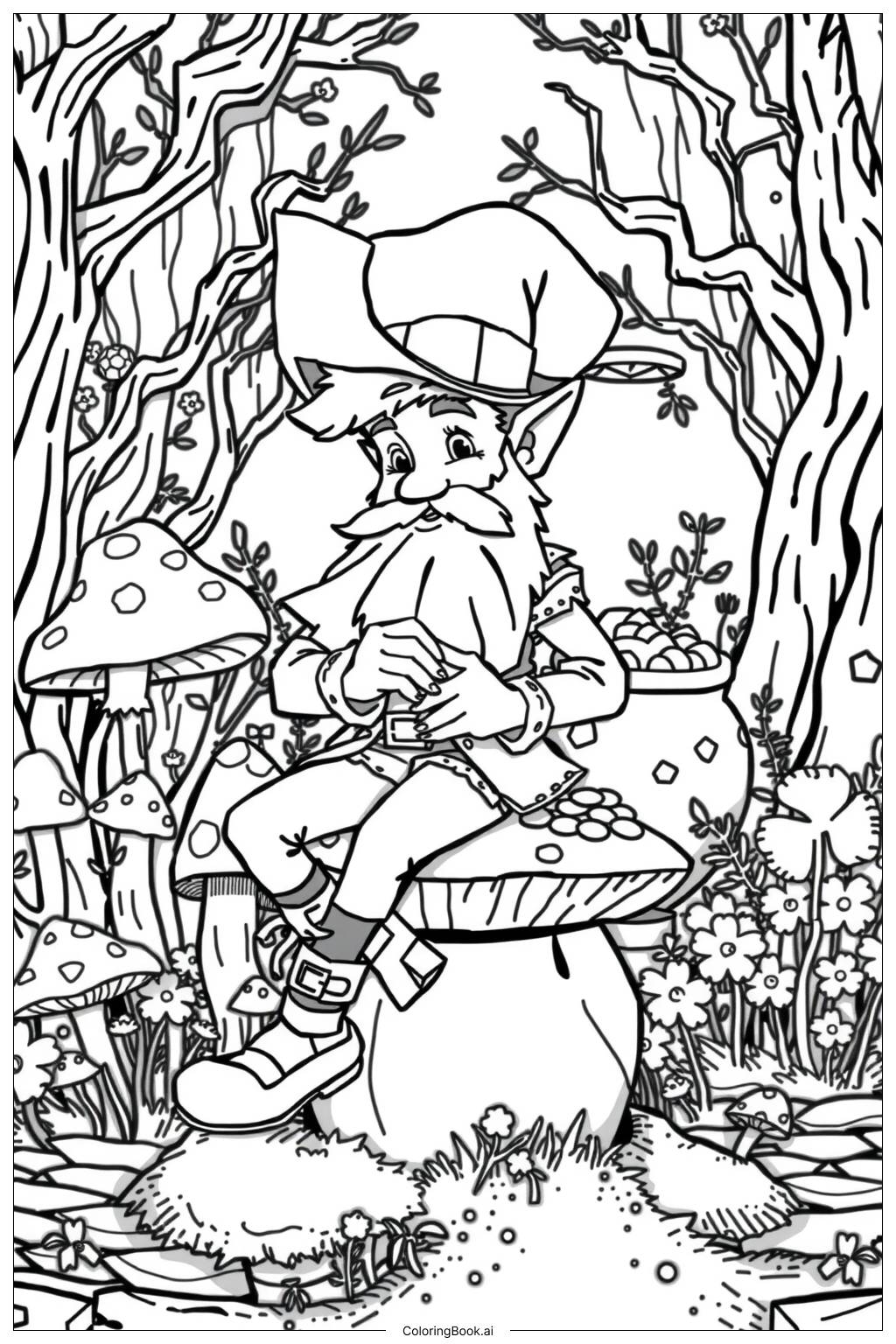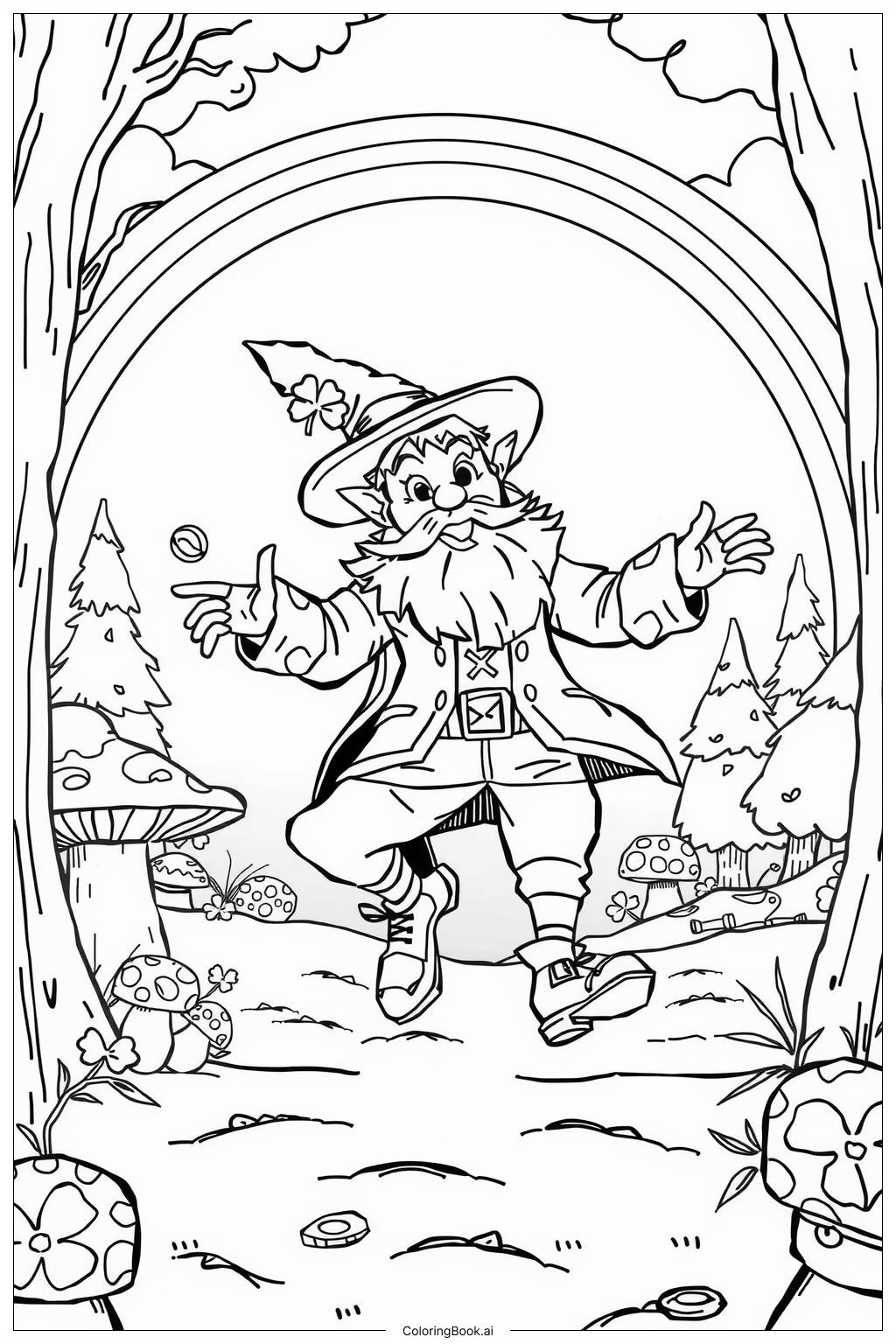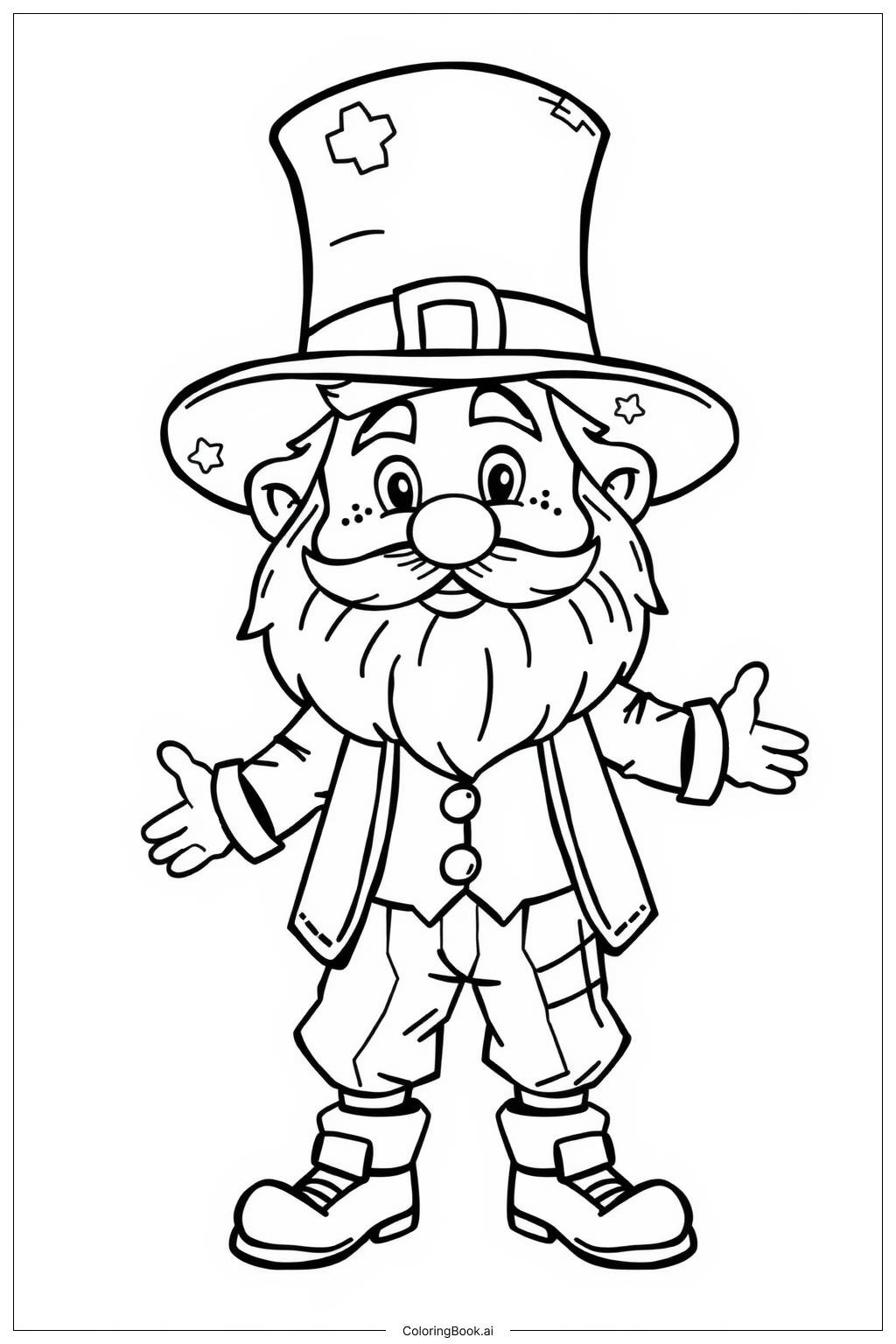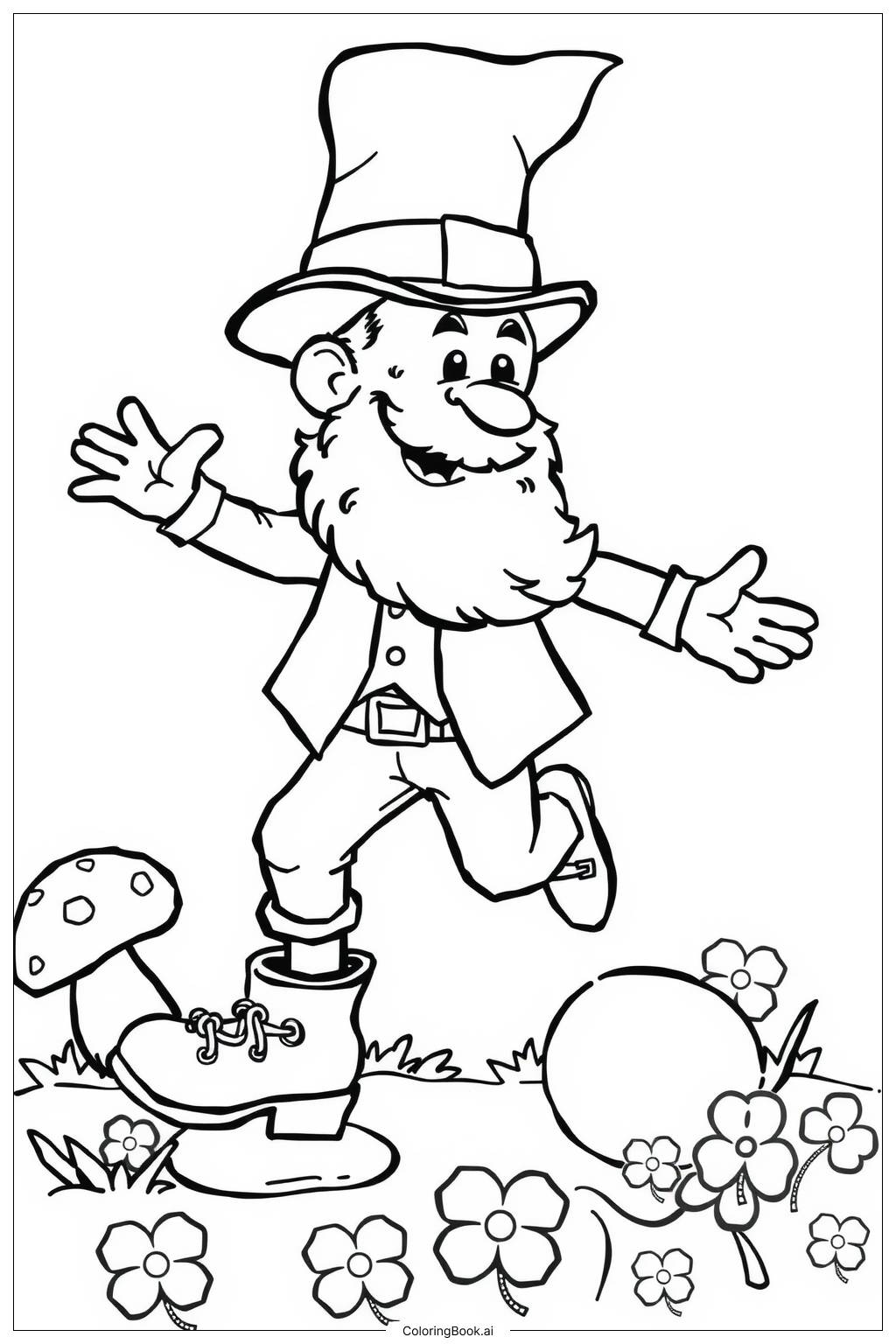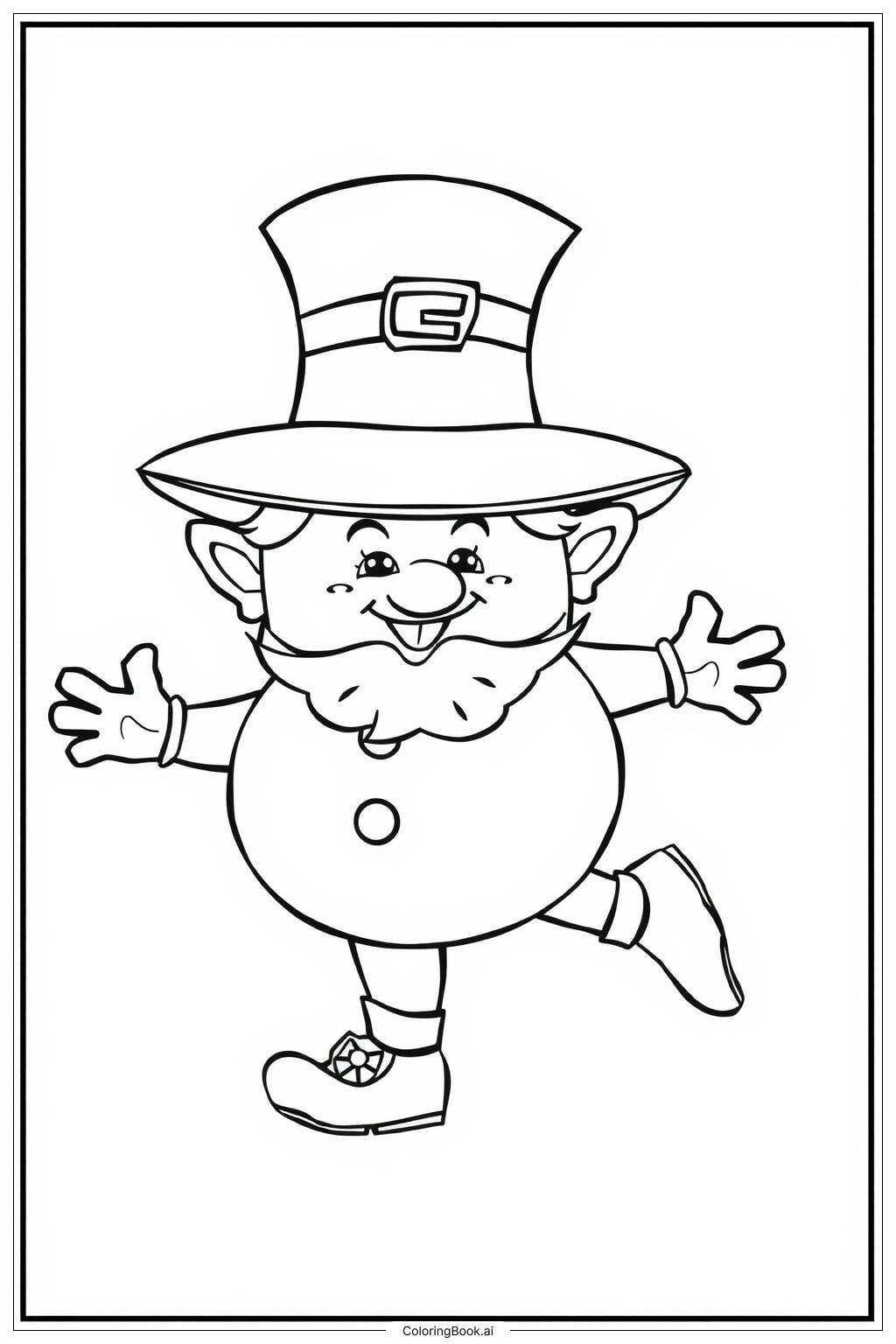
Coloring tips: How to color Leprechaun racing against time coloring page well?
To bring this leprechaun scene to life, use bright greens for the leprechaun's jacket, hat, and shamrocks. Consider using gold and yellow tones for the coins to create a rich contrast with the greenery. The clock can be colored in silver or gray with bold black numbers for clarity. Use warm skin tones for the leprechaun’s face and hands, and add rosy cheeks to show his excitement. For the background, soft blues or light purples will help the character pop without overwhelming the picture. Encourage experimenting with shading the motion lines with light to dark gradients to capture the sense of speed and urgency.
Coloring challenges: Which parts are difficult to color and need attention for Leprechaun racing against time coloring page?
• Detailed Clothing Elements: The leprechaun's small hat buckle, buttons, and shoe buckles require careful coloring within narrow spaces, which can be challenging for younger artists. • Facial Expressions: Capturing the playful yet determined look involves subtle shading around the eyes and mouth, needing steady hand control. • Clock Face Details: The numbers and hands on the clock must be colored clearly and precisely to keep them legible, especially if colored by younger colorists. • Motion Lines: These lines represent movement and may require blending different intensities of color smoothly to show speed, which can be difficult to master. • Background Complexity: Adding color without making the background too distracting demands balance, challenging the artist to choose palettes that complement rather than compete.
Benefits of coloring books: Advantages of drawing Leprechaun racing against time coloring page
Coloring this image helps develop fine motor skills through the careful attention needed for small details like buckles and clock hands. It encourages focus and patience as young artists work within tight spaces and refine their precision. The dynamic theme of racing against time can spark imagination and storytelling skills, motivating kids to think about speed, fun, and urgency in creative ways. Additionally, experimenting with shading and blending colors boosts artistic confidence and understanding of how color can express motion and excitement. Overall, it’s a fun way for children aged 4 to 16 to engage their mind and hands productively.