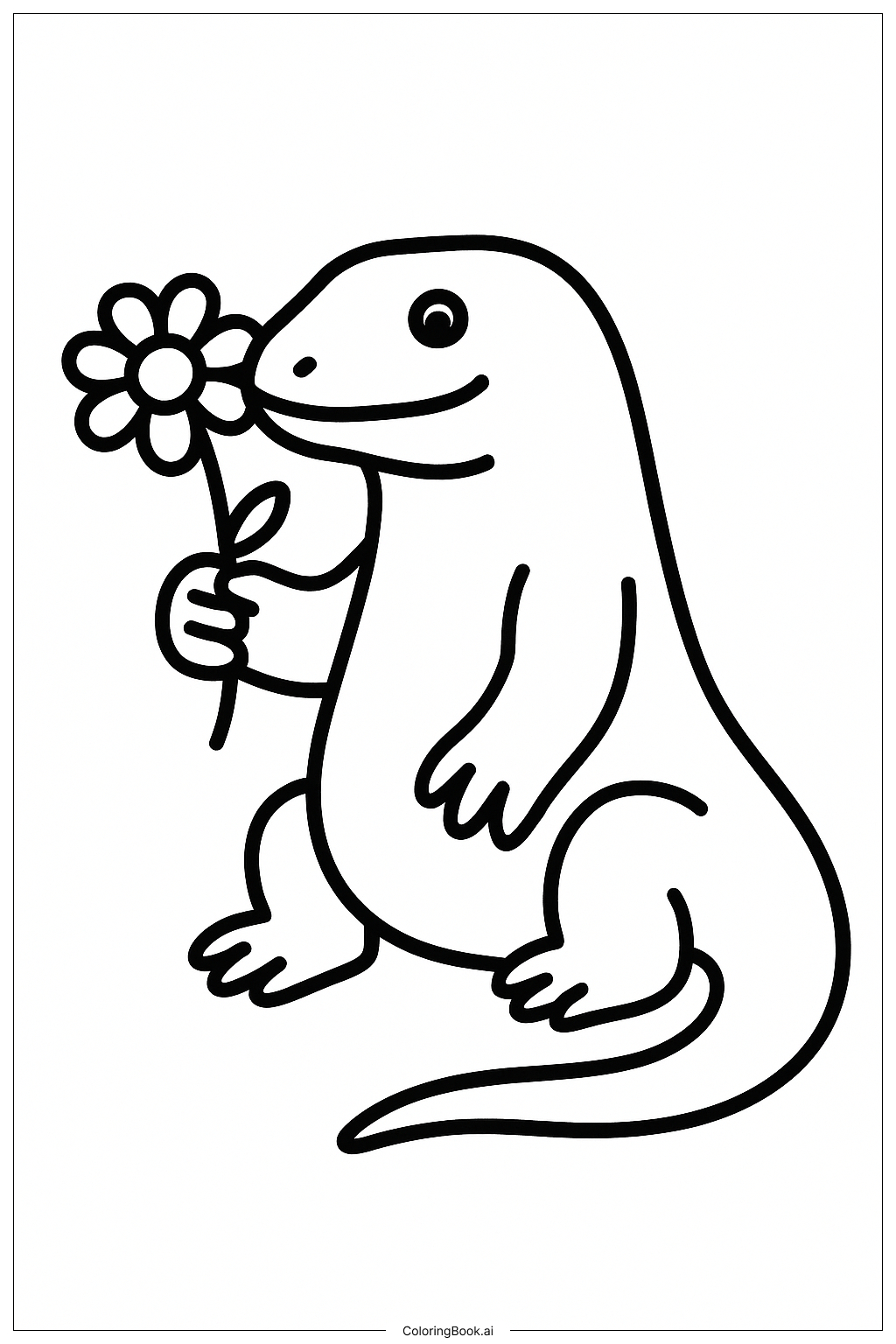
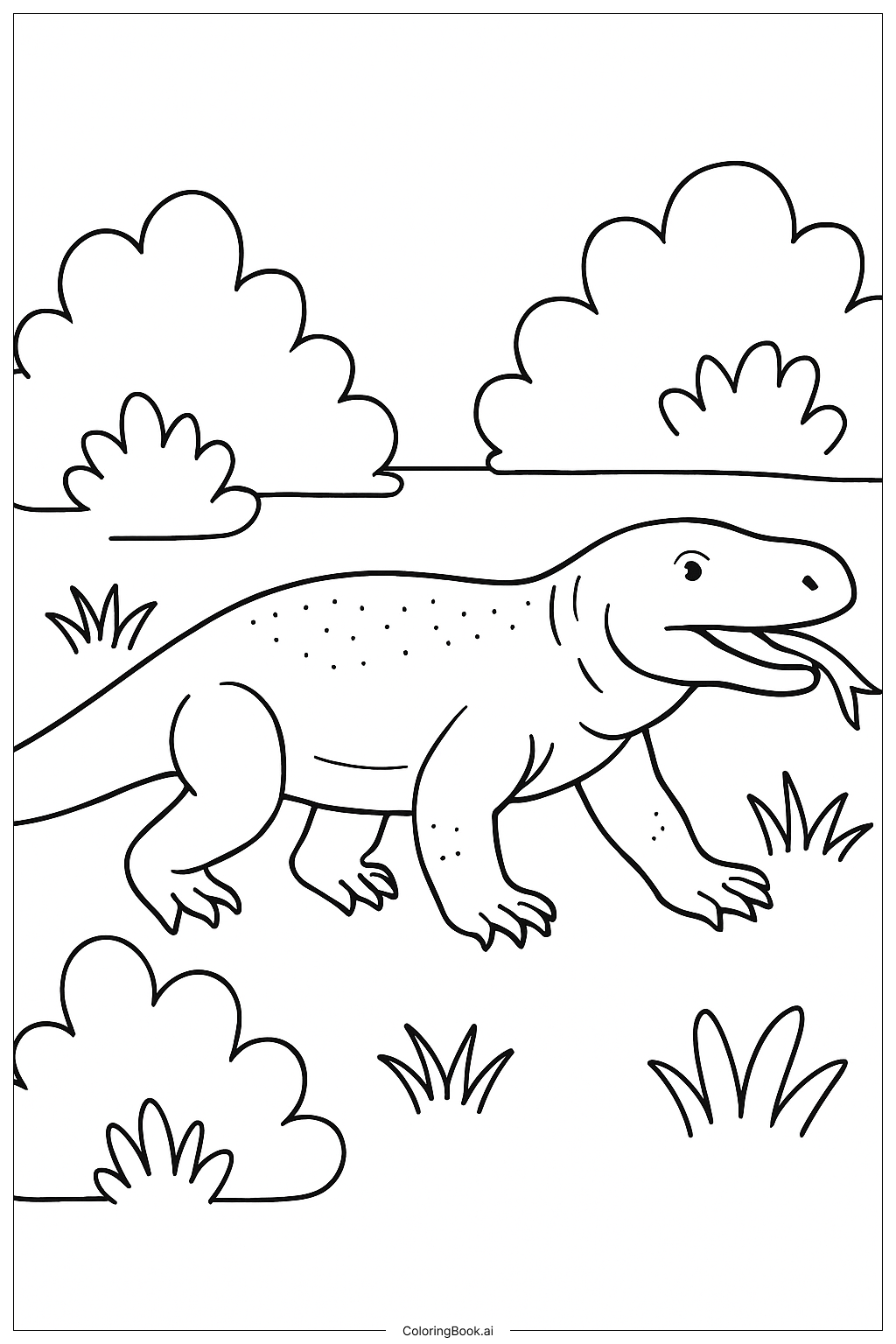
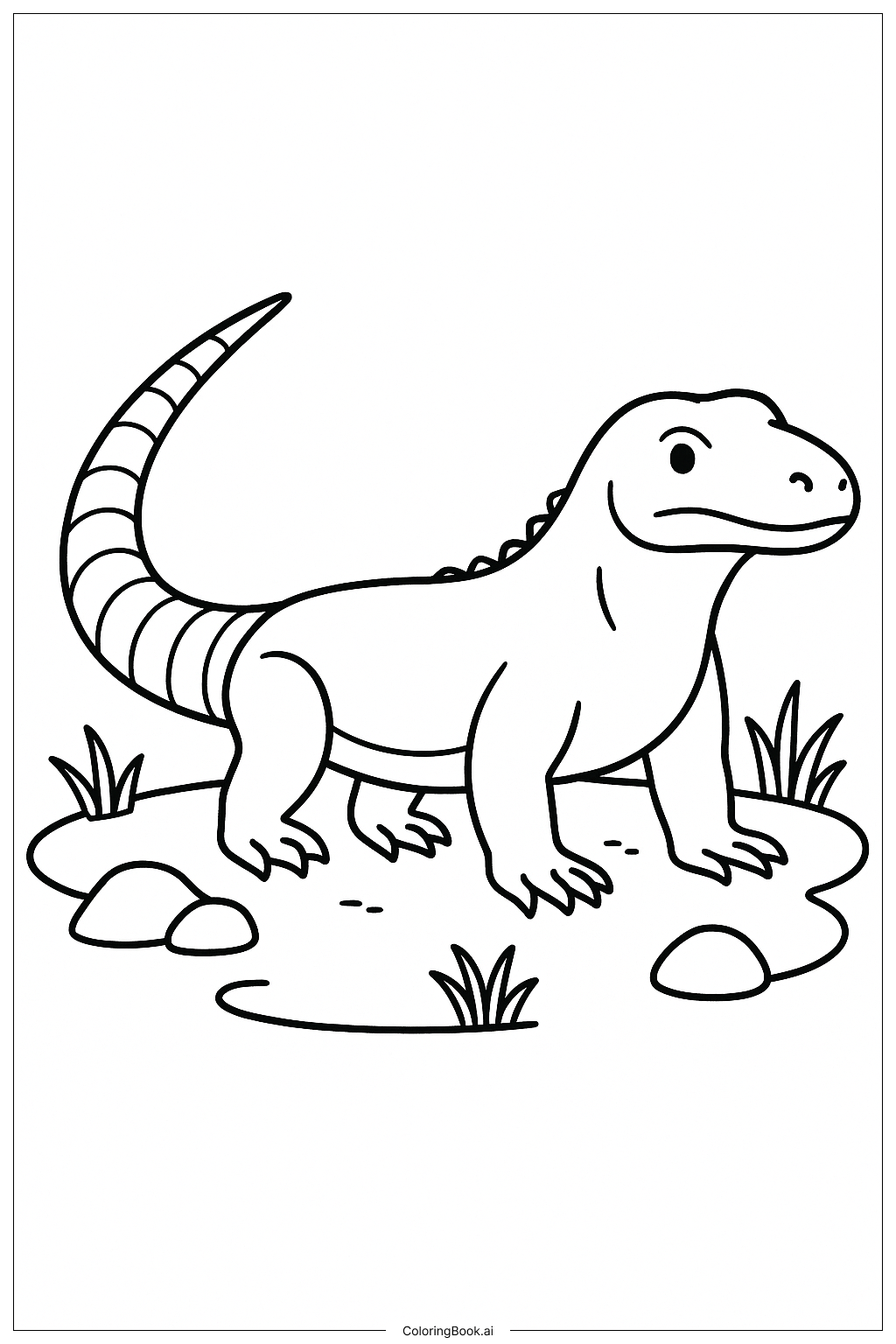
Coloring tips: How to color Komodo Dragon Waving Hello coloring page well?
Start with the Komodo Dragon's body using realistic earth tones like olive green, brown, or gray as a base color. Add darker shades of green or brown to create depth along the scales and undersides. The belly can be lighter, using pale yellow or cream colors. For the scales, try using multiple shades of the same color family to create texture and dimension. The claws can be colored with tan, beige, or dark gray. Consider adding subtle orange or reddish-brown highlights on the head and back to mimic the natural coloring of real Komodo Dragons. The tongue, if visible, could be bright pink or red. For a more creative approach, children can use imaginative colors like blues, purples, or even rainbow patterns. Don't forget to add shadows under the body and tail using darker tones to make the dragon appear three-dimensional.
Coloring challenges: Which parts are difficult to color and need attention for Komodo Dragon Waving Hello coloring page?
• Scale Pattern Complexity: The intricate scale patterns covering the entire body present a significant challenge. Each scale requires careful attention to create a consistent texture while maintaining different shading to show dimension. Children must decide whether to color each scale individually or work with larger sections, both approaches demanding patience and fine motor control.
• Shading and Depth: Creating realistic depth on a reptilian body requires understanding light sources and shadow placement. The curved surfaces of the tail, legs, and torso need gradual color transitions from light to dark. Young artists may struggle with blending colors smoothly to avoid a flat appearance, especially around the rounded belly and cylindrical tail.
• Fine Detail Work: The dragon's claws, facial features, and smaller scales require precision coloring within tight spaces. Staying within the lines of the tiny claws, nostrils, and eye details challenges hand-eye coordination. The waving arm position adds foreshortening complexity that may confuse younger children about which areas should be darker or lighter.
• Color Selection: Choosing appropriate colors for a realistic or creative interpretation requires decision-making skills. Children must consider whether to use natural Komodo Dragon colors or fantasy palettes, and how to make different body parts distinct while maintaining overall harmony in their color choices.
Benefits of coloring books: Advantages of drawing Komodo Dragon Waving Hello coloring page
Coloring this Komodo Dragon helps children develop essential fine motor skills through the detailed scale work and precise movements required for staying within lines. It enhances concentration and patience as completing the intricate patterns demands sustained focus. The reptilian texture provides excellent practice for experimenting with shading techniques and color blending, teaching young artists how to create depth and dimension. This page also serves as an educational tool, sparking curiosity about Komodo Dragons and their natural habitat in Indonesia. Children learn about reptile anatomy while exercising creativity through color choices. The friendly waving pose makes the fearsome creature approachable, helping kids overcome any fears of reptiles. Completing this complex image builds confidence and provides a sense of accomplishment. It encourages problem-solving as children determine the best approach for tackling the detailed sections, ultimately supporting cognitive development alongside artistic growth.