Coloring tips: How to color Komodo Dragon Among The Bushes coloring page well?
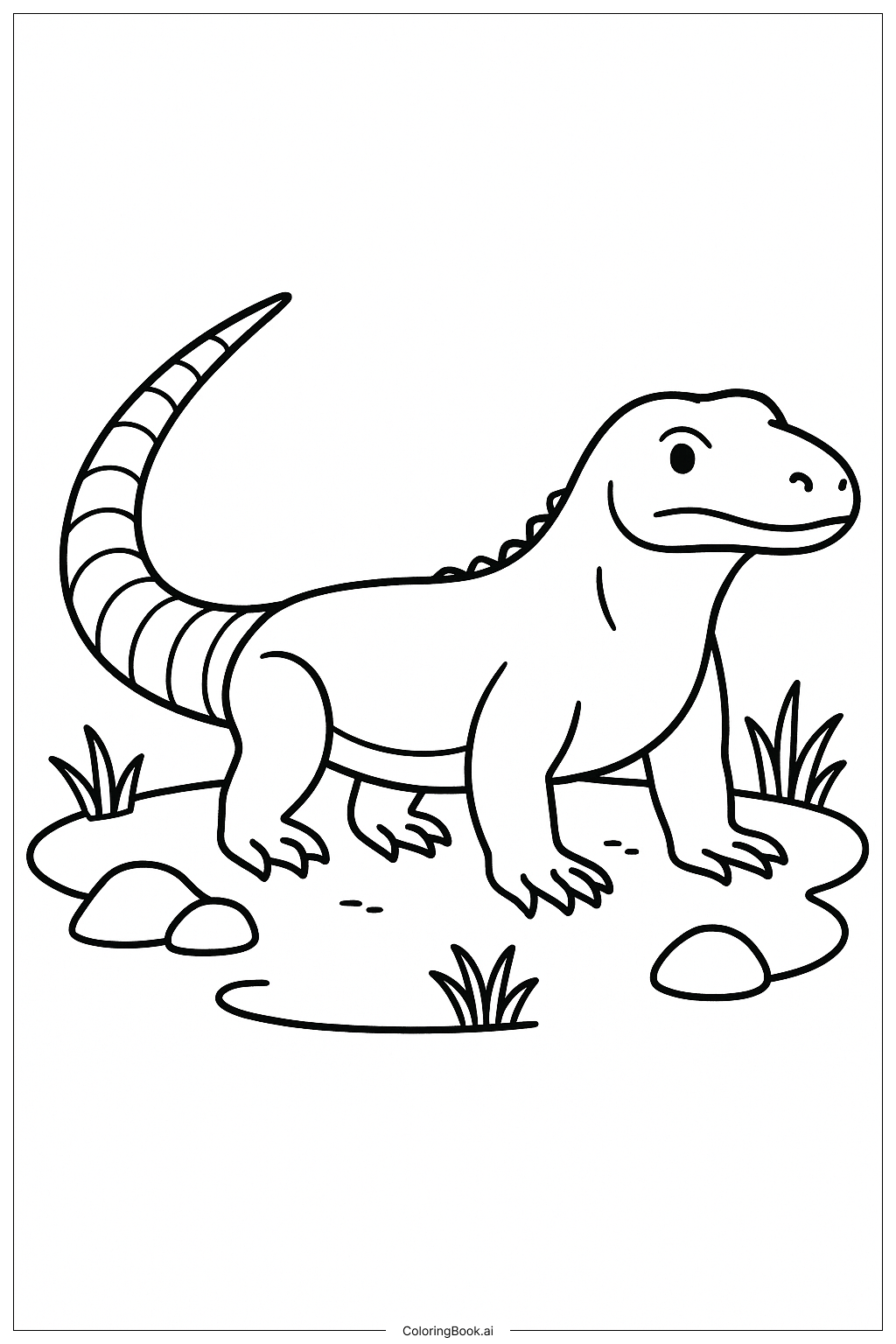
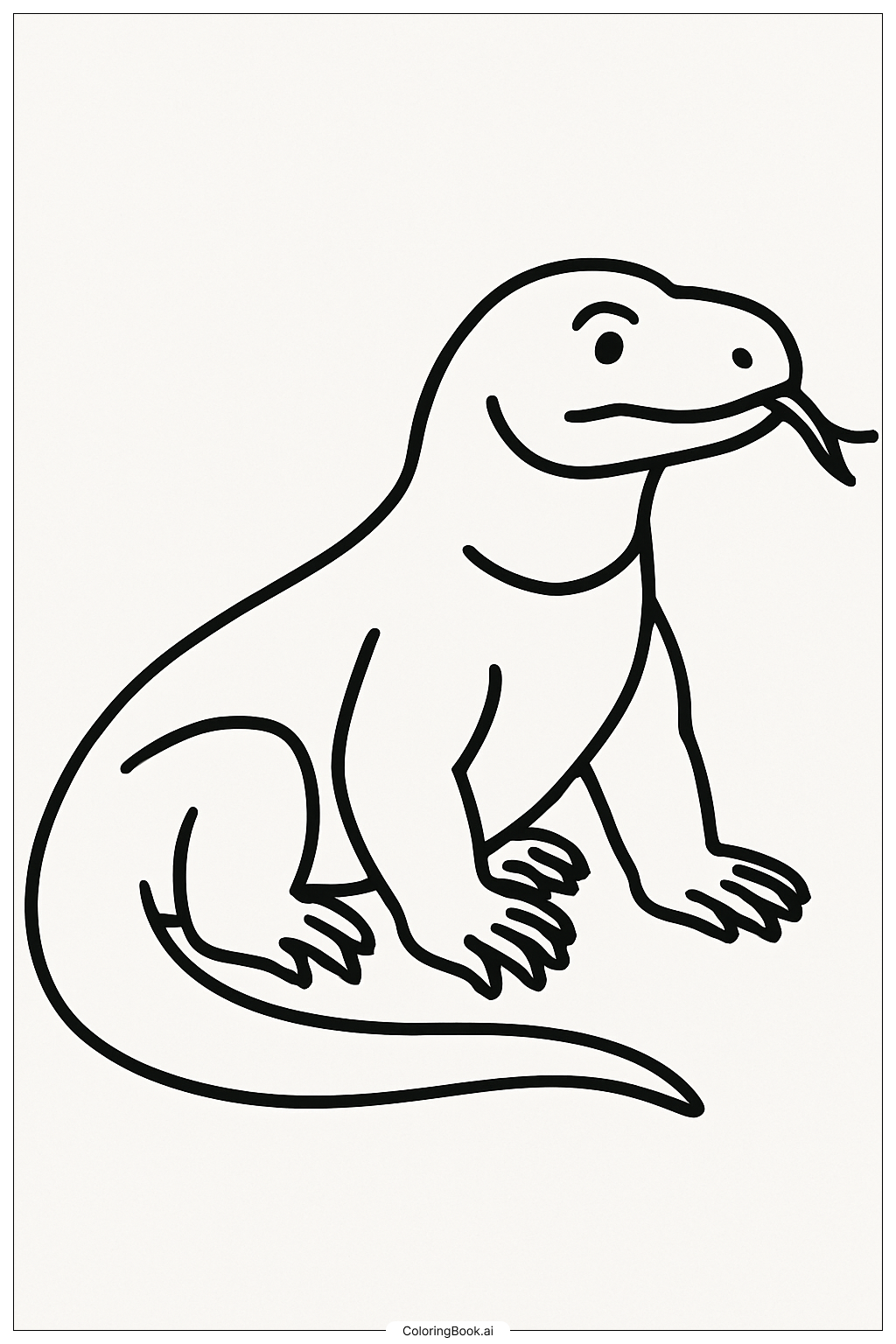
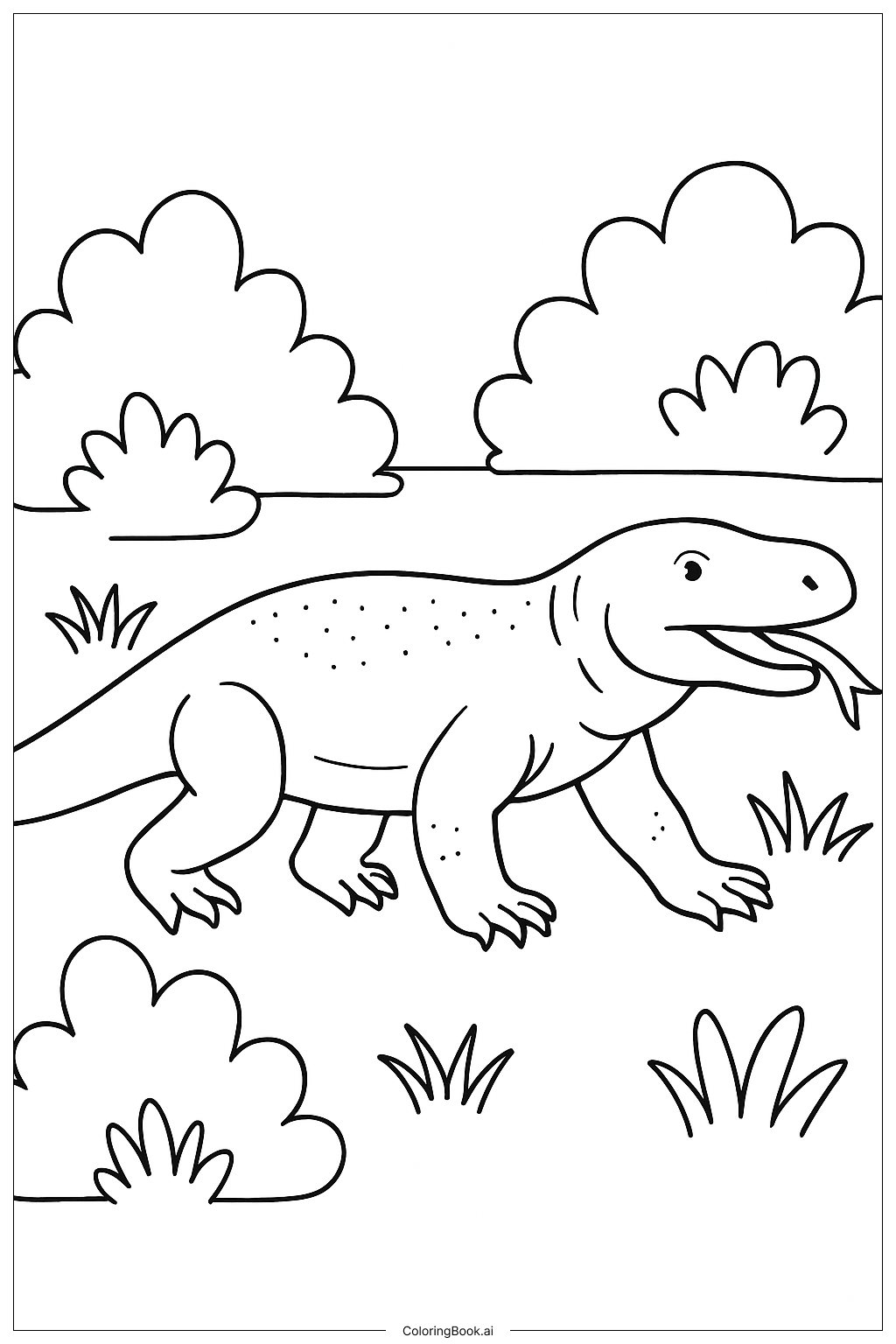
Start with the Komodo dragon's body using earthy tones. Shades of olive green, dark brown, and gray work great for the scales. Add a bit of yellow-green on the belly area to show lighter underbelly tones. Use a darker brown or black to shade between the scales and give them depth. For the tongue, use a vivid pink or red to make it pop. The claws can be colored in tan or light gray. For the bushes and leaves around the dragon, use several shades of green — from bright lime to deep forest green. Add yellow highlights on leaves where sunlight might hit. You can use brown and dark green for the ground and shadows beneath the plants. Try layering your colors to make the scene look more realistic and full of life. Take your time with the scales — they are small and detailed, but coloring them carefully will make your finished picture look amazing.
Coloring challenges: Which parts are difficult to color and need attention for Komodo Dragon Among The Bushes coloring page?
• Scale Texture Complexity: The Komodo dragon's body is covered in hundreds of small, overlapping scales. Each scale has its own shape and edge. Coloring them individually takes patience and a steady hand. Using a fine-tipped marker or a sharpened colored pencil will help you stay within each scale without smearing into the next one. Rushing this section may cause the texture to look flat or messy.
• Consistent Color Gradation: The dragon's body is not one flat color. The top is darker, the sides are mid-tone, and the belly is lighter. Blending these tones smoothly across a large area can be tricky, especially for younger colorists. Practice gradual shading by pressing lighter at first, then layering more color where shadows fall.
• Detailed Claw and Toe Areas: The feet and claws are small and closely packed together. The lines are tight, and it is easy to accidentally color outside the boundaries. A fine-tipped tool is strongly recommended here. Take extra care to separate each claw with a slightly different shade to give them dimension.
• Layered Foliage Depth: The bushes surrounding the dragon overlap each other in layers. Choosing the right greens for near and far leaves helps create a sense of depth. Leaves in the front should be brighter and lighter, while background leaves should be darker and cooler in tone. Keeping track of which leaf belongs to which layer can be challenging.
• Tongue and Facial Details: The face has several fine details including the eye, nostril, and forked tongue. These small elements require precision. Using a very fine tool and going slowly will help ensure these features stand out clearly and bring the dragon's expression to life.
Benefits of coloring books: Advantages of drawing Komodo Dragon Among The Bushes coloring page
Coloring this Komodo dragon scene offers a wonderful mix of fun and learning for kids and young artists. First, it helps build fine motor skills. Carefully coloring the small scales and tight spaces trains hand control and coordination. Second, it encourages focus and patience. The detailed scales and layered leaves require steady concentration, which helps children develop the ability to work carefully on a task from start to finish. Third, it sparks curiosity about nature and wildlife. Kids who color this page may become interested in learning more about Komodo dragons — where they live, what they eat, and how big they grow. This connects art with science in an exciting way. Fourth, choosing colors for the scales, tongue, and plants exercises creative thinking and decision-making. There is no single right answer, so children feel free to express themselves. Finally, completing a detailed coloring page like this builds a sense of pride and accomplishment. When kids see their finished work, it boosts their confidence and encourages them to take on more creative challenges. This page is a great activity for both quiet solo time and group learning settings.