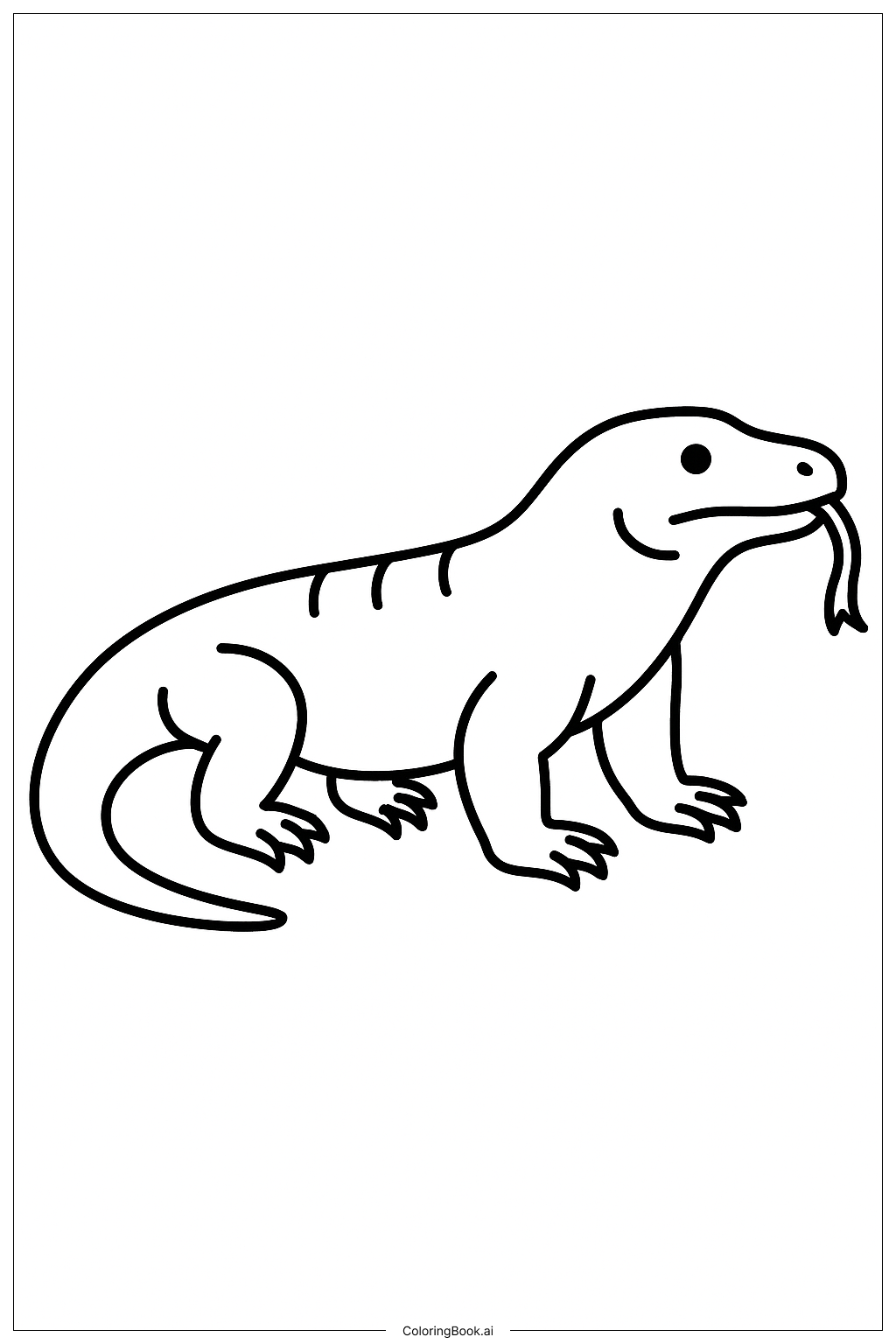
Coloring tips: How to color K Is For Komodo Dragon coloring page well?
Start with the big letter "K" first. You can use a bold, bright color like red, blue, or orange to make it stand out on the page. For the Komodo dragon, use earthy tones like brown, olive green, dark green, or gray to make it look realistic. You can also mix light and dark shades of green to give the scales some depth and texture. Use a darker shade along the back and a lighter tone on the belly. The forked tongue looks great in bright red or pink. The claws can be colored in tan or light brown. If there are leaves or plants in the background, use different shades of green to make the scene feel lively. Take your time with the small scale details — they are fun to fill in with small, careful strokes. Feel free to get creative and use your favorite colors!
Coloring challenges: Which parts are difficult to color and need attention for K Is For Komodo Dragon coloring page?
Coloring this image is a fun challenge, but there are a few tricky parts to watch out for. Here are the main coloring challenges:
• Scale Texture Details: The Komodo dragon's body is covered in many small overlapping scales. Coloring each scale neatly takes patience and a sharp colored pencil or fine-tip marker. Trying to add light and shadow to these scales to make them look three-dimensional can be especially tricky for younger colorists.
• Staying Within Outlines: The letter "K" and the dragon have bold outlines, but some areas — like the claws, the tongue, and the toes — are quite small and narrow. It can be hard to color inside these tiny spaces without going over the lines. Using a thin-tipped tool works best here.
• Blending Body Colors: The Komodo dragon looks most realistic when different shades of green, brown, and gray are blended together smoothly. Achieving a natural gradient from the darker back to the lighter belly requires some color blending skill, which can be a challenge for beginners.
• Tongue and Eye Contrast: The small forked tongue and the eye are tiny focal points that need contrasting colors to stand out. Making sure these details pop without overshadowing the rest of the image requires careful color choices and a steady hand.
• Balancing the Letter and the Animal: The letter "K" and the Komodo dragon need to look balanced together. Choosing colors that complement each other without one overpowering the other is a creative challenge that encourages thoughtful color planning.
Benefits of coloring books: Advantages of drawing K Is For Komodo Dragon coloring page
Coloring this K Is For Komodo Dragon page offers many wonderful benefits for kids. First, it helps children learn the alphabet in a fun and engaging way. Connecting the letter "K" with the Komodo dragon makes it easier to remember. Second, coloring detailed scale patterns on the dragon's body helps improve fine motor skills and hand-eye coordination. Carefully filling in small spaces builds steady, precise movements that are useful for writing and drawing. Third, choosing colors for the dragon encourages creativity and artistic thinking. Kids learn about color mixing, contrast, and how to make a picture look natural and lively. Fourth, this activity supports focus and concentration. Sitting down to carefully color a detailed image helps children practice patience and attention to detail. Fifth, learning about the Komodo dragon while coloring sparks curiosity about animals and nature. It can inspire kids to ask questions and explore more about wildlife. Overall, this coloring page is a simple, screen-free activity that supports learning, creativity, and calm — all at the same time.