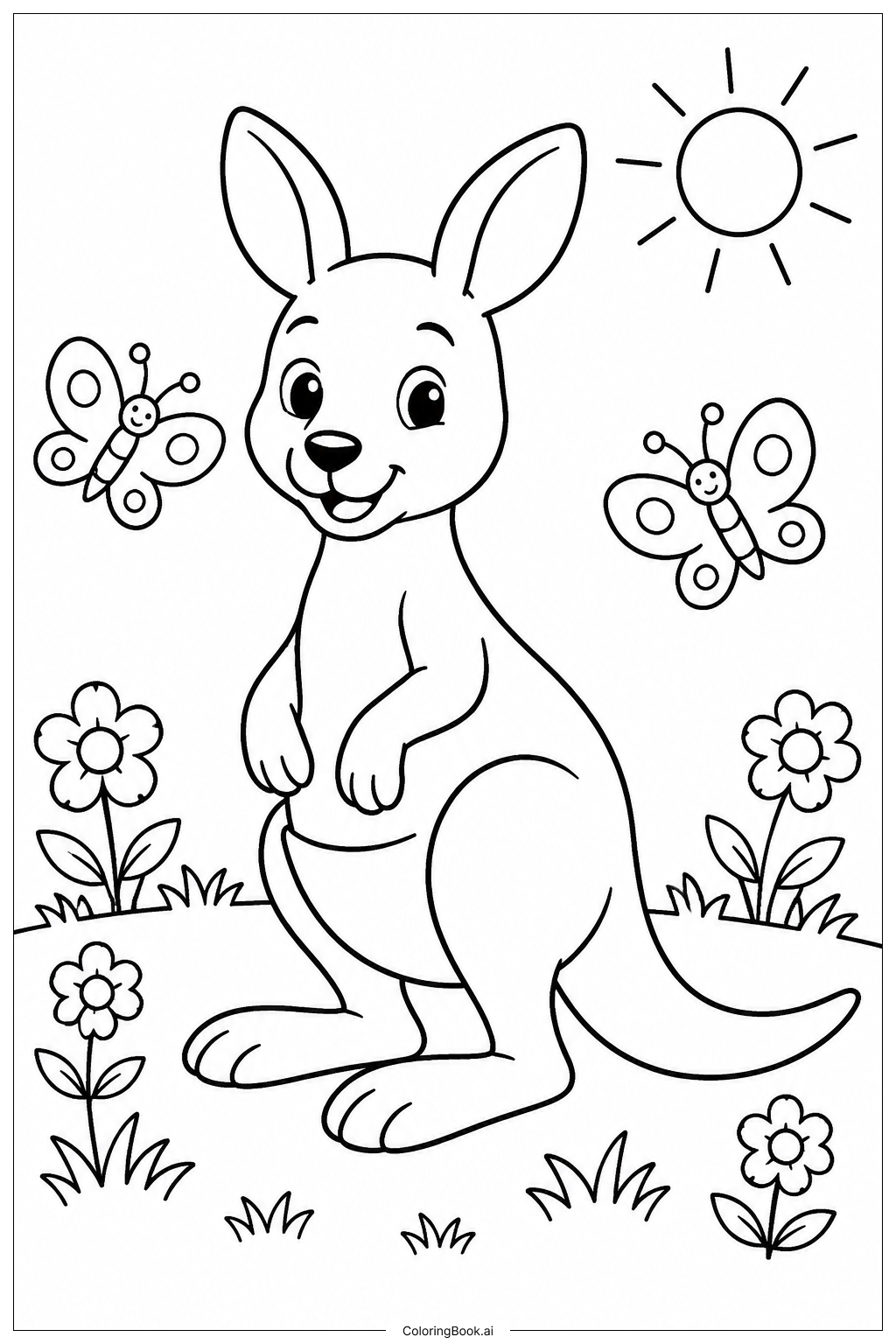
Coloring tips: How to color Kangaroo With Butterflies coloring page well?
You can use warm browns and soft reds for the kangaroo’s fur to make it look natural and lively. Try shading darker along the legs and tail for depth. Color the butterflies in bright and varied shades such as yellows, oranges, blues, and purples to create contrast and draw attention. Use light greens and pastel colors for the leaves and flowers to keep the background calm and balanced. Feel free to mix different tones to make the scene vibrant and fun. Remember to leave some white space on butterfly wings for highlights and a realistic effect.
Coloring challenges: Which parts are difficult to color and need attention for Kangaroo With Butterflies coloring page?
• Detailed Butterfly Wings: The butterflies have many small sections and patterns that require careful coloring to stay within the lines and maintain symmetry.
• Kangaroo Fur Texture: Adding realistic fur texture with colored pencils or crayons can be tricky, especially around curves like the tail and legs.
• Balancing Colors: Choosing colors that make the kangaroo stand out without overpowering the butterflies or background requires thoughtful planning.
• Background Elements: The leaves and flowers are small and close together, making it important to color neatly while distinguishing each shape clearly.
• Shading Effects: To give the image depth, subtle shading is needed on the kangaroo’s body and around the butterflies, which can be challenging for younger children still learning blending techniques.
Benefits of coloring books: Advantages of drawing Kangaroo With Butterflies coloring page
Coloring this image helps children develop fine motor skills as they carefully fill in small butterfly sections and curved shapes of the kangaroo. It encourages focus and patience completing the detailed areas. The variety of shapes and sizes offers practice in controlling pencil or crayon pressure for different textures, such as smooth butterfly wings and furry kangaroo body. This activity also sparks creativity by letting children choose color combinations, improving their understanding of color contrast and harmony. Additionally, it inspires curiosity about nature and animals, promoting both learning and relaxation.