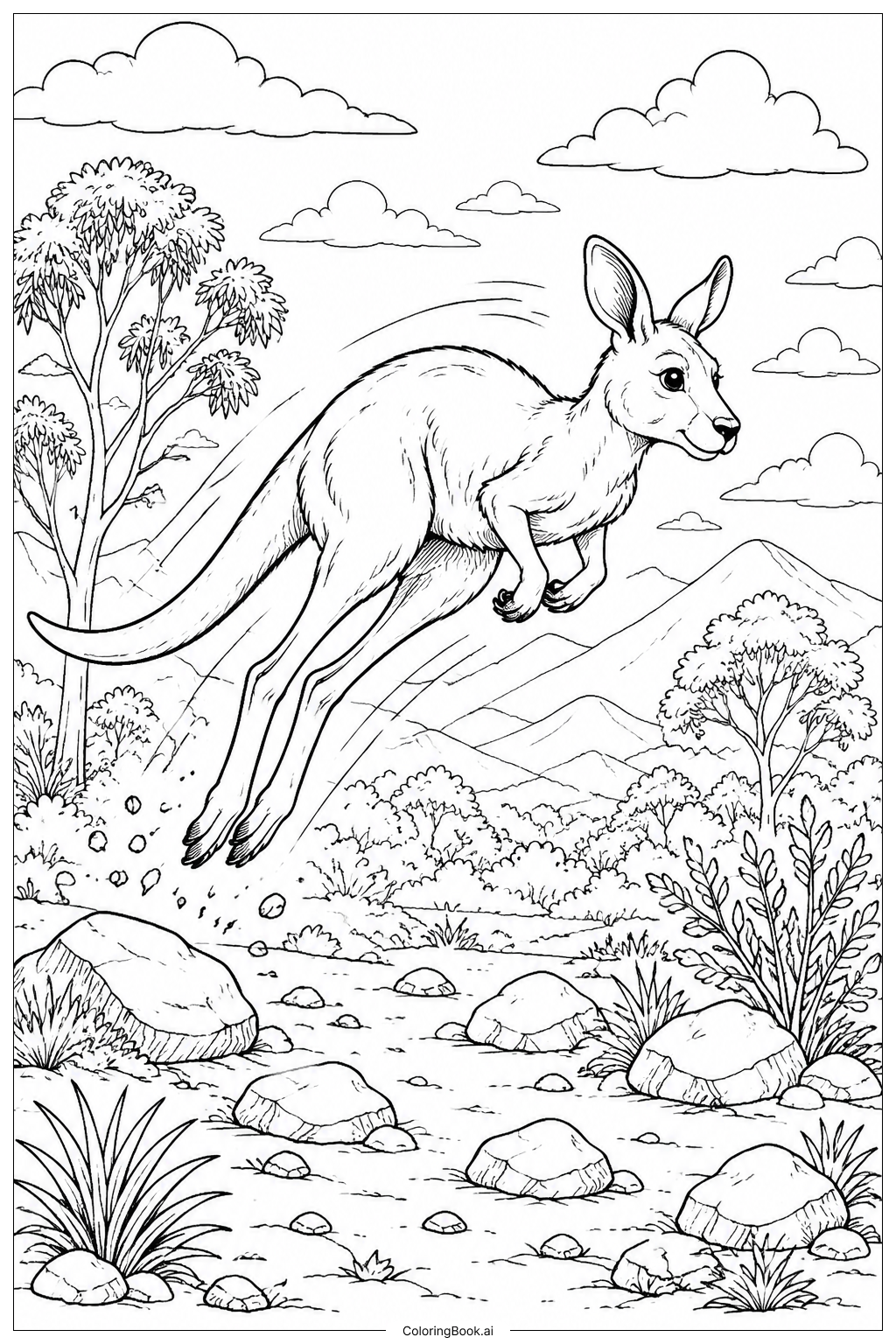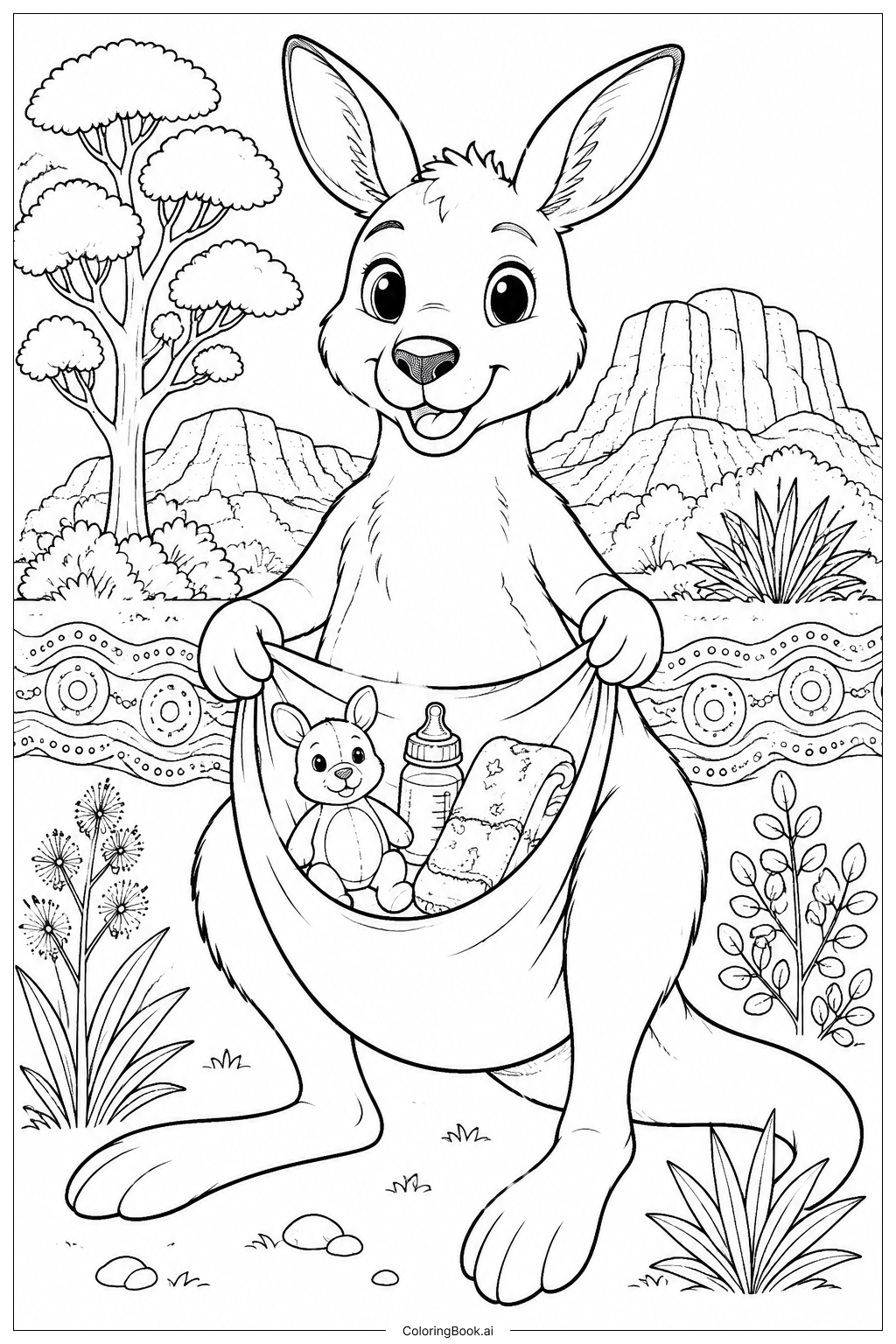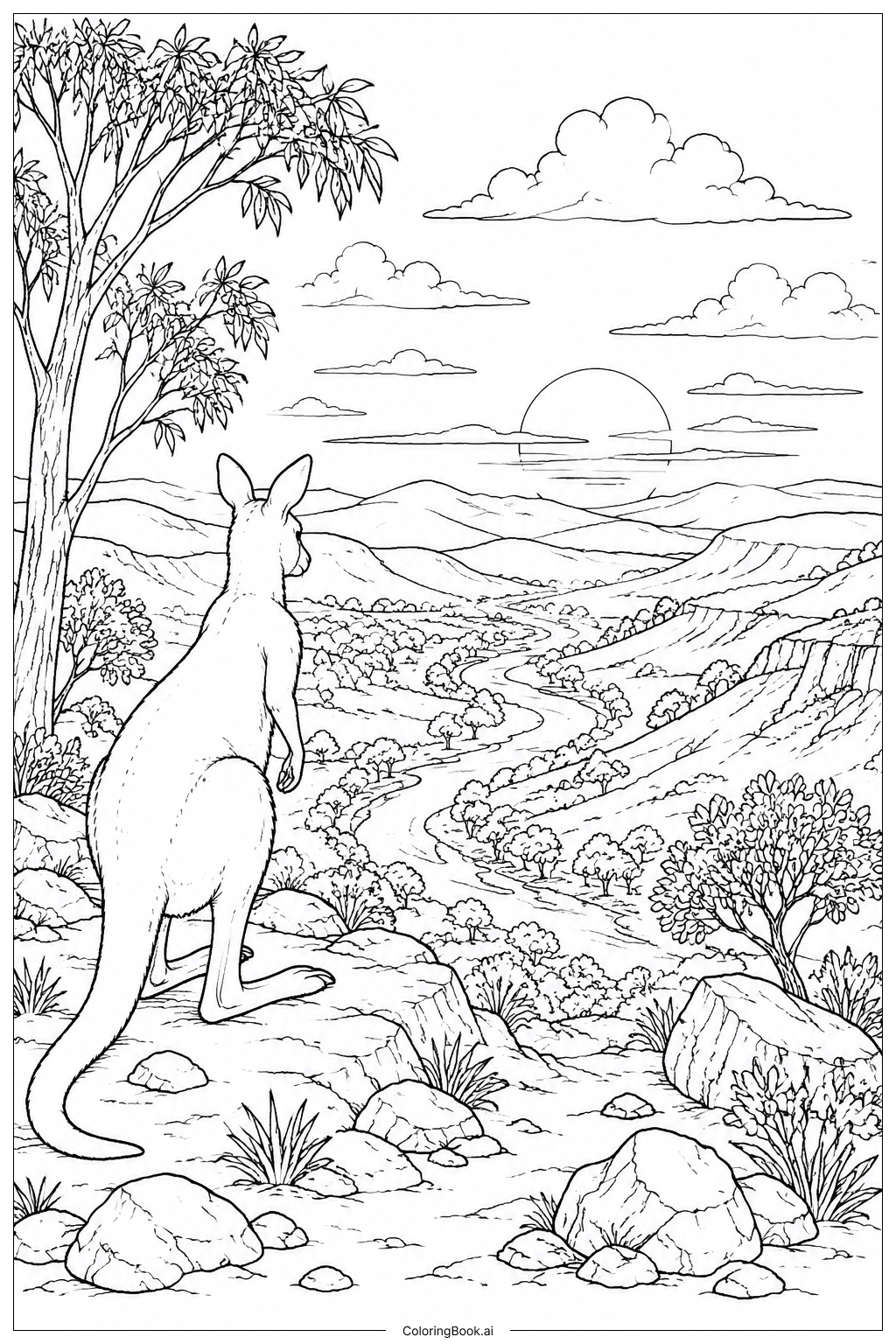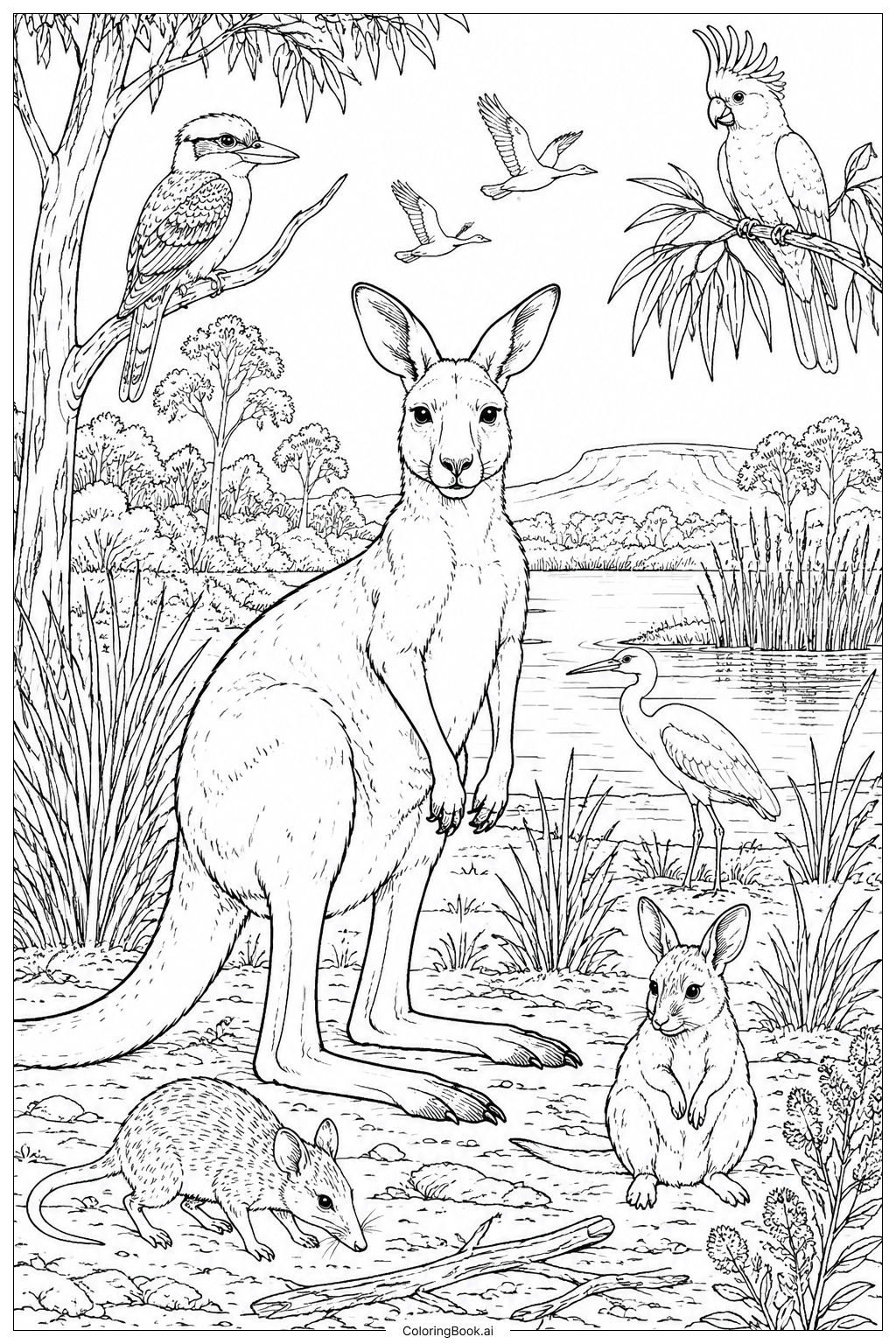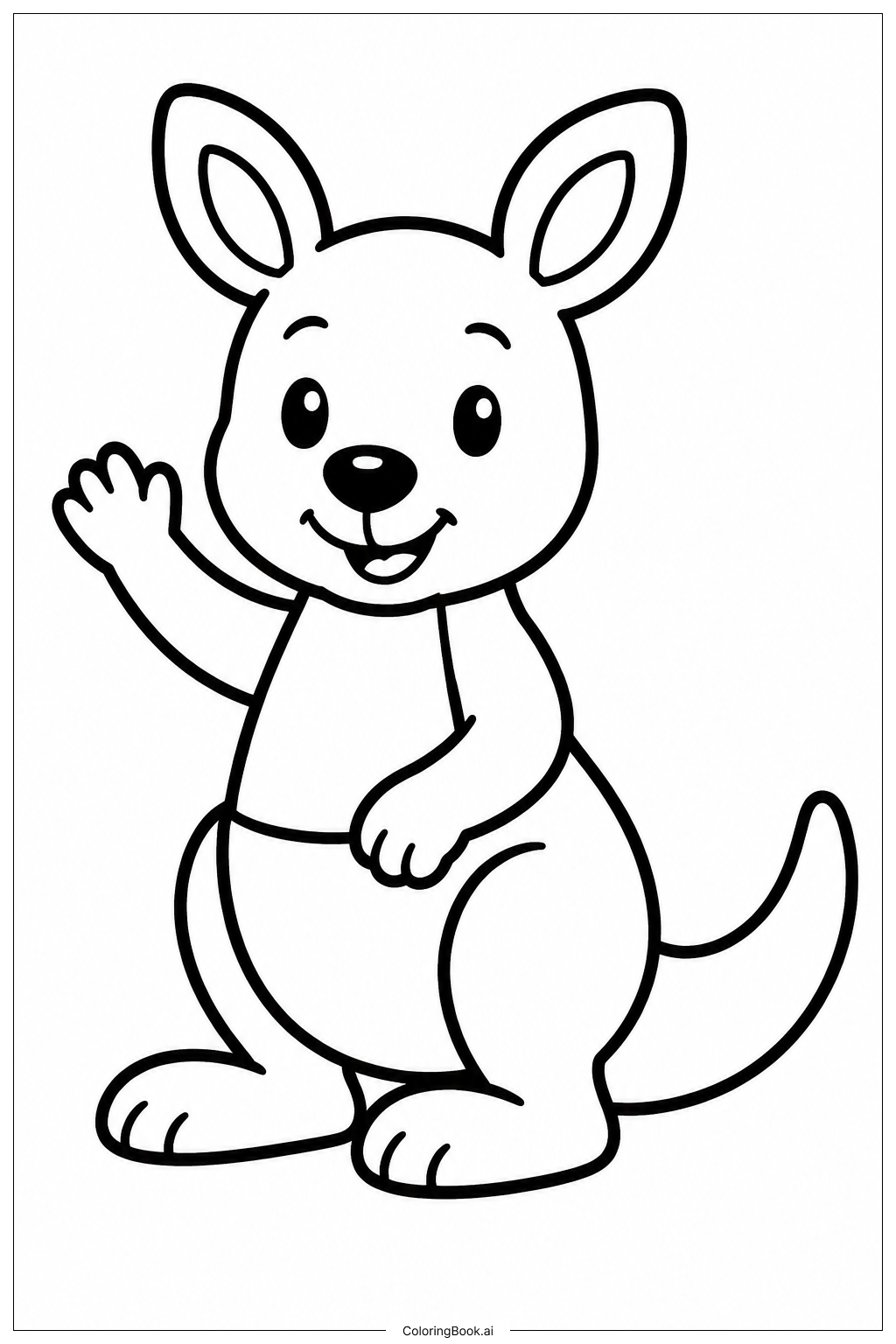
Coloring tips: How to color Kangaroo Waving Paw coloring page well?
Start with the kangaroo's body! Most kangaroos are brown or tan, so try warm shades like light brown, sandy beige, or golden brown for the fur. Use a slightly darker brown for the ears, tail, and lower legs to add depth. The belly and inner ears can be colored in a soft cream or light pink to make them stand out. Give the eyes a warm hazel or dark brown color, and add a tiny white dot to make them look shiny and alive. The nose can be a soft pink or dark brown. If you want to get creative, try making your kangaroo a fun color — purple, orange, or even rainbow! Add a bright background of green grass, a blue sky, or an Australian outback landscape to complete the scene.
Coloring challenges: Which parts are difficult to color and need attention for Kangaroo Waving Paw coloring page?
• **Fur Shading and Texture:** One of the main challenges is making the kangaroo's fur look natural and soft. Simply filling in flat color can make the image look dull. Kids and beginners may find it tricky to blend two shades of brown together to create a realistic furry texture. Using short, light pencil strokes in the direction of fur growth can help, but it takes patience and practice to get it right.
• **Small Facial Details:** The kangaroo's face has small but important features — the eyes, nose, and smile. These tiny areas require a steady hand and careful attention. Coloring too far outside the lines, especially around the eyes, can make the expression look unintended. Using fine-tipped coloring tools works best here.
• **Keeping Body Proportions in Mind:** The kangaroo has different body zones — the belly, the outer fur, the inner ears, and the limbs. Each area benefits from a slightly different shade. Deciding where one color ends and another begins can be confusing for younger colorists, especially around the paw and tail areas.
• **The Waving Paw:** The raised paw has small fingers and curved lines that create narrow spaces. Staying inside these lines without smudging or overlapping colors is a fine motor challenge, particularly for younger children using thick crayons or markers.
• **Background Composition:** Adding a background that complements the kangaroo without overpowering it can be tricky. Choosing colors that contrast well with the kangaroo's body while still looking harmonious requires some color theory awareness, which can be a fun but challenging exercise for older kids.
Benefits of coloring books: Advantages of drawing Kangaroo Waving Paw coloring page
Coloring this friendly Kangaroo is a wonderful activity for kids of all ages! It helps build fine motor skills as children carefully color within the lines of the paws, ears, and face. Choosing colors and deciding how to shade the fur encourages creative thinking and artistic expression. Kids learn about animals and nature as they think about what a real kangaroo looks like and where it lives. The simple, bold outlines make it easy and satisfying for younger children, while older kids can challenge themselves with shading and blending techniques. Focusing on a detailed image like this also promotes concentration and patience — skills that are valuable in school and everyday life. Completing the page gives children a sense of pride and accomplishment. Most importantly, coloring is a relaxing and joyful activity that reduces stress and lets kids have fun while expressing themselves. It is a great quiet-time activity for home, school, or on the go!